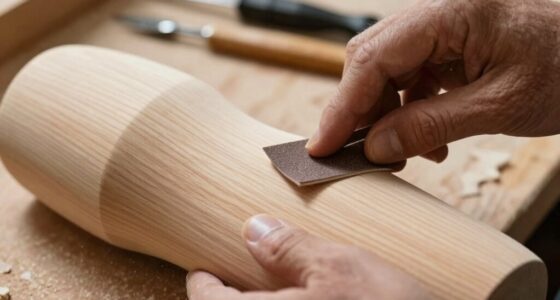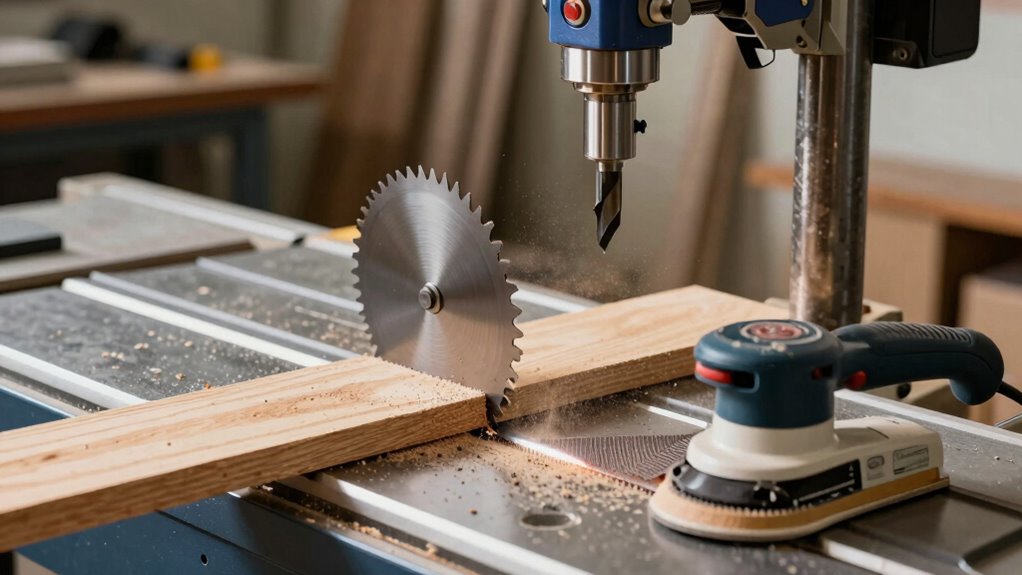

You use band saws, drill presses, and sanders because each tool is designed to solve specific challenges in woodworking. Band saws handle curves and irregular shapes, while drill presses make precise, straight holes. Sanders smooth and finish surfaces. Choosing the right tool for each task helps you achieve accurate results efficiently. If you want to understand how each tool’s features fit your projects, keep exploring to get the full picture.

Get business pricing on tools and workshop supplies
- Business-only prices and quantity discounts
- Tax-exempt purchasing
- Multiple users, one account, clear invoices
Key Takeaways
- Band saws are ideal for cutting curves and irregular shapes, which drill presses and sanders cannot handle effectively.
- Drill presses provide precise, straight holes, addressing tasks like doweling and creating uniform drill patterns.
- Sanders are designed for smoothing surfaces and finishing, which cutting or drilling tools cannot achieve.
- Each tool’s unique features target specific woodworking challenges, improving efficiency and accuracy.
- Proper tool selection prevents damage, ensures safety, and enhances the quality of woodworking results.

Have you ever wondered why different woodworking tools are designed for specific tasks? It’s because each tool is built to handle particular challenges, making your work more efficient and precise. Take band saws, for example. They’re ideal for cutting curves and irregular shapes, thanks to their continuous blade loop. The key to a smooth cut is maintaining proper blade tension. If the tension is too loose, the blade wobbles, causing inaccurate cuts and potential blade breakage. Too tight, and you risk damaging the blade or stressing the machine. Adjusting blade tension correctly guarantees clean, precise cuts and prolongs the life of your blade. Additionally, the motor horsepower of a band saw determines its ability to handle different types of wood and thicknesses. A higher horsepower motor provides the power needed for dense hardwoods or larger workpieces, enabling you to push through tougher materials without bogging down or overheating. Proper tool maintenance is essential for ensuring consistent performance and safety during operation.
Proper blade tension and motor horsepower are key for precise cuts and handling tough materials efficiently.
In contrast, drill presses are designed for drilling precise, straight holes in wood, metal, or plastic. Their stability and consistent power make them perfect for tasks requiring accuracy. The motor horsepower in a drill press influences how deep and fast you can drill, especially when working with tougher materials. A more powerful motor allows you to drill larger or denser materials without stalling or overheating. Unlike band saws, where blade tension is essential, the primary concern with drill presses is maintaining a steady, unwavering position while applying consistent pressure. This guarantees your holes are perfectly aligned and clean. The drill bit’s size and the motor’s capabilities work together to give you control over the depth, diameter, and finish of your holes, making the tool versatile for various projects. Proper maintenance of each tool ensures they operate at peak performance and extend their lifespan. Understanding the different functions of each tool helps you select the right one for each task, enhancing your overall woodworking experience.
As an affiliate, we earn on qualifying purchases.
Frequently Asked Questions
How Do I Choose the Right Tool for a Specific Project?
To choose the right tool for your project, consider tool versatility and project compatibility. Think about the material you’re working with and the specific cuts or finishes you need. If you need precise drilling, a drill press is ideal, while a band saw offers versatility for curved cuts. Sanders are perfect for smoothing surfaces. Match the tool’s capabilities to your project’s requirements to guarantee efficiency and quality.
Can These Tools Be Used for Metalworking?
Think of these tools as a craftsman’s palette. Yes, band saws, drill presses, and sanders can be used for metalworking if you choose the right blade and settings. For metal cutting, select blades designed for durability and precision. A band saw with a bi-metal blade handles thicker steel, while a drill press can bore through metal with the appropriate bit. Sanders can smooth metal surfaces if equipped with suitable abrasive belts.
What Safety Precautions Are Necessary for Each Tool?
You need to follow safety guidelines and wear protective gear when using each tool. For band saws, goggles and gloves protect your eyes and hands from debris. Drill presses require ear protection and a tight-fitting shirt to prevent entanglement. Sanders demand dust masks and safety glasses to guard against dust and splinters. Always keep your workspace clear, follow manufacturers’ instructions, and stay alert to prevent accidents and injuries.
How Much Maintenance Does Each Tool Require?
Think of maintenance schedules as the heartbeat of your tools, keeping them alive and thriving. For band saws, regular blade checks and lubrication extend tool longevity, while drill presses need periodic belt and motor inspections. Sanders require blade replacements and dust removal. By following these routines, you guarantee each tool stays in top shape, reducing downtime and maximizing performance, so your workshop runs smoothly like a well-oiled machine.
Are There Hybrid Tools That Combine These Functions?
There are some integrated power tools and multi-tool devices that combine functions, offering multi-tool versatility. These hybrids can handle tasks like cutting, sanding, and drilling within a single unit. However, they often don’t match the efficiency or precision of dedicated tools for each job. While they offer convenience for light or occasional use, for demanding projects, specialized tools remain the best choice.
As an affiliate, we earn on qualifying purchases.
Conclusion
So, whether you’re slicing through thick wood with a band saw, drilling precise holes with a drill press, or smoothing surfaces with a sander, each tool paints a different picture. They’re like brushstrokes on your woodworking canvas—each fulfilling a unique purpose, creating a harmonious masterpiece. Embrace their differences, and you’ll craft with confidence, turning raw materials into polished art. Your workshop becomes a gallery where every tool plays its perfect part.
As an affiliate, we earn on qualifying purchases.
Fall yard work Picks
leaf blowers
As an affiliate, we earn on qualifying purchases.