TL;DR

Get business pricing on tools and workshop supplies
- Business-only prices and quantity discounts
- Tax-exempt purchasing
- Multiple users, one account, clear invoices
A House Beautiful report describes four habits professional organizers recommend for managing clutter in small homes: create drop zones, use a one-in, one-out rule, decline unneeded freebies and put items away after use. The advice focuses on routines that can be started over a weekend and maintained in short daily sessions; it is not a report of new research or a tested guarantee that rooms will look larger.
House Beautiful has published four decluttering habits that professional organizers say can help residents manage mess in compact homes: assign places for everyday items, remove one item when bringing another home, refuse unnecessary freebies and put things away after use. The advice matters to people in studios and other small spaces, where organizers say items can quickly accumulate on limited surfaces.
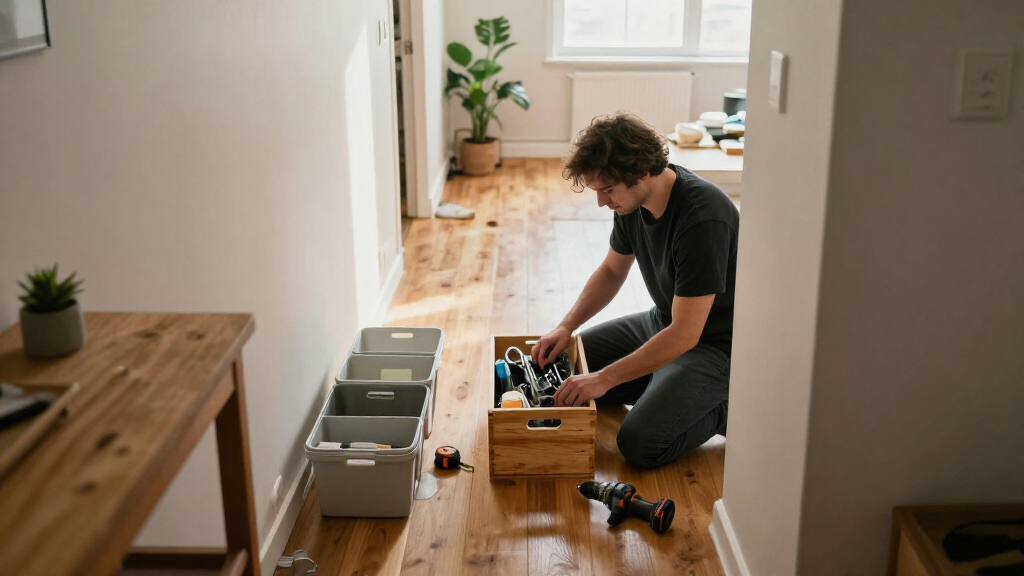
The recommendations emphasize repeatable systems over a one-time cleanout. For everyday belongings, organizers suggest establishing small drop zones near entryways or other useful spots: a hook for keys and bags, a tray for items coming through the door, or a basket for remote controls. Cathy Orr, cofounder of The Uncluttered Life, also recommends one collection basket for misplaced items. Rather than returning each item throughout the day, residents can sort the basket in a short evening session.
A second habit is the “one in, one out” rule: before adding an item, remove one from the same category. Macie Kreutzer, founder of For the Love of Simple, advises clearing out at least one item before shopping for clothing or home goods and not bringing home more than the space can contain. The report also recommends checking existing closet, refrigerator and pantry supplies before buying more. Donation bags should be moved toward an exit or placed in a car so unwanted items do not remain in the home indefinitely.
The other two habits address what comes into the home and what is left out afterward. Diane Greenhalgh, owner of Tiny to the Max, advises declining freebies that have no immediate use, such as hotel toiletries, event giveaways or extra takeout utensils. For items already stored, Carroll Cartwright of Neatly & Co. recommends reviewing each one and making an active decision about whether to keep it. Organizers also advise putting away makeup, dishes and work materials after use, or setting aside 10 to 15 minutes a day to reset the space.
Small Routines, Less Surface Clutter
In a compact home, a few misplaced objects can occupy a large share of available counters, tables or floors. The report’s central point is that preventing accumulation and finishing small tasks may be easier to sustain than waiting until clutter requires a major clearout. Drop zones reduce the effort of deciding where routine items belong, while a nightly basket check gives misplaced objects a regular route back to their homes.
The suggestions also connect household organization with spending and waste. Checking supplies and applying a one-in, one-out rule can prompt a pause before purchases, while refusing unneeded giveaways limits items that might otherwise fill drawers. These are organizers’ practical recommendations, not evidence that the routines will produce the same result for every household. Their usefulness depends on the space, the belongings and whether residents can keep the habits going.
Popular right now

Samsung 65 The Frame QLED 4K TV (2026) QN65LS03HEFXZA Bundle

Dreame L40 Ultra Gen 2 Robot Vacuum and Mop with 25,000 Pa Suction

Bose QuietComfort Wireless Noise Cancelling Headphones, Black
As an affiliate, we earn on qualifying purchases.
Why Organizers Focus on Habits
The House Beautiful report frames small-space clutter as an ongoing maintenance problem rather than something solved by a single purge. It notes that kitchens and studio apartments often have limited surfaces, so objects left out can make a room feel more crowded. The organizers’ advice is to give belongings designated places and establish routines that fit into daily life.
Gayle M. Gruenberg of Let’s Get Organized says the challenge is not simply knowing to pick things up, but having the motivation and tools to do it. The article presents its four habits as routines that people can begin over a weekend, rather than a plan requiring a full home renovation or a large-scale cleanout.
““The hard part is actually DOING it. It requires motivation, presence of mind, initiative, and the necessary tools.””
— Gayle M. Gruenberg, of Let’s Get Organized
No Measured Results Reported
The source is a service-oriented report based on organizer recommendations, not a study measuring whether these habits make rooms appear larger or how much clutter they remove. It gives no survey data, comparison group or quantified outcomes. Claims about how well a routine works should therefore be understood as professional advice rather than demonstrated results.
The article also does not set out one schedule that will suit everyone. Its suggested evening basket check and 10-to-15-minute daily reset are examples; the time needed may vary with household size and circumstances. Readers may need to adapt the habits to their available storage and routines.
Try One Routine This Weekend
The report suggests starting with a manageable change rather than attempting a whole-home purge. A resident could place a small basket near a commonly used area, review one drawer of freebies or clear one category before shopping. For a daily reset, the organizers recommend returning stray items and wiping down or clearing surfaces before the day ends.
There is no announced follow-up study or additional milestone in the source material. Whether these routines make a particular small home feel more spacious will depend on how they are used and maintained.
Key Questions
What are the four decluttering habits?
The report recommends setting up drop zones or a collection basket, using a one-in, one-out rule, refusing freebies without a clear use and putting items away after use.
What is a collection basket?
It is one catchall basket for misplaced household items. Cathy Orr recommends sorting it at the end of the day and returning its contents to their usual places.
How does the one-in, one-out rule work?
Before bringing home an item, remove one from the same category. The idea is to keep possessions from exceeding the storage space available.
How long should a daily reset take?
Carroll Cartwright suggests 10 to 15 minutes a day for “closing your circles,” such as putting away items left out. The report presents this as guidance, not a fixed requirement.
Does the report prove these habits make rooms look bigger?
No. It shares professional organizers’ advice but reports no measured results or study showing how much larger a space may appear.
Source: housebeautiful.com