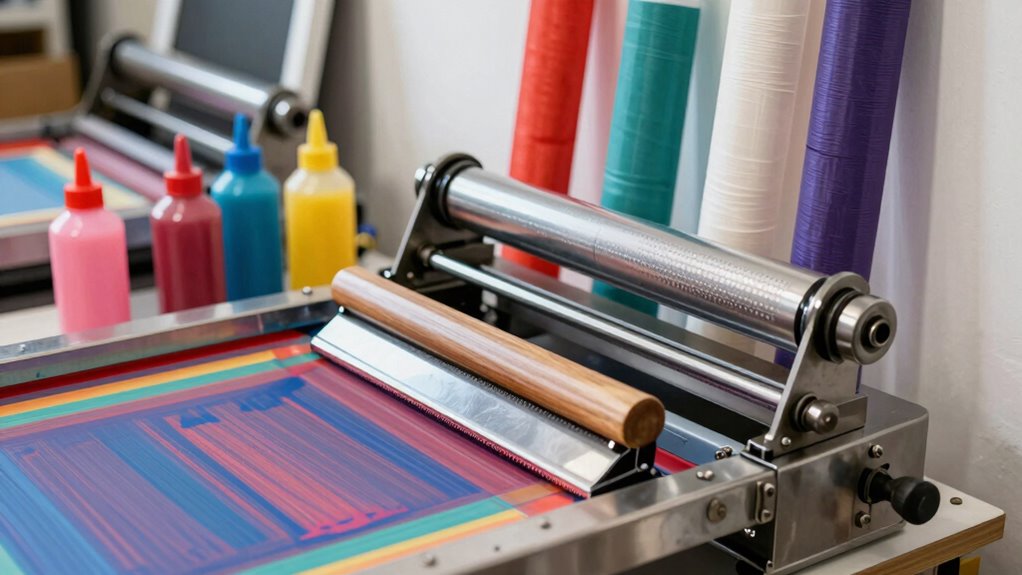

As a beginner, you often overbuy multi-color stations or fancy tools before mastering basic techniques. Focus first on essential equipment like a good squeegee, proper inks, and small mixing containers. Don’t get overwhelmed by expensive setups; instead, learn core ink mixing, color blending, and surface prep. Building a strong foundation makes using more advanced equipment easier later on. If you keep exploring, you’ll find out how to grow your setup step by step for better results.

Get business pricing on tools and workshop supplies
- Business-only prices and quantity discounts
- Tax-exempt purchasing
- Multiple users, one account, clear invoices
Key Takeaways
- Beginners often overbuy multiple colors, instead of mastering primary ink mixing and color blending techniques first.
- It’s common to purchase excessive tools; focus on essential items like squeegees and small mixing containers initially.
- Overinvesting in advanced exposure units or drying equipment can be premature before understanding fundamental processes.
- Avoid buying a wide range of inks; learn to mix and customize colors using primary inks for cost-effective results.
- Prioritize mastering core skills and essential tools before expanding your equipment setup for more complex printing needs.
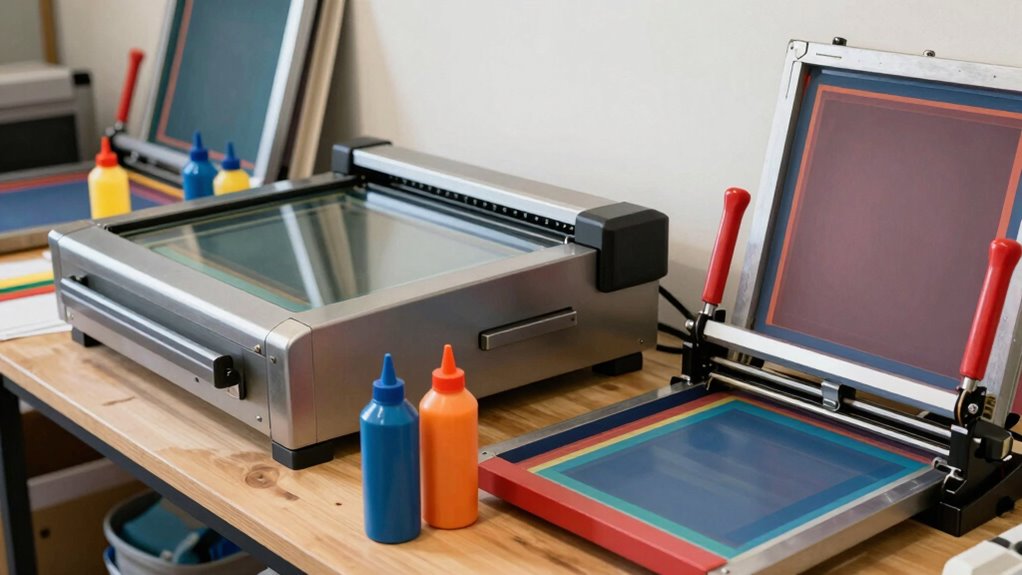
Another area where beginners tend to overbuy is ink mixing. Instead of purchasing a large range of pre-mixed colors, focus on understanding how to blend inks properly. This approach gives you more flexibility and saves money in the long run. To do this well, learn the basics of color theory and how to blend inks to achieve your desired shades. Keep in mind that consistent mixing is key, so invest in small containers and a palette knife for thorough blending. It’s tempting to buy many colors at once, but start with primary colors—red, blue, yellow—and then mix secondary and tertiary shades as needed. Proper ink mixing also involves adjusting the viscosity of your ink to match your substrate and screen mesh, which can be done using additives or thinning agents. This process ensures your prints are sharp, vibrant, and durable. Additionally, understanding ink compatibility with different fabrics and surfaces can help prevent issues like bleeding or cracking, leading to more professional results. Gaining knowledge of ink formulation can further improve your ability to customize colors and optimize print quality. Developing a solid understanding of color mixing techniques early on can significantly enhance your overall print outcomes. In the beginning, it’s better to buy only what you need and learn how each component affects your final product. Instead of overbuying every tool or color, focus on mastering squeegee selection and ink mixing. These elements have a significant impact on your prints and can be refined over time as you gain experience. Developing a strong foundation in color blending techniques will enable you to troubleshoot and improve your prints more effectively. Building a comprehensive knowledge base about your inks and tools allows for better decision-making and creative experimentation. By honing these skills first, you’ll build a solid foundation that allows you to explore more advanced equipment and techniques confidently. Remember, quality tools and careful preparation often outweigh having an extensive, costly setup right from the start.
As an affiliate, we earn on qualifying purchases.
Frequently Asked Questions
How Much Should I Budget for Initial Screen Printing Equipment?
You should budget around $2,000 to $5,000 for initial screen printing equipment. Focus on essential items like a press, drying rack, and exposure unit, while considering ongoing costs like equipment maintenance and ink selection. Avoid overbuying by starting with basic, versatile tools, and upgrade as your skills grow. This budget helps you balance quality and affordability, ensuring you can produce professional results without unnecessary expenses.
What Safety Gear Is Essential for Beginners?
Think of safety gear as your shield in a busy battlefield. You’ll want protective gloves to guard your skin from inks and chemicals, and respirator masks to keep harmful fumes at bay. These essentials help you stay safe and focused on creating your art. Don’t skimp—invest in quality gear that fits well, so you can work confidently while protecting yourself from potential hazards.
Can I Start With a Small-Scale Setup at Home?
Yes, you can definitely start with a small-scale printing setup at home. A home setup allows you to learn and practice without large investments. Focus on essential small-scale printing equipment like a basic screen printing kit, a tabletop press, and some inks. This approach keeps costs low and helps you develop your skills before expanding to more advanced equipment. Remember, starting small gives you flexibility and a better understanding of the process.
How Long Does It Take to Learn Basic Screen Printing Skills?
You can learn basic screen printing skills in a few weeks with regular practice. It takes time to master color mixing and design transfer techniques, but consistency speeds up your progress. Start by experimenting with simple designs and basic color blends. Focus on understanding how inks interact and how to transfer your designs correctly. With patience and dedication, you’ll become comfortable with the core techniques and improve steadily.
What Are Common Mistakes Beginners Make When Overbuying Equipment?
Like a ship overloaded with cargo, you might overbuy equipment, risking imbalance. Beginners often mistake quantity for quality, neglecting essential factors like equipment maintenance and ink selection. This leads to wasted resources and frustration. Instead, focus on versatile, durable tools that suit your style, and learn proper maintenance. Avoid chasing every new gadget; simplicity and understanding will steer you toward successful screen printing, rather than sinking your budget in unnecessary gear.
As an affiliate, we earn on qualifying purchases.
Conclusion
Remember, starting with too much can overwhelm your passion and drain your resources. Focus on the basics, master your craft, and let your creativity guide your journey. Imagine each print as a stroke of your unique story—don’t drown it in unnecessary tools. Keep it simple, stay inspired, and watch your skills grow like a seedling reaching for the sun. Your true art begins with what’s essential—trust that, and your future prints will speak volumes.
primary color screen printing inks
As an affiliate, we earn on qualifying purchases.
As an affiliate, we earn on qualifying purchases.
As an affiliate, we earn on qualifying purchases.
Fall yard work Picks
leaf blowers
As an affiliate, we earn on qualifying purchases.