Knitting edges tend to curl because of the stitch pattern, tension, and fiber types you use. Loose tension or stitches like stockinette make edges curl inward, while tight tension can cause edges to pucker or curl outward. Fiber properties also matter—wool’s elasticity causes more curl, while cotton stays flatter. Choosing the right stitch, maintaining even tension, and using blocking techniques can fix or reduce curling. If you keep exploring, you’ll discover how to make curls part of your design.
Key Takeaways
- Loose tension and certain stitch patterns like stockinette cause edges to curl inward.
- The type of fiber and its elasticity influence whether edges curl or lay flat.
- Finishing techniques like blocking or adding garter stitch borders help reduce curling.
- Edge stitches such as slipped or twisted stitches can stabilize the fabric and prevent curl.
- Curling can be a natural, intentional aesthetic element reflecting craftsmanship and organic design.
The Role of Tension and Stitch Types in Curling
Tension and stitch types play a crucial role in preventing or causing curling at the edges of your knitting. When tension control is too loose, the edges tend to curl inward because the stitches aren’t tightly secured, creating a looseness that encourages curling. Conversely, if your tension is too tight, the edges may curl outward or become puckered. Stitch variation also impacts curling; for example, stockinette stitch is prone to curling because of its stitch structure, while garter stitch tends to lie flat due to its uniform texture. By adjusting your tension for consistency and choosing stitch patterns that promote stability, you can better control edge curling. Understanding stitch structure and tension control helps you create neater, more stable edges in your knitting projects. Additionally, experimenting with different edge finishes can further reduce curling and improve the overall appearance of your work. Incorporating block techniques can also help relax stitches and set the fabric, leading to a smoother edge.
How Edge Stitches Affect the Curling Effect
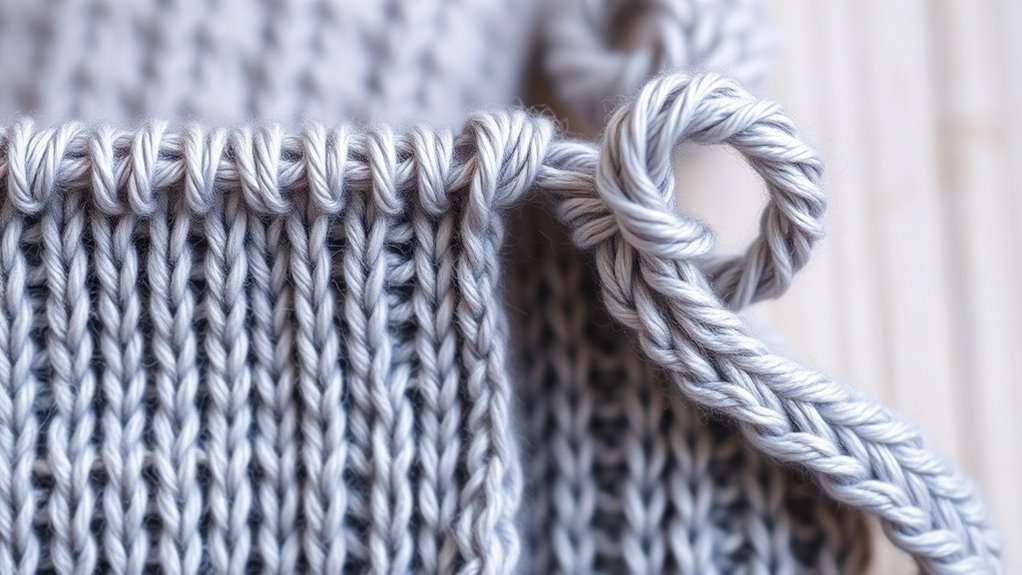
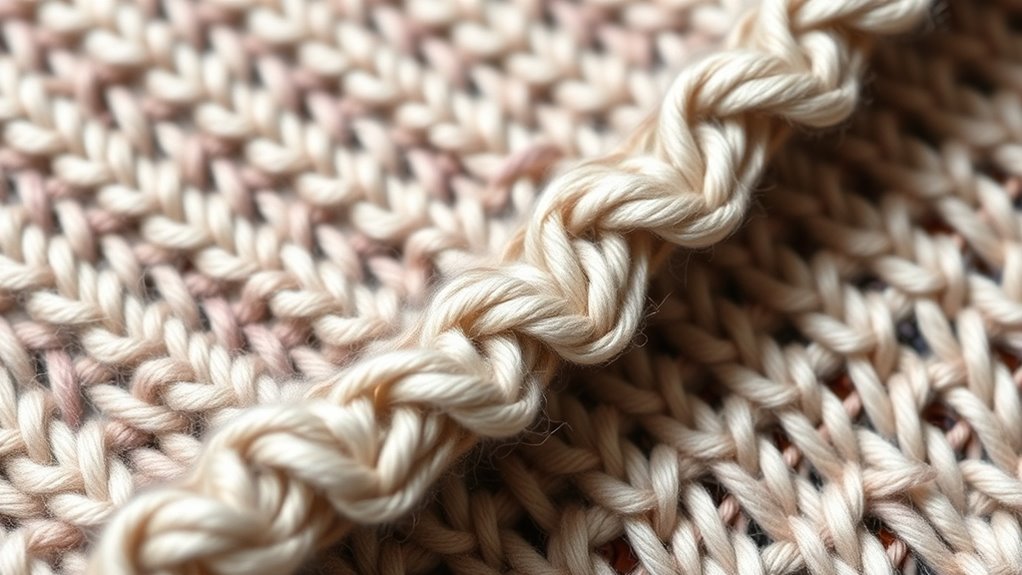
Have you ever noticed how the way you finish the edges of your knitting can influence whether they curl? Edge stitch variations, such as a simple garter stitch border or slipped stitches, can reduce curling by adding stability. Your knitting gauge also plays a role—finer gauges often lead to more curl, while thicker gauges tend to resist it. To improve edges, consider:
Finishing edges with garter stitch or slipped stitches reduces curling and creates a neater look.
- Using a thicker edge stitch variation like garter stitch.
- Incorporating slipped or twisted stitches at the edges.
- Adjusting your knitting gauge to be looser or tighter, which can help manage fabric stability. Additionally, choosing appropriate edge stitches can significantly influence the final look and durability of your project.
- Combining different edge stitches to find the most stable finish. Being aware of knitting tension and how it affects fabric stability can also help in controlling curling. Additionally, understanding fabric stability can guide you in choosing the most effective edge techniques for your project. Research indicates that different sound vibrations can also influence the elasticity and resilience of knitted fabrics, which may be an interesting area for further exploration.
Experimenting with these techniques helps control curling, making your edges look cleaner and more polished. The right edge stitches can profoundly impact your project’s overall appearance and durability.
Impact of Yarn Choice and Fiber Properties
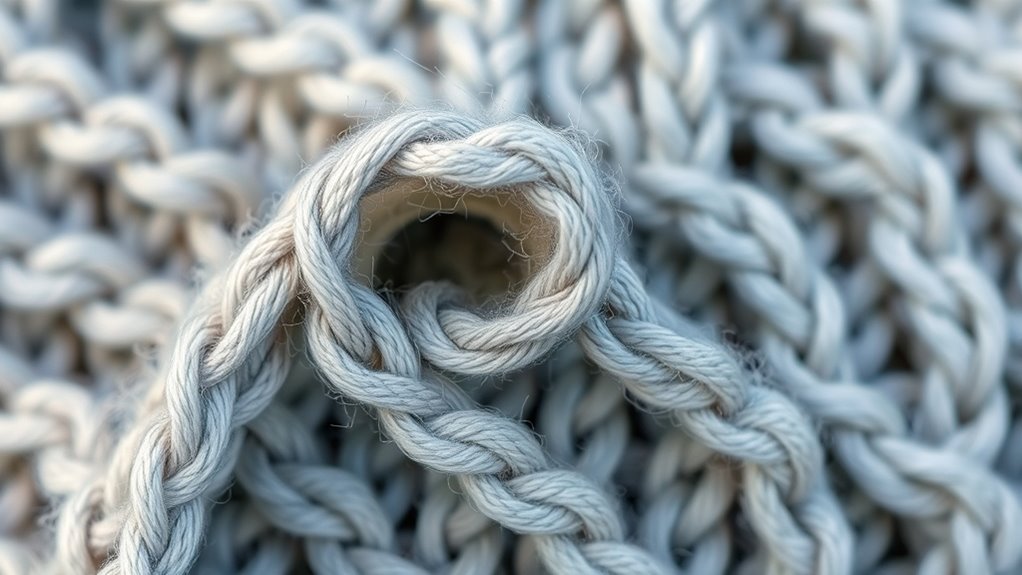
The type of yarn and fiber properties you choose can substantially influence how edges behave and whether they tend to curl. Yarn texture plays a significant role; smooth, tightly spun yarns often produce edges that curl more, while textured or loosely spun yarns may resist curling. Fiber elasticity also matters—fibers with high elasticity, like wool, tend to stretch and rebound, causing edges to curl as they recover from tension. Conversely, less elastic fibers, such as cotton or linen, usually result in flatter edges. Your fiber choice impacts not only the appearance but also the durability of your project’s edges. Understanding these properties helps you predict how your knitting will behave, allowing you to select yarns that align with your desired finished look. Additionally, fiber composition influences how fibers respond to moisture and tension, further affecting curl tendencies. Recognizing these Fiber elasticity characteristics can aid in choosing the right materials for projects where edge curl is a concern. For example, fiber stretchability can be a critical factor in determining how much a finished edge might curl. Moreover, the fiber’s moisture absorption also affects how fibers contract or expand, which can impact curling during knitting or after blocking. Being aware of the fiber resilience can help in selecting yarns that maintain their shape over time.
Techniques to Prevent or Minimize Curling
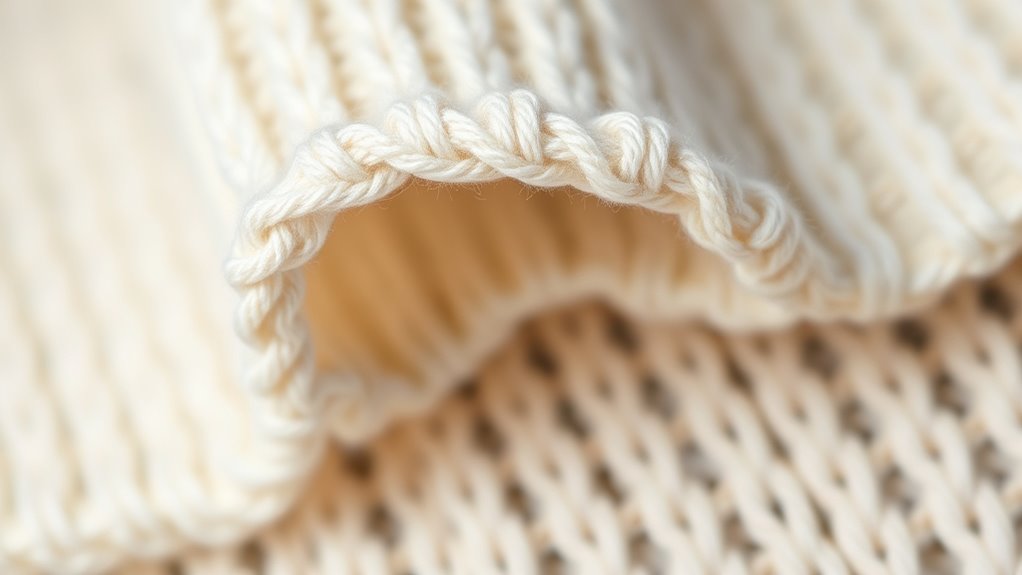
To prevent or minimize curling in your knitting edges, incorporating specific techniques can make a significant difference. First, use appropriate blocking techniques to flatten and set your edges, reducing natural curl. Second, add edge stabilization by working garter stitch borders or slip stitches along the edges, which help keep edges flat. Third, select yarns with less tendency to curl, such as wool blends or smoother fibers. Fourth, consistently maintain even tension throughout your work to avoid uneven edges that encourage curling. Fifth, choosing fiber properties, such as fiber content and texture, can influence how much your edges curl over time. Additionally, using Yarn Structure that promotes stability can further help maintain edge stability. Combining these methods ensures more stable edges and a neater finish. Proper blocking techniques are especially effective for setting the shape after finishing, while edge stabilization methods provide ongoing support during knitting. These steps help keep your edges straight and professional-looking.
Embracing Curling as Part of the Knitting Aesthetic
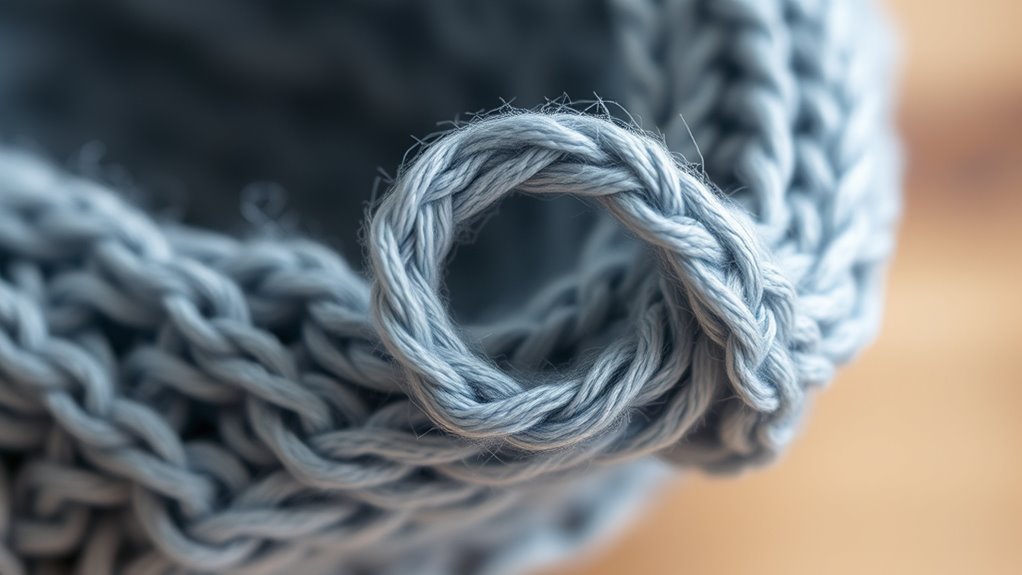
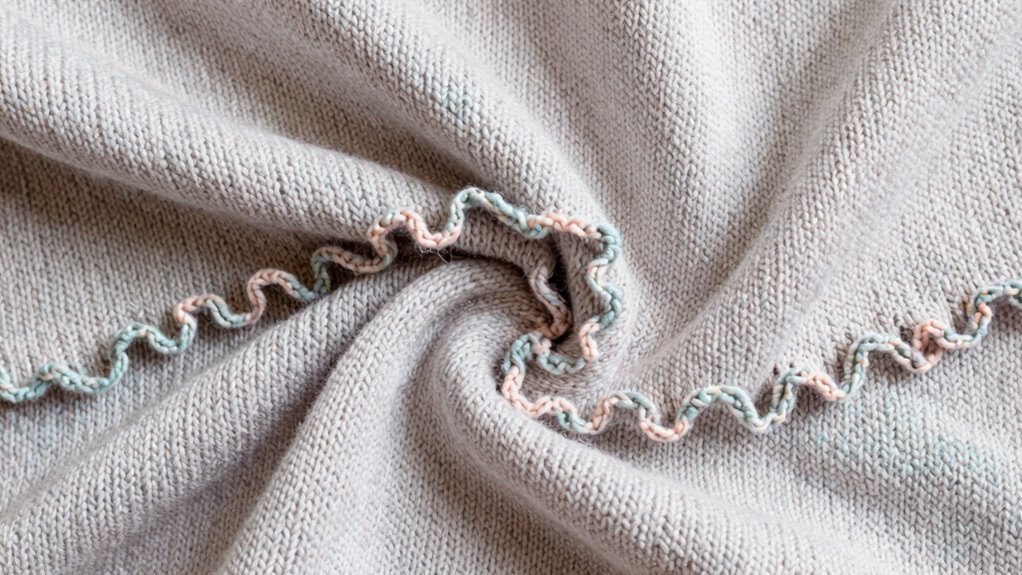
While techniques like blocking and edge stabilization help keep knitting edges flat, sometimes curling can become an intentional part of the design. Curling adds a dynamic element to your piece, transforming an ordinary edge into a form of edge decoration. It can convey a sense of movement or fluidity, making your knitting more visually interesting. Embracing curling allows you to see it as a symbol of knitting’s organic nature and craftsmanship. Some knitters view curling as a reflection of tradition or a subtle reminder of the handmade process. Instead of fighting it, you can incorporate curling into your aesthetic, celebrating imperfections and natural variations. Recognizing knitting’s organic qualities can help you appreciate curling as a natural and meaningful aspect of your work, enriching your piece with personality and intention. Additionally, understanding edge behavior can help you better anticipate and utilize curling as a creative element, especially when considering backyard transformation essentials that highlight natural beauty. Incorporating fiber characteristics into your design choices can further enhance the organic feel of your work and how it interacts with curling.
Frequently Asked Questions
Can Blocking Completely Eliminate Curling in Knitting Projects?
Blocking techniques can considerably reduce curling, but they might not completely eliminate it. You need to think about yarn elasticity, as some yarns are more prone to curling due to their fiber content. Properly blocking your project helps relax the fibers and reshape edges, but if the yarn has high elasticity or the edges are heavily affected, a perfect fix may not be possible. Regular blocking improves the overall appearance, though.
Does the Size of the Knitting Needle Influence Edge Curling?
Think of your knitting needle size as a conductor guiding an orchestra; smaller needles create tighter tension, which often prevents edge curling, while larger needles can lead to looser stitches and curling. When you choose the right needle size, you’re better equipped for tension control, reducing the tendency for edges to curl. So, select your needles thoughtfully, understanding that their size influences your project’s stability and overall look.
Are Certain Knitting Patterns More Prone to Edge Curling?
Yes, some knitting patterns are more prone to edge curling. Patterns with stockinette stitch, for example, tend to curl more than garter stitch or ribbing. Using proper selvage techniques can help prevent curling, and choosing yarn fiber types like wool or acrylic also influences the tendency. Wool tends to curl more, while acrylic stays flatter. Adjusting your pattern or incorporating these techniques can keep edges neat and flat.
How Do Different Knitting Styles Affect the Likelihood of Curling?
Different knitting styles markedly influence edge curling because your stitch tension and fabric elasticity play key roles. Tighter stitches reduce elasticity, making edges prone to curl, while looser stitches increase elasticity, helping edges stay flat. Patterns with stockinette stitch tend to curl more than garter or ribbing, which add stability. So, adjusting your stitch tension and choosing the right style can help minimize curling and create a smoother edge.
Is Curling More Common in Hand-Knit or Machine-Knit Fabrics?
Curling is typically more common in hand-knit fabrics than in machine-knit ones. You’ll notice that hand-knit edges often curl due to less fabric stability, looser tension, or uneven stitches, making it harder for the fabric to lay flat. Machine knitting, with its tighter, more uniform tension, provides greater fabric stability, reducing the likelihood of curling. So, if you want to minimize curling, machine knitting generally offers more stability and flat edges.
Conclusion
Understanding why your edges curl helps you embrace or prevent it. By adjusting tension, choosing the right stitches, and selecting fibers wisely, you gain control over your knitting’s finish. Curling isn’t just a flaw—it’s a sign, a whisper from your stitches, telling you what’s happening beneath the surface. So, next time your edges roll, remember: it’s not just chaos but a dance of fiber and technique, waiting for your touch to guide it into harmony.