Colors turn muddy when dyes overlap, are incompatible, or if you use too much dye at once, causing dull, murky hues. To keep fabrics bright, understand dye chemistry and match dyes to fabric types, use proper preparation, and apply colors gradually. Proper techniques like testing small samples, avoiding harsh detergents, and fixing colors with mordants help prevent muddiness. Keep these tips in mind, and you’ll achieve vibrant, lasting colors—if you continue exploring, you’ll discover even more ways to perfect your dyeing craft.

Get business pricing on tools and workshop supplies
- Business-only prices and quantity discounts
- Tax-exempt purchasing
- Multiple users, one account, clear invoices
Key Takeaways
- Overlapping dye layers and mixing incompatible dyes cause dull, muddy colors by obscuring vibrancy.
- Maintaining proper dyeing temperature and testing small samples prevent unintended color muddiness.
- Using transparent dyes and applying multiple layers gradually help preserve brightness and clarity.
- Correct fabric preparation and choosing suitable dye types ensure even color uptake and reduce dullness.
- Rinsing promptly, fixing colors with mordants, and washing separately help maintain vibrant, long-lasting hues.
Understanding Color Chemistry in Dyeing

Understanding color chemistry in dyeing is essential because it explains how dyes interact with fibers to produce vibrant, lasting colors. The color wheel helps you visualize how different hues relate and mix, guiding your dye choices. Recognizing dye affinity is critical; it determines how well a dye bonds with a particular fiber. For example, some dyes have high affinity for protein fibers like wool, while others bond better with cellulose fibers like cotton. When you understand these interactions, you can predict how colors will turn out and avoid muddy results. Knowing the chemistry behind color interactions empowers you to select appropriate dyes and control the dyeing process, ensuring your finished product displays the bright, consistent colors you want. Additionally, understanding sustainable dyeing practices can help reduce environmental impact and improve colorfastness. Incorporating eco-friendly dyes and methods aligns with ethical sourcing principles, further benefitting the environment and your project. Developing this knowledge also allows you to troubleshoot issues like color bleeding and achieve more predictable results in your projects. Being aware of dye-fiber interactions further enhances your ability to select the right dye with confidence, leading to more successful dyeing outcomes. For example, understanding fiber properties can help you tailor your technique to different materials for optimal results.
The Impact of Over-Dyeing and Mixing Colors
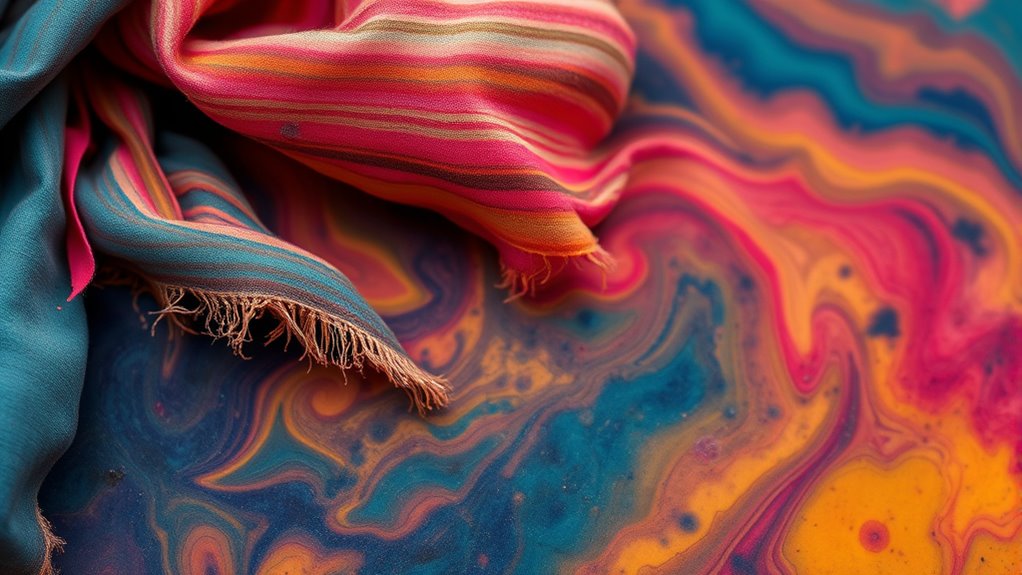
Over-dyeing and mixing colors can considerably affect the final appearance of your dyed fabric. Too much dye layering can lead to muddy, dull results, while improper color blending can produce unexpected hues. When you layer dyes, each new color can obscure or distort the original, making the fabric look less vibrant. Additionally, mixing incompatible colors may cause unwanted color muddiness. To avoid these issues, keep these tips in mind:
Over-dyeing and mixing colors can dull fabrics; use transparent dyes and test small samples first.
- Use transparent dyes to enhance color blending.
- Limit dye layering to prevent dark, muddy areas.
- Test small fabric samples before full dyeing.
- Gradually build color intensity to maintain brightness.
- Understanding color accuracy helps ensure your dyes produce the desired vibrant outcome.
Choosing the Right Dye and Fabric for Vibrancy
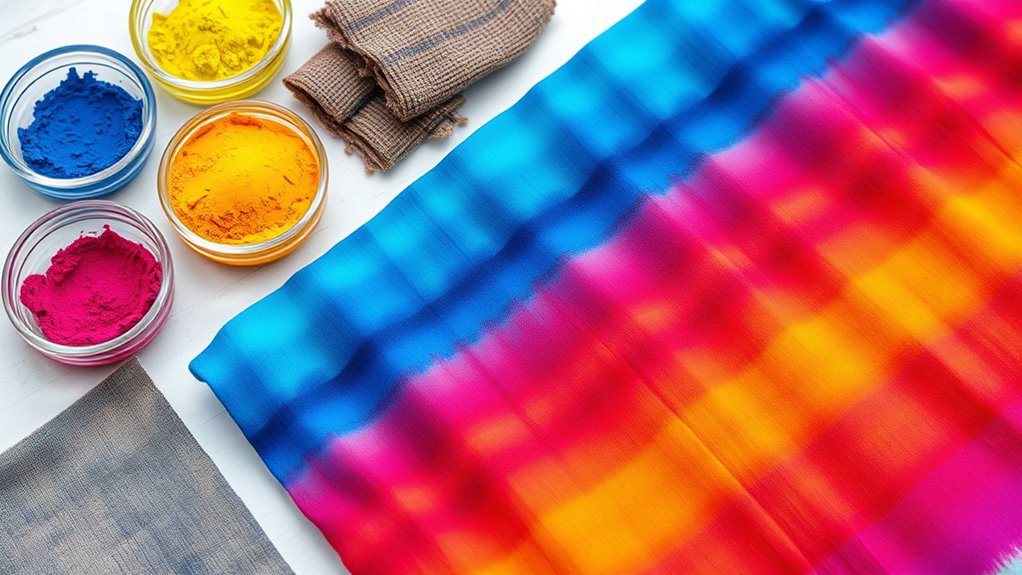
Choosing the right dye and fabric is essential for achieving vibrant, long-lasting colors in your dyeing projects. Start by selecting dyes suited for your fabric type, whether fiber-reactive for cotton or acid dyes for protein fibers like wool. Your choice of dye application methods, such as immersion, painting, or tying, impacts color intensity and uniformity. Proper fabric preparation techniques—like thorough washing to remove oils, sizing, and any finishes—ensure dye adheres evenly and prevents dull or muddy results. Using pre-mixed dyes or concentrated powders can also influence vibrancy. Additionally, understanding the safe ingredients to avoid ensures your dyed fabrics are not only vibrant but also safe for wear and washing. Incorporating visual cues can help you monitor color development and achieve desired results. Recognizing the importance of dye-fiber compatibility can significantly improve color retention and vibrancy over time. By selecting compatible dyes and fabrics and preparing your material correctly, you set a strong foundation for bright, durable colors that won’t fade prematurely.
Proper Dyeing Techniques to Prevent Muddy Hues
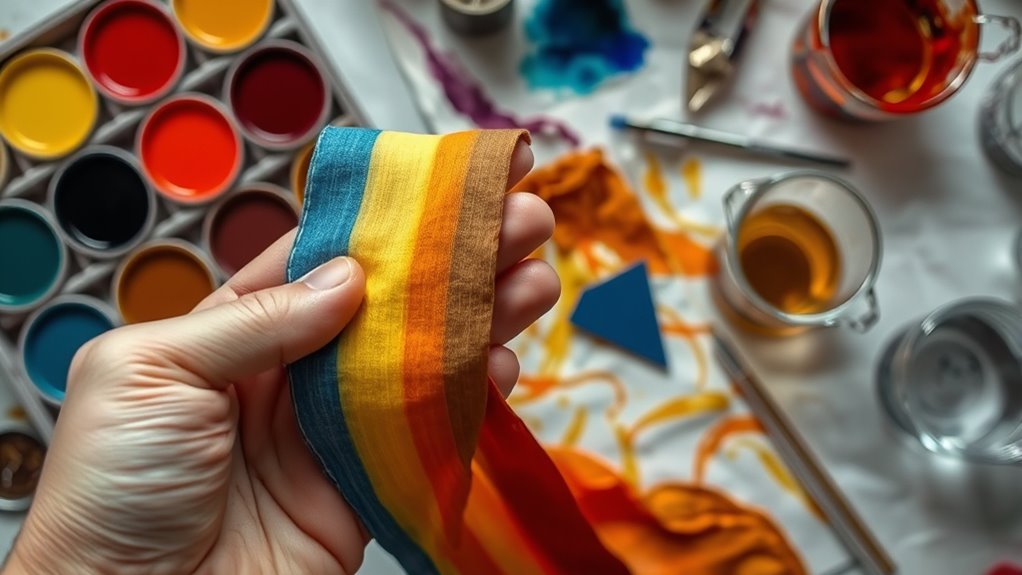
To prevent muddy hues in your dyeing projects, it’s crucial to control how colors interact during the process. Start with colorfast fabrics to avoid bleeding and uneven mixing. Maintain the correct dyeing temperature, as too hot or cold water can cause colors to blend into dull shades. Next, follow these techniques:
- Test small samples first to see how colors react.
- Use separate containers for different dyes to prevent unwanted mixing.
- Add dyes gradually, stirring constantly to promote even distribution.
- Rinse fabrics in cool water immediately after dyeing to lock in vibrant hues.
Tips for Fixing and Maintaining Bright Colors After Dyeing
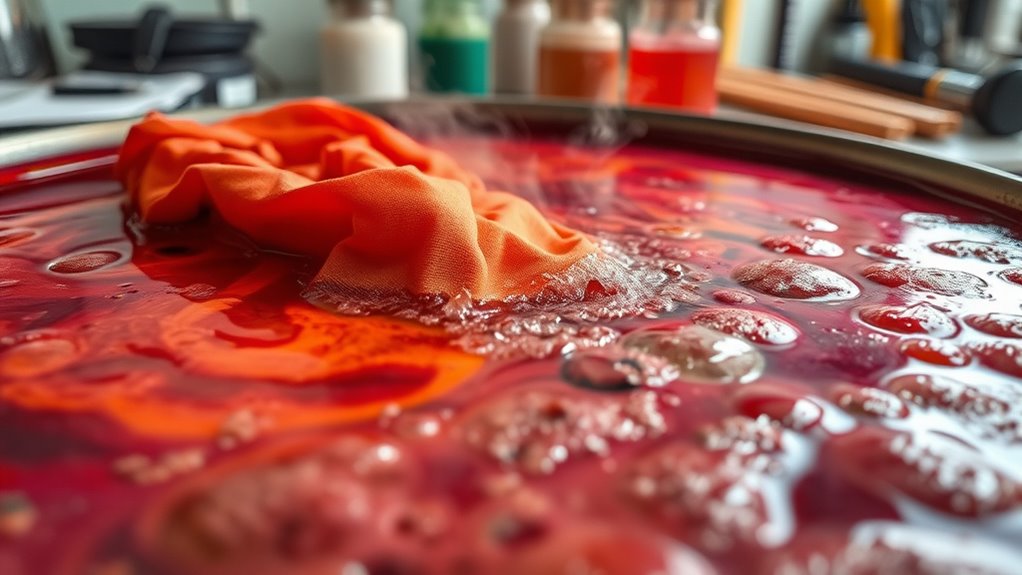
Maintaining bright colors after dyeing requires quick action and proper care. If you notice colorfastness issues, address them promptly to prevent fading or dullness. Rinsing your fabric with cold water immediately after dyeing helps lock in the color. Using dye fixation methods like mordants or fixatives enhances dye adhesion and prevents bleeding. Always wash dyed items separately for the first few washes to avoid dye transfer. Avoid hot water or harsh detergents, which can strip color. Instead, opt for gentle, color-safe detergents. Adding a bit of vinegar or salt during the first wash can also help set the dye. Proper air purifier maintenance is essential to prevent dust and contaminants from dulling the vibrancy of your colors over time. Regular cleaning of your air purifier filters ensures optimal performance and helps preserve the brightness of your dyed fabrics. Additionally, controlling environmental factors such as dust and pollutants can significantly extend the vibrancy of your colors. With these tips, you’ll preserve vibrant hues and extend the life of your dyed fabric. Proper aftercare is key to keeping colors bright and beautiful.
Frequently Asked Questions
How Does Water Quality Affect Dye Color Vibrancy?
Water quality greatly impacts dye color vibrancy. If your water has an imbalanced pH level, it can cause colors to appear dull or muddy. High mineral content, like calcium or iron, can also interfere with dye absorption, dulling the hues. To keep colors bright, test and adjust your water’s pH and consider using filtered or distilled water to minimize mineral interference, ensuring vibrant, consistent results.
Can Natural Dyes Achieve the Same Brightness as Synthetic Dyes?
Imagine trying to brighten a room with a candle versus a spotlight—natural dyes are the candle, charming but limited in brightness. They can’t quite match the synthetic dyes‘ dazzling vibrancy, which act like a spotlight. Natural dyes face limitations in achieving the same intense brightness, while synthetic dyes offer more consistent, vivid results. So, if you crave eye-popping hues, synthetic dyes are your best bet.
What Role Does Temperature Play in Color Stability?
Temperature plays a vital role in color stability during dyeing. You need to manage heat control carefully to guarantee proper dye fixation, which helps the color bond securely with the fabric. If the temperature‘s too low, dye fixation may be incomplete, resulting in dull or muddy colors. Conversely, too much heat can cause colors to fade or become uneven. Maintaining ideal temperature ensures vibrant, long-lasting results.
How Do Different Fabric Types Influence Dye Absorption?
Different fabric types influence dye absorption through fiber porosity and dye affinity. You’ll find that natural fibers like cotton and wool have higher porosity, absorbing dye more readily and resulting in vibrant colors. Synthetic fabrics, with lower porosity and different chemical structures, may resist dye uptake, leading to duller shades. Understanding these factors helps you choose fabrics and dyes wisely, ensuring brighter, more consistent results in your dyeing projects.
Are There Specific Methods for Preventing Color Fading Over Time?
To prevent color fading over time, you should focus on fiber pre-treatment and dye fixation techniques. Think of your fabric as primed for a lasting bond, ensuring vibrant hues stay lively. Use mordants or fixatives that lock in colors, and follow proper dyeing procedures. This proactive approach helps maintain brightness, keeping your finished piece looking fresh and beautiful, long after the first wear.
Conclusion
By mastering the art of dyeing, you become a painter of vibrant dreams, avoiding muddy muddles and letting your colors dance with clarity. Think of your fabrics as blank canvases—when you choose the right dyes and techniques, you paint a lively masterpiece that sparkles with life. Keep your colors bright and true, like sunlight breaking through clouds, and your creations will always shine with vivid, lasting beauty.
Columbus Day / Indigenous Peoples' Day Picks
long weekend sales
As an affiliate, we earn on qualifying purchases.