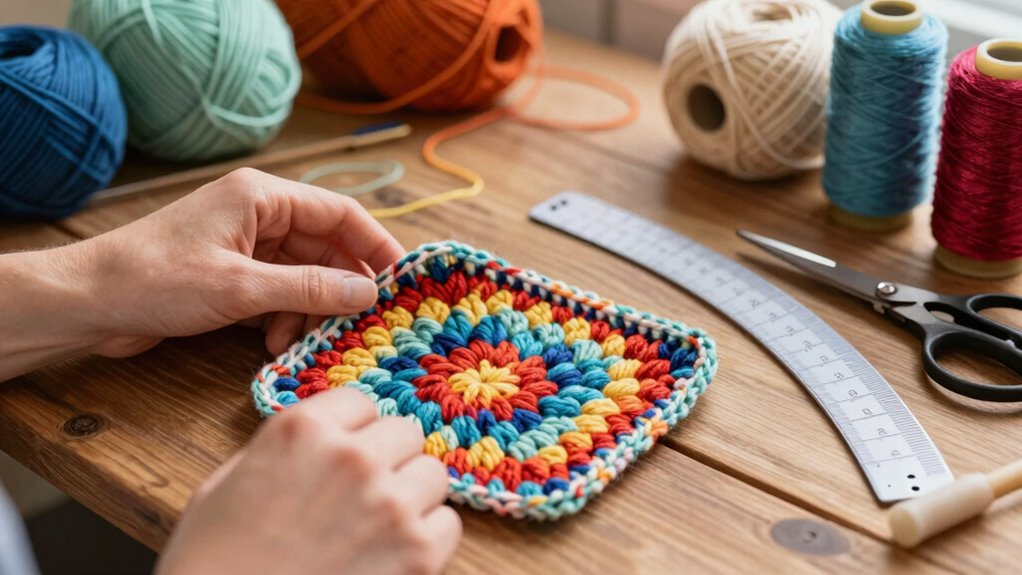

Crochet gauge can seem tricky, but it’s simple once you understand its importance. It measures how many stitches and rows fit into a specific area, ensuring your project turns out the right size. To avoid headaches, make a small swatch, work evenly, and compare your stitches to the pattern’s gauge. Adjust your tension or hook size if needed. Keep these tips in mind, and you’ll master gauge effortlessly—more helpful hints await.
Key Takeaways
- Use a 4-inch swatch to accurately measure stitches and rows, ensuring your gauge matches the pattern.
- Maintain consistent tension by working evenly and avoiding tight or loose stitches during your swatch.
- Adjust your hook size slightly if your stitches are too tight or loose to achieve the correct gauge.
- Record your gauge measurements and any hook adjustments to replicate consistent results across projects.
- Choose yarn and hook combinations recommended for your pattern to prevent sizing issues and ensure professional results.
As an affiliate, we earn on qualifying purchases.
What Is Crochet Gauge and Why Does It Matter?

Have you ever finished a crochet project only to find it’s too small or too large? That’s where crochet gauge comes in. It’s the measurement of your stitches per inch, which determines the final size of your project. Proper gauge ensures your yarn color selection matches your expectations, as different yarns can behave differently depending on tension. Using a comfortable crochet hook with good ergonomics helps you maintain consistent tension, making it easier to achieve accurate gauge. When you understand your gauge, you can adjust your hook size or tension to match pattern specifications. This prevents sizing surprises and guarantees your project turns out just right. Mastering gauge saves time, materials, and frustration, resulting in beautifully fitting, professional-looking crochet pieces. Additionally, understanding your gauge can help you optimize the project’s overall appearance by ensuring consistent stitch size throughout. Recognizing how knitting and crochet tension affects your gauge empowers you to troubleshoot and refine your technique for better results. Developing awareness of your personal tension can further enhance your ability to produce uniform stitches and achieve the desired gauge. Being mindful of industry standards for gauge can also help you compare your work with professional patterns and ensure compatibility. Knowing the typical gauge measurements for different yarn weights allows you to select the right tools and techniques for each project.
As an affiliate, we earn on qualifying purchases.
How to Measure Your Crochet Gauge Accurately

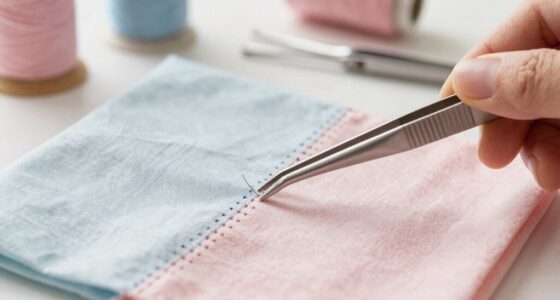
To measure your crochet gauge accurately, start by creating a swatch that’s at least 4 inches (10 cm) square, including extra rows and stitches to guarantee a representative sample. Use the yarn you plan to work with, as different yarns can affect your gauge. Choose the recommended hook size from your pattern or experiment with a hook that matches your yarn selection. Work your stitches evenly, avoiding tight or loose tension, to ensure an accurate measurement. Once finished, lay the swatch flat without stretching and measure the number of stitches and rows within 4 inches (10 cm). Comparing this to your pattern’s gauge will help you determine if you need to adjust your hook size or tension for a perfect fit. Remember that Free Floating techniques can help you maintain consistent tension throughout your project. Additionally, understanding your crochet tension can lead to more consistent results across different projects. To further enhance your accuracy, consider gauge swatch techniques that ensure precise measurement before starting your main project. Developing a consistent measurement method can also improve your overall tension control and help achieve uniform results. Incorporating proper tension management practices can significantly enhance the quality and consistency of your crochet work.
As an affiliate, we earn on qualifying purchases.
Tips for Achieving Consistent Gauge in Every Project

Achieving a consistent gauge across all your crochet projects requires attention to detail and deliberate practice. Start by choosing the right yarn selection; select yarns that match your project’s specifications, as different fibers and thicknesses can alter your gauge. Always use the recommended hook size, but don’t be afraid to make small adjustments if your gauge isn’t lining up. Before beginning, crochet a swatch and measure it carefully to confirm your gauge matches the pattern’s requirements. Keep your tension even throughout, maintaining a steady grip on your hook and yarn. Consistency comes with practice, so take the time to test your gauge regularly and adjust your hook size or tension accordingly. Paying attention to crochet gauge and how it influences your finished project will help you achieve uniform results every time. Additionally, understanding fiber types and their impact on gauge can further refine your technique for more precise results. Being aware of how different fiber properties affect your tension can also lead to better control and more predictable outcomes. Incorporating regular tension checks during your work can help you maintain consistent tension and improve overall accuracy. To enhance your consistency, consider keeping a gauge record to track your tension and hook adjustments over time.
As an affiliate, we earn on qualifying purchases.
Common Mistakes That Affect Your Crochet Gauge

One common mistake that can throw off your crochet gauge is using inconsistent tension. When your tension varies, your stitches become uneven, making it harder to match the gauge. Yarn selection plays a big role here; some yarns naturally have more stretch or slipperiness, which can cause tension fluctuations. Picking the wrong hook size for your yarn can also lead to inaccurate gauge—using a hook that’s too big or small affects stitch size and tension. Always choose a hook that complements your yarn and practice maintaining even tension throughout your work. Avoid rushing or tightening your grip, as this can alter your gauge. Paying attention to your yarn and hook choice helps keep tension consistent, ensuring your gauge stays accurate and your project turns out just right. Additionally, understanding crochet gauge and how different stitches impact tension can help you achieve more precise results.
Troubleshooting and Adjusting Your Gauge for Perfect Results

When your crochet gauge isn’t matching the pattern, it’s essential to troubleshoot effectively to achieve perfect results. Start by reassessing your yarn selection; different yarns can alter your gauge markedly. Adjust your hook sizing—try a larger hook if your stitches are tight or a smaller one if they’re loose. Keep track of these adjustments to find the right fit. Use this table as a quick reference:
| Issue | Solution | Tip |
|---|---|---|
| Too tight stitches | Switch to a larger hook | Test with scrap yarn |
| Too loose stitches | Switch to a smaller hook | Check tension regularly |
| Yarn thickness mismatch | Select yarn matching pattern specs | Read yarn labels carefully |
| Inconsistent gauge | Practice consistent tension | Use stitch markers if needed |
Additionally, understanding how crochet gauge affects overall project size can help you make more informed adjustments. Being familiar with gauge measurement techniques ensures you can troubleshoot more precisely. Troubleshooting with these steps helps you fine-tune your gauge for flawless project results.
Frequently Asked Questions
How Can Different Yarn Types Impact My Crochet Gauge?
Different yarn types impact your crochet gauge because fiber texture influences how tight or loose your stitches turn out, and color variations can sometimes make it hard to see your stitch definition. For example, smooth fibers like cotton help maintain consistent tension, while fuzzy or textured yarns may cause uneven gauge. Keep in mind that choosing the right yarn based on fiber texture and color can help you achieve your desired gauge more easily.
Is There a Standard Gauge Measurement for All Crochet Projects?
Gauge guides generalize, but there’s no single standard for all crochet projects. You need to match your crochet hook ergonomics and yarn dye lot variability to your pattern’s gauge swatch. Always check your project’s specific gauge, because factors like hook comfort and yarn differences can affect your size and fit. Customizing your tension and tool choice helps you achieve the perfect finish, no matter what you’re creating.
What Tools Are Best for Checking Crochet Gauge Accurately?
You should use a clear, flexible measuring tape or a gauge ruler for checking your crochet gauge accurately. Comparing measuring tools helps you find what works best for your project. When doing gauge swatch techniques, keep the tension consistent and measure multiple spots for precision. A stitch counter or a magnifying glass can also enhance accuracy. Choose tools that are easy to handle and provide precise measurements to ensure your project turns out perfect.
How Does Hook Size Influence Gauge Consistency?
Hook size variations directly impact your gauge consistency because larger hooks create looser stitches, while smaller hooks produce tighter ones. To maintain accurate gauge, you should use gauge calibration techniques, such as making swatches and measuring stitch counts carefully. By selecting the right hook size and regularly calibrating your gauge, you guarantee your finished project matches the pattern’s specifications, resulting in a professional-looking, well-fitting piece every time.
Can My Tension Change Over Time, Affecting Gauge?
Did you know that tension can shift by up to 15% over time? Yes, your tension can change, impacting your gauge. As you crochet, your yarn thickness and tension adjustment habits evolve, which may lead to tighter or looser stitches. To maintain consistent gauge, periodically check your tension and adjust if needed. Practicing proper tension helps you achieve uniform results and prevents frustration in your projects.
Conclusion
Now that you understand crochet gauge, you’re armed with the tools to master every project. Remember, gauge isn’t just a number—it’s the secret ingredient that transforms your work from good to stunning. Like a compass guiding your creative journey, accurate gauge keeps you on course. So, don’t let confusion cloud your craft—embrace the process, troubleshoot with confidence, and let your stitches tell a story worth sharing. Happy crocheting!