
To make your handmade patchwork lie flat, start by pre-washing and pressing each fabric piece to set their shape. When sewing, press seams open or to one side, pressing each section before moving on to the next. Press each sewn block carefully before joining rows, nesting seams for accuracy. Finish with a final, thorough press of the completed quilt top. Mastering this pressing order helps your patchwork look polished—continue for more detailed steps.
Key Takeaways
- Press each fabric piece thoroughly before sewing to set shape and prevent distortion.
- Press seams open or to one side during assembly to reduce bulk and ensure flatness.
- Press each sewn seam before joining rows, nesting seams to align edges properly.
- Use a pressing cloth and press in alternating directions for smooth, flat patches.
- Finish with a thorough final press of the entire quilt top to eliminate wrinkles and maintain flatness.

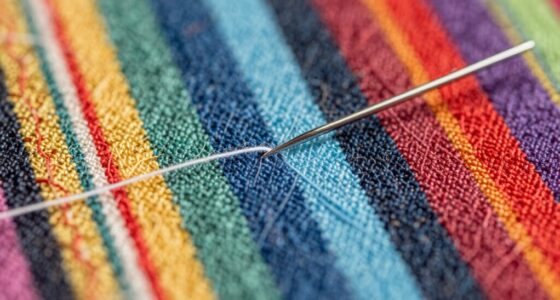
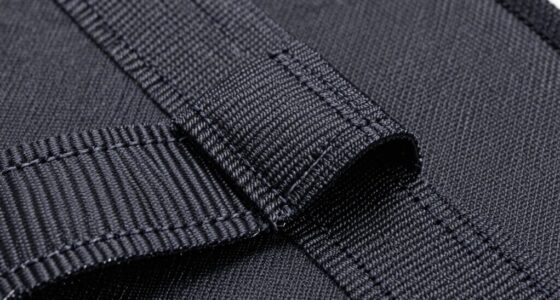
When working on handmade patchwork, pressing each piece correctly is essential to achieve a polished and professional finish. Your fabric selection plays a crucial role here, as choosing the right fabrics influences how well your pieces will press and sit flat. Opt for fabrics that are stable, with similar fiber content and weight, to ensure consistent results. Pre-wash your fabrics to prevent any shrinkage after sewing, which could distort your patchwork. Once you’ve selected your fabrics, you need to master the proper sewing techniques; these are the foundation of a smooth, flat finished quilt. Accurate seam allowances, precise stitching, and consistent seam presses are vital to prevent puckering or uneven surfaces.
Press each patch correctly with stable fabrics and proper sewing techniques for a professional, flat finish.
The pressing order begins with individual fabric pieces. As you cut your patches, press each piece before sewing them together. Use a hot, dry iron for crisp edges, and avoid stretching the fabric while pressing. This initial step helps set the shape and makes sewing easier. When sewing two patches together, press the seam allowances open or to one side, depending on your pattern. Pressing seams open helps reduce bulk, which is especially important in patchwork that needs to lie flat. With seams pressed correctly, your fabric pieces will fit together more accurately and lay smoother.
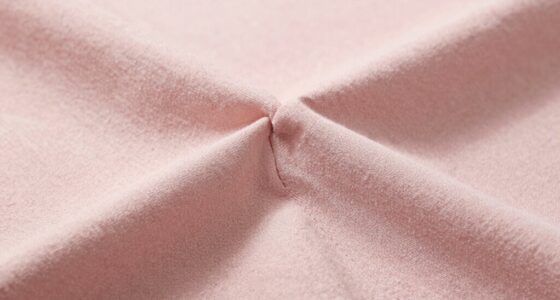
Next, press the sewn blocks before joining them into the final quilt top. Pressing each block well ensures that the seams lay flat and don’t create bumps or puckers. Use a pressing cloth if needed, to avoid damaging delicate fabrics or leaving shiny marks. When assembling your quilt top, press the seams in alternating directions; this nesting technique helps align seams perfectly and creates flat, crisp intersections. As you sew rows or sections together, press after each seam to maintain a flat surface. This incremental approach prevents any misalignment from compounding and helps your quilt top stay flat.
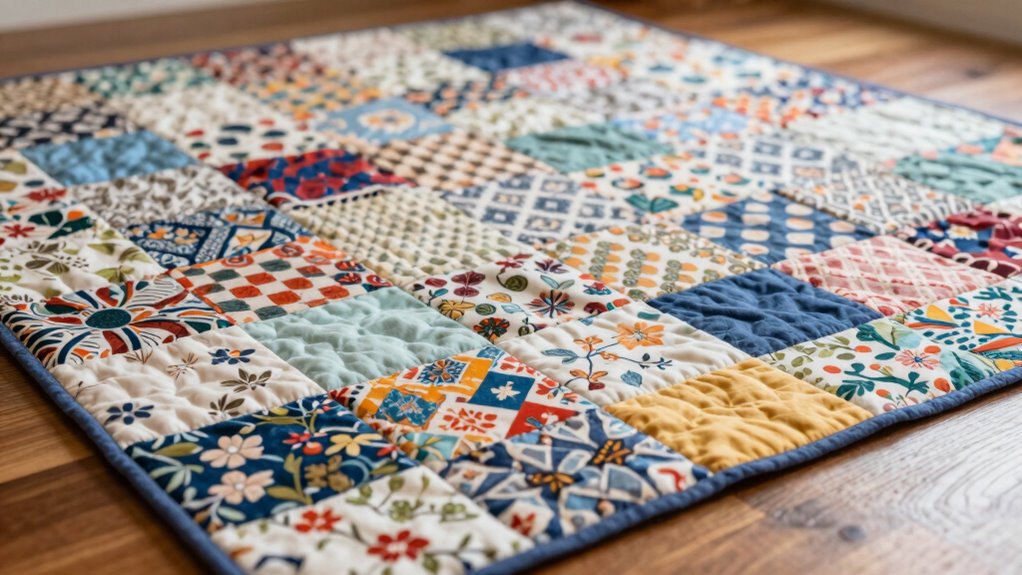
Finally, once your quilt top is assembled, give it a thorough pressing to set all the seams and smooth out any wrinkles. This final pressing ensures your quilt will be flat and ready for quilting. Remember, patience during pressing is key—rushing can lead to puckering or uneven surfaces. Incorporating proper ventilation considerations can help reduce moisture and heat buildup during pressing, which improves results. By carefully choosing your fabrics, employing proper sewing techniques, and following an intentional pressing order, you’ll considerably improve the quality of your patchwork. Your finished quilt will not only look professional but will also lie flat, making it more enjoyable to display or gift. Proper pressing isn’t just a step—it’s the secret to achieving a beautifully crafted, flat, and polished handmade patchwork.
Frequently Asked Questions
Can Pressing Affect the Durability of the Patchwork?
Yes, pressing can affect the durability of your patchwork. Proper pressing techniques help set the fabric texture and seams, preventing shifting or fraying over time. If you press too hard or use the wrong temperature, you risk damaging the fabric or creating weak spots. Carefully applying even pressure guarantees your patchwork stays flat, durable, and maintains its quality through use and washing.
Is There a Specific Temperature for Pressing?
Think of pressing as sculpting your quilt’s future—set your iron to the right temperature. For most fabrics, a medium heat with fabric steam works best, gently melting away wrinkles without scorching. Use pressing techniques like a steady, even press rather than sliding the iron around. This careful approach guarantees your patchwork stays flat and durable, transforming your handmade piece into a masterpiece that lies perfectly smooth.
How to Prevent Fabric From Stretching During Pressing?
To prevent fabric from stretching during pressing, you should use fabric stabilizers, which provide extra support and maintain shape. Employ gentle pressing techniques, avoiding excessive pressure or dragging the iron across the fabric. Always lift the iron instead of sliding it, and use a pressing cloth to protect delicate fibers. These methods help keep your patchwork flat and smooth, resulting in a professional-looking finished piece.
Can Pressing Cause Color Bleeding in Patchwork?
Like a modern-day alchemist, you must understand that pressing can cause fabric dye migration if you’re not careful. Improper pressing techniques, especially with high heat or moisture, can lead to color bleeding in patchwork. To avoid this, use a pressing cloth, set your iron to the right temperature, and press gently. This way, you protect your fabric’s colors and keep your patchwork looking vibrant and professional.
What Tools Are Best for Precise Pressing?
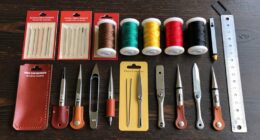
You should use a well-chosen iron with adjustable temperature settings for precise pressing. A steam iron with a smooth, flat soleplate provides even heat distribution, helping you control the iron temperature effectively. For accuracy, consider pressing tools like pressing mats, point turners, and small pressing sticks. These tools help you maintain sharp, flat seams, prevent puckering, and make sure your patchwork lies flat, giving you professional-looking results every time.
Conclusion
By following the right pressing order, you’re gently guiding your patchwork project to lie flat like a calm lake’s surface. Think of each press as a brushstroke in a masterpiece—patience and precision make all the difference. When you press in the right sequence, your quilt comes together smoothly, showcasing your craftsmanship. So take your time, enjoy the process, and watch your patchwork unfold into a beautiful, flat canvas ready to be cherished.