
Choosing the right needle size alone won’t fix your stitches, and bigger isn’t always better. Using the wrong needle can cause fabric damage or uneven stitches, no matter the size. Your sewing results depend more on proper tension, stitch length, and machine setup than just needle size. Focusing only on size overlooks these key factors. Keep an open mind—there’s more to achieving professional stitches than just selecting a larger or smaller needle.
Key Takeaways
- Larger needles do not necessarily reduce pain; comfort depends on proper technique and stitch settings.
- Needle size alone does not address issues like tension, stitch length, or fabric damage, which are crucial for quality stitches.
- Proper thread tension and stitch length have a more significant impact on stitch appearance and fabric handling than needle size.
- Choosing the right needle involves considering fabric type and thread, not just size, to prevent damage and improve stitch quality.
- Focusing on machine setup and technique yields better results than merely selecting a larger or smaller needle size.
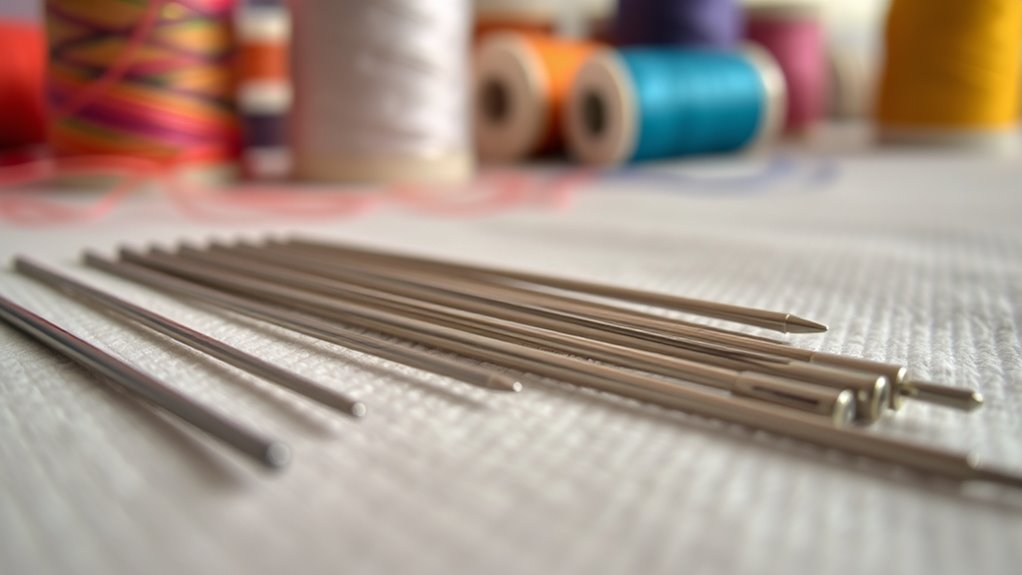
Many people believe that larger needles cause less pain, but this is a common myth. The truth is, needle size alone doesn’t determine how comfortable you’ll feel during sewing or quilting. While it’s tempting to think that bigger needles might glide through fabric more easily, they can actually cause more damage if not used correctly. Instead, factors like thread tension and stitch length play a more vital role in achieving smooth, even stitches and maintaining comfort. When you choose the right needle, paying attention to these details, you can improve your sewing experience dramatically. Proper needle selection also involves considering the type of fabric and thread, which can influence tension and stitch quality. Thread tension is essential because it affects how tight or loose your stitches are, which directly impacts the quality and comfort of your sewing. If the tension is too tight, the fabric can pucker, causing discomfort and uneven stitches. If it’s too loose, your stitches may look sloppy and can even cause frustration as you try to correct them. Proper tension ensures that each stitch is balanced, helping your stitches lay flat and look professional. This is especially true when you’re working with different fabrics or thread types—adjusting tension accordingly makes all the difference. Many sewists overlook this aspect, but it’s vital for achieving a smooth sewing experience, regardless of needle size. Stitch length is another key element that influences both the look of your stitches and your comfort during sewing. Longer stitches are generally easier to handle and can reduce strain on your hands and wrists, making sewing more comfortable. Shorter stitches, on the other hand, are often necessary for intricate work or reinforcing seams, but they can cause tension issues if not managed properly. If you’re struggling with puckering or uneven stitches, it’s worth experimenting with stitch length settings on your machine. Perfect stitch length helps distribute tension evenly across the fabric, preventing puckers and ensuring your stitches are consistent. Adjusting stitch length in combination with correct thread tension can greatly improve the final appearance and feel of your sewing project. Additionally, understanding the impact of needle size on fabric penetration can help prevent damage and improve stitch quality. In essence, focusing solely on needle size is a mistake. You should prioritize understanding how thread tension and stitch length work together to create balanced, comfortable stitches. When you select the right needle for your fabric but neglect tension and stitch length, your sewing can still turn out uneven or uncomfortable. Conversely, fine-tuning these settings can often resolve issues that seem related to needle size but are actually about how your machine is set up. Remember, sewing isn’t just about the tools; it’s about how you use them. Paying attention to thread tension and stitch length will help you sew more confidently, improve your results, and make the process more enjoyable.
Frequently Asked Questions
How Do I Choose the Right Needle Size for Delicate Fabrics?
To choose the right needle size for delicate fabrics, consider the fabric’s weight and stretch. Use a smaller, finer needle, like size 60/8 or 70/10, to prevent damage. Adjust your thread tension slightly lower to avoid puckering, and guarantee your needle glides smoothly through the fabric. Remember, a proper needle choice complements your thread tension and respects the fabric’s stretch, resulting in neat, durable stitches without harming delicate fibers.
Does Needle Material Affect Stitch Quality?
You might think needle material doesn’t matter, but it’s essential for stitch consistency. Sharp, high-quality needles glide smoothly, reducing skipped stitches and fabric damage, giving you a cleaner finish. Steel needles are durable, while titanium ones resist corrosion and heat. Choosing the right material ensures your stitches stay even and strong, avoiding frustration. So, don’t overlook needle material—your sewing project’s success depends on it.
Can Incorrect Needle Size Cause Fabric Damage?
Using an incorrect needle size can definitely cause fabric damage, like puckering or needle breakage. If the needle’s too small, it may struggle to pass through thicker fabrics, leading to puckering or skipped stitches. Conversely, a too-large needle risks damaging delicate fabrics or breaking, which can ruin your project. Always match your needle size to the fabric’s weight and type for smooth stitching and to prevent damage.
Are There Specific Needles for Different Sewing Techniques?
Did you know that using the right needle for each technique can boost sewing efficiency by up to 30%? Yes, there are specific needles for different techniques, like ballpoint for knits or sharp for woven fabrics. To guarantee perfect stitches, you need to match needle types with your fabric and keep your sewing machine well-maintained. Proper thread tension and regular maintenance prevent issues and improve your sewing results.
How Often Should I Replace My Sewing Needles?
You should replace your sewing needles after every 8-12 hours of sewing or when you notice skipped stitches, fabric damage, or increased noise. Regular needle maintenance keeps your machine running smoothly and guarantees compatibility with your fabric and stitches. Change needles frequently to prevent damage, maintain sewing quality, and avoid machine issues. Always select needles suited for your project and machine to optimize performance and longevity.
Conclusion
Remember, choosing the right needle size isn’t a magic fix. Think of it like trying to fix a torn fabric with the perfect needle alone—you might get close, but without proper technique and understanding of your material, the repair falls apart. It’s the combination of tools, skills, and patience that truly makes your stitches strong. So, don’t just rely on size—focus on the craft, and your work will hold together beautifully, no matter the needle.