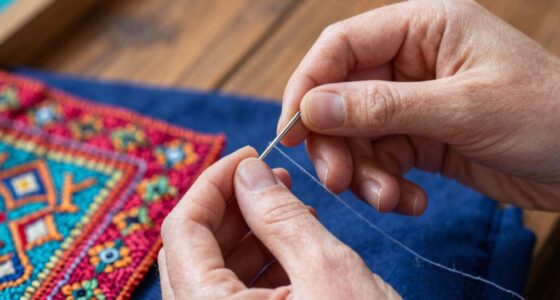

To guarantee your hand sewing knots don’t slip, start with a small, secure knot that’s snug yet smooth, and keep consistent tension on your thread as you sew. Finish with multiple tiny stitches, then pass your needle through the last loop to form a tight knot, often doubling it for extra security. Proper tension control and sturdy knots make your stitches more durable and professional-looking—keep going to discover more effective techniques.
Key Takeaways
- Use a secure, snug knot such as a double knot or surgeon’s knot to prevent slipping at the start and end.
- Pass the needle through the loop of the last stitch before tightening to lock the knot in place.
- Wrap the thread around the needle multiple times before pulling through to create a tight, slip-resistant knot.
- Tie a double knot or multiple overhand knots at the seam’s end for extra security.
- Trim excess thread close to the knot and consider applying a small amount of fabric glue or fray check for added hold.
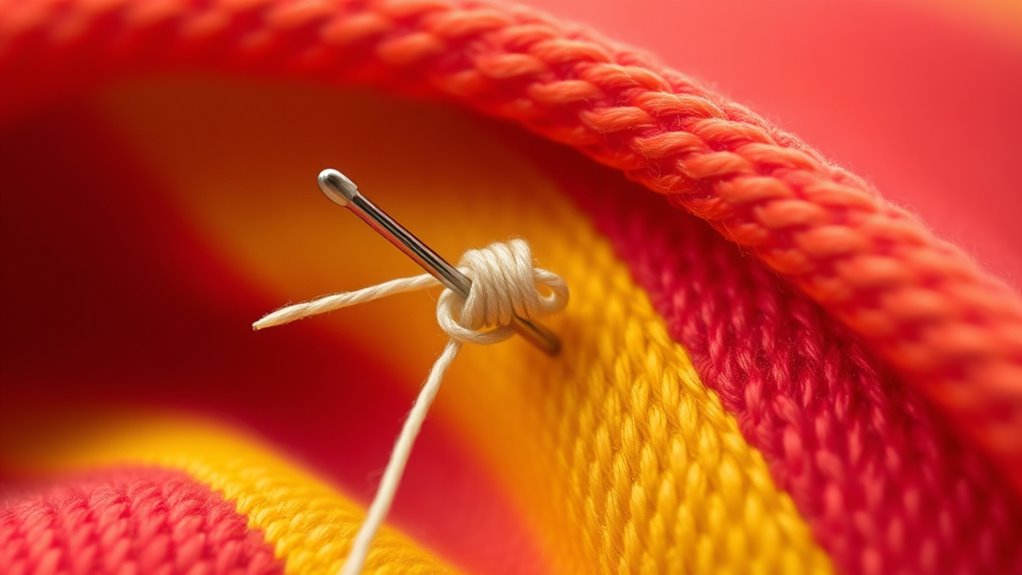
Have you ever wondered how to secure your stitches effectively? When you’re hand sewing, knot security is essential to keep your work intact, and tension control plays a big role in achieving that. If your stitches are too loose, your seams may come apart easily; if they’re too tight, you risk puckering the fabric or damaging the material. Mastering the balance between tension control and knot security ensures your sewing project stays neat and durable from start to finish.
To begin, focus on maintaining consistent tension as you sew. Not too tight, not too loose—just enough to hold the fabric together without distorting it. Controlled tension allows your stitches to sit smoothly and evenly, which makes knot formation more secure. When you start your sewing, make a small, sturdy knot at the end of your thread, but don’t tighten it excessively. This initial knot should be snug enough to hold, yet not so tight that it creates a bulky lump. As you sew, keep an even tension on your thread, gently pulling it through the fabric to avoid slack or overstretching. If your stitches are uneven, you might notice knots slipping or unraveling, so adjusting your tension as you go is key. Additionally, knot security can be improved by choosing the right type of knot for your project and thread material.
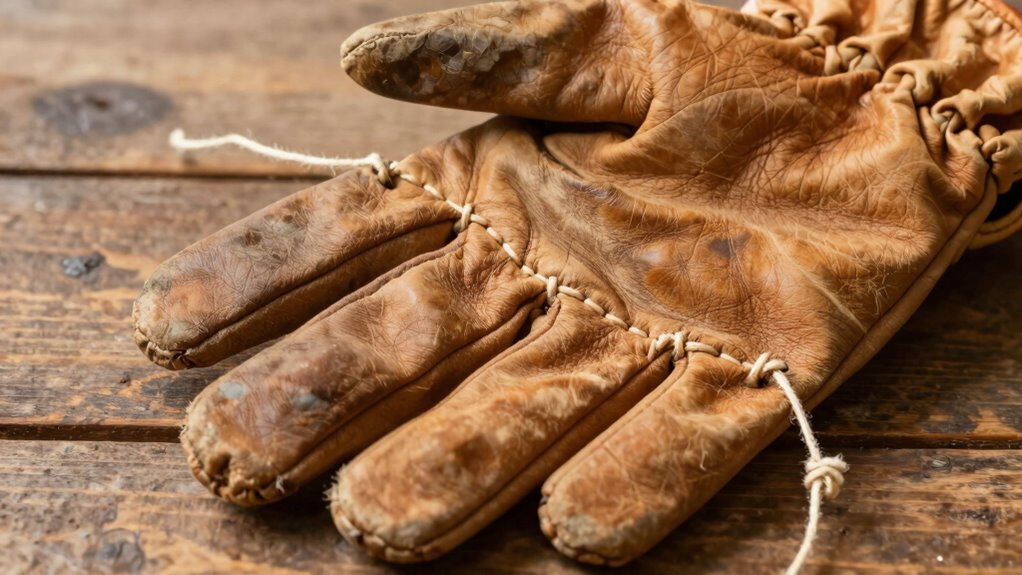
When ending your sewing, the goal is to create a knot that won’t slip or come undone. One effective method is to make several small stitches close together at the end of your seam, then pass your needle through the loop of your final stitch before pulling tight. This creates a secure knot that is less likely to slip because of the multiple wraps. Alternatively, you can tie a double knot by making two overhand knots with your thread, ensuring each knot is snug and firm. To lock the knot in place, you can apply a tiny amount of fabric glue or fray check, especially in delicate or high-stress areas. Always trim your thread close to the knot after finishing to prevent accidental snips that could loosen the knot over time.
Frequently Asked Questions
Can I Use Different Types of Knots for Heavy-Duty Sewing Projects?
Yes, you can use different types of knots for heavy-duty sewing projects. Knot versatility is key, so consider strong knots like a double knot or a figure-eight knot to guarantee thread strength. These knots hold securely under tension, preventing slipping or unraveling. By choosing the right knot, you enhance durability, especially for tough fabrics or thicker threads, making your sewing project more reliable and long-lasting.
How Do I Prevent Knots From Loosening Over Time?
To prevent knots from loosening over time, focus on tie strength and knot maintenance. Make sure your knots are tight and properly secured before starting your project. Periodically check and retighten them as needed, especially for heavy-duty or long-term projects. Using double or triple knots can also help, and avoid knots that slip easily. Proper knot tying techniques guarantee your stitches stay secure and your project remains intact.
Are There Specific Knots Better Suited for Delicate Fabrics?
If you’re sewing delicate fabrics, choose knots that are small and secure, like the double knot or a tiny surgeon’s knot. These knots minimize thread tension issues and prevent bulk. You might think larger knots are more secure, but they can damage fine fabrics. Stay precise, keep your knot size minimal, and guarantee your stitches are gentle yet firm. The right knot can make all the difference in preserving your delicate project.
What Tools Can Help Tie Secure Knots More Easily?
You can make knot tying easier with the right hand sewing tools and knot tying aids. A thimble helps push the needle and keeps your fingers secure, while a needle threader simplifies threading and reduces frustration. Using small pliers or knot tying clips can also help tighten knots firmly. These tools give you better control, ensuring your knots stay secure, especially on delicate fabrics, without slipping or coming undone.
How Do I Remove Knots Without Damaging the Fabric?
Think of removing knots like unraveling a tightly-guarded secret. Gently loosen the knot with a fine needle or tweezers, carefully working it free to prevent fabric fraying. Use knot hiding techniques beforehand, like pressing or trimming, to make removal easier. Patience is key—slowly loosen without tugging, and you’ll preserve your fabric’s integrity, keeping it smooth and intact while secretly undoing the stitches beneath the surface.
Conclusion
By mastering these knots, you hold the key to your sewing journey—your stitches become the steady heartbeat of your craft, unwavering and true. Think of each knot as a promise, a silent vow that your work will stand the test of time. With patience and practice, you’ll weave confidence into every seam, turning simple threads into a tapestry of your dedication. Now, go ahead—seal your creations with knots that won’t slip, and let your passion sew its story.