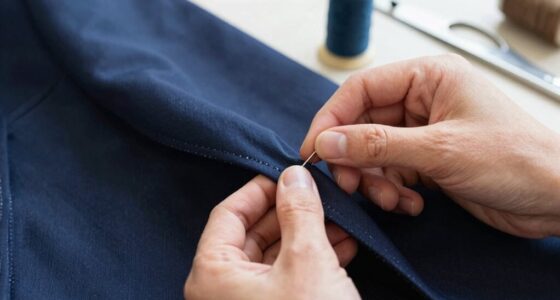
Seam allowance is the small distance between your fabric edges and the stitching line, typically 1/4 to 5/8 inches. It’s essential because it impacts how your garment fits, lasts, and looks professional. Too little allowance can cause seams to pop open, especially with stretchy fabrics, while too much can make your garment bulky. Getting this tiny measurement right helps your stitches hold and your project turn out polished—if you want to discover how, keep exploring further.

Get business pricing on tools and workshop supplies
- Business-only prices and quantity discounts
- Tax-exempt purchasing
- Multiple users, one account, clear invoices
Key Takeaways
- Seam allowance is the fabric margin added beyond the pattern’s cut line to secure seams and prevent fraying.
- Small differences in seam allowance (e.g., 1/4″ vs. 5/8″) can alter a garment’s fit and appearance significantly.
- Using inadequate seam allowance on stretchy fabrics causes seams to break or pop open with movement.
- Proper seam allowance ensures durability, facilitates finishing, and maintains the intended fit over time.
- Adjusting seam allowance based on fabric type and garment purpose is key to achieving a professional, comfortable fit.

Understanding seam allowance is vital for sewing projects because it influences the fit, durability, and finish of your garments. When you’re working with different fabrics, especially those prone to stretching, knowing how much seam allowance to use can make or break your project. Fabrics like knits and jerseys tend to stretch, so you need to account for that by adjusting your seam allowances accordingly. For stable woven fabrics, standard allowances of about 1/4 to 5/8 inches usually work well, but stretchy fabrics might require a slightly larger allowance to prevent the seams from popping open after stretching or washing.
Adjust seam allowances based on fabric stretch to ensure durability and a perfect fit.
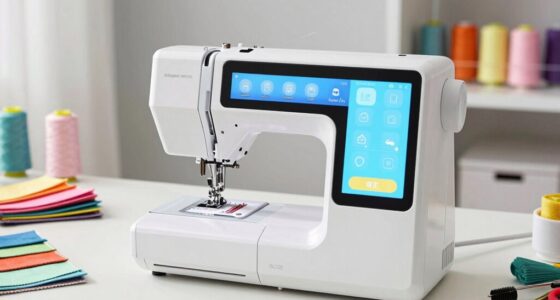
One key tip is to choose the right sewing machine settings to handle different fabric types effectively. For fabrics prone to stretching, use a stretch stitch or a zigzag stitch instead of a straight stitch to give your seams more flexibility. When sewing with stretchy materials, it’s also essential to reduce the tension on your machine and use a ballpoint needle, which helps prevent snags and runs. These sewing machine tips ensure your seams stay intact, especially when the fabric stretches or moves during wear. Additionally, pin or clip your fabric carefully before sewing to prevent shifting, which could distort your seam allowances and affect the fit of your finished piece.
Understanding how fabric stretching impacts seam allowances helps you plan better. For instance, if you’re sewing a fitted t-shirt from a stretchy knit fabric, you might want to add extra seam allowance or use a stretch stitch to accommodate the fabric’s elasticity. This way, when the fabric stretches during wear, your seams won’t pull apart or become uncomfortable. Conversely, for woven fabrics that don’t stretch much, sticking to standard seam allowances maintains a clean finish and ensures your garment retains its shape and structure over time. Also, considering the fabric’s elasticity during pattern drafting can help you make precise adjustments for a better fit.
It’s also worth noting that seam allowances influence how you finish raw edges. A wider allowance gives you more room to sew a clean, durable finish, whether you’re using a serger or a zigzag stitch. If your fabric stretches or shifts while sewing, having a generous seam allowance can help you correct mistakes without compromising the overall fit. Plus, adjusting your seam allowance in pattern drafting can help fine-tune the fit, especially around areas that experience a lot of movement or stretching.
As an affiliate, we earn on qualifying purchases.
Frequently Asked Questions
How Do Seam Allowances Differ Across Fabric Types?
You’ll notice seam allowances vary across fabric types because of fabric stretch and finish options. Stretch fabrics often need larger allowances to accommodate movement without stress, while delicate fabrics like silk require narrower allowances to prevent fraying. Seam finish options also influence allowances; for example, serging reduces the need for extra seam allowance, whereas zigzag stitching or binding might need slightly more. Adjust your allowances based on fabric stretch and chosen seam finish to guarantee a perfect fit.
Can Seam Allowance Affect Garment Durability?
Seam allowance variations can considerably impact your garment’s durability. If you skimp on seam allowance, stitches may slip or fray, fostering fabric failure. Conversely, ample seam allowances strengthen seams and support long-lasting wear. The seam allowance significance lies in its role as a buffer, preventing tears and unraveling. So, pay close attention to seam allowances, ensuring they’re appropriate for your fabric type and construction to keep your clothing strong and stylish.
What Tools Are Best for Measuring Seam Allowances Accurately?
You should use a seam gauge or a clear ruler to measure seam allowances accurately. Seam gauges are designed specifically for sewing, with measurements marked for precision. A clear, flexible ruler helps you double-check your seam widths visually. When measuring, keep the fabric flat and aligned properly, ensuring your tools are straight against the fabric. This way, you’ll get consistent, precise seam allowances for a better-fitting, professional-looking garment.
How Do Seam Allowances Impact Pattern Adjustments?
Seam allowances directly influence how well your pattern fits, with variations ranging from 1/4 inch to 1 inch. These differences impact pattern adjustment techniques, making it easier to modify or resize your garment. For example, increasing seam allowances can help you fine-tune fit, while decreasing them offers a more tailored look. Understanding these variations lets you adjust patterns confidently, ensuring your finished piece fits perfectly.
Are Seam Allowances Standard Across All Sewing Patterns?
Seam allowance variations exist across sewing patterns, so they aren’t always standard. Some patterns have wider allowances for easier fitting adjustments, while others stick to minimal margins for precise seam finishing. When pattern drafting techniques are used, seam allowances may differ based on fabric type or project needs. Always check your pattern’s seam allowance details before cutting, and modify if necessary to guarantee your garment fits perfectly.
As an affiliate, we earn on qualifying purchases.
Conclusion
So, next time you’re sewing, remember that seam allowance is more than just a tiny measurement—it’s what transforms fabric into a perfect fit. Sometimes, it feels like a small detail, but it’s the unexpected twist that can make or break your project. Just like life’s little surprises, paying attention to these subtle details can lead to something beautifully tailored. Embrace the imperfections, and you might just find your perfect fit hiding in the smallest seam.
As an affiliate, we earn on qualifying purchases.
As an affiliate, we earn on qualifying purchases.
Fall Picks
fall essentials
As an affiliate, we earn on qualifying purchases.