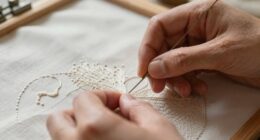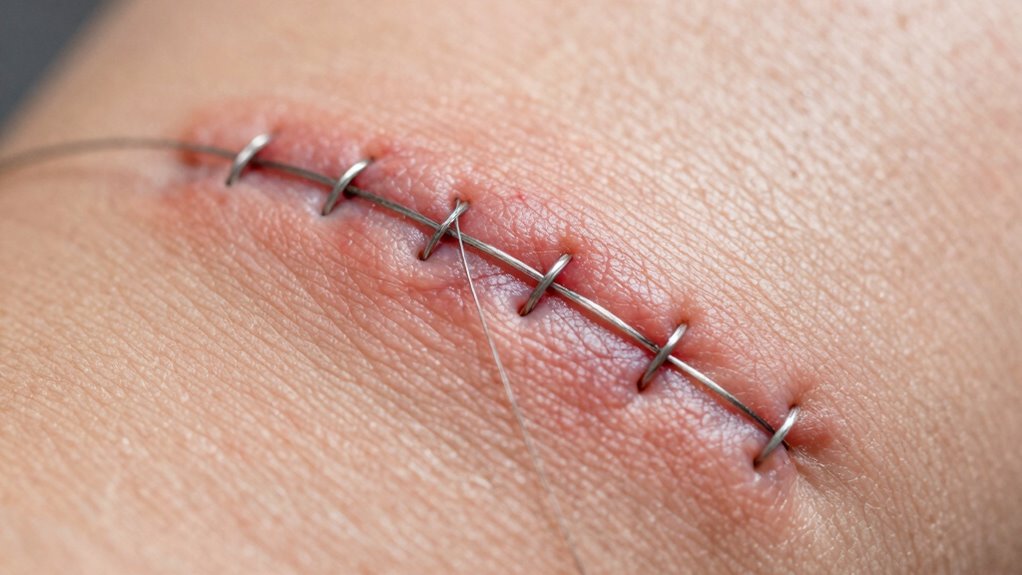

Even with perfect thread, your stitches can appear uneven if tension issues, fabric handling, or technique flaws are present. Inconsistent tension can cause stitches to vary in size and shape, while fabric that’s too loose or too tight leads to puckering or pulling. Poor fabric control, rushing, or incorrect needle and thread choices can also impact stitch evenness. Paying attention to these factors helps improve your results—keep going to discover how to fix these common sewing challenges.
Key Takeaways
- Inconsistent tension adjustments on your sewing machine can cause uneven stitches despite good thread quality.
- Fabric shifting or puckering during sewing leads to irregular stitch appearance, even with perfect thread.
- Using the wrong needle or thread type for your fabric can result in uneven stitches regardless of tension.
- Variations in sewing speed or hand pressure can create inconsistent stitch length and shape.
- Improper fabric handling, such as overstretching or not stabilizing, causes puckering and uneven stitches.

If your stitches look uneven, it’s understandable to feel concerned, but many factors can contribute to this appearance. One common culprit is tension issues, which can affect how your stitches form and look. Even if your thread is perfect, inconsistent tension in your sewing machine or hand sewing can cause stitches to vary in size and shape. You might notice that some stitches are tight and others loose, or that the stitches pull the fabric unevenly. To address this, start by checking your machine’s tension settings. Many machines have a tension dial or slider; ensuring it’s set correctly for your fabric and thread type is vital. For hand sewing, maintaining steady tension on the thread as you sew can help create more uniform stitches.
Another key factor is fabric tension. The way your fabric interacts with your stitches can markedly influence their appearance. If the fabric is loose or puckering, your stitches may appear uneven because the fabric isn’t stable enough to guide the stitches evenly. Conversely, if the fabric is too tight or stretched, it can cause stitches to pull or bunch up, making them look irregular. To prevent this, pin or baste your fabric before stitching to keep it taut but not stretched excessively. Always handle your fabric gently, avoiding pulling or tugging as you sew. This helps maintain consistent fabric tension across your project, resulting in cleaner, more even stitches.
Additionally, the type of fabric you’re working with can impact stitch uniformity. Thin or stretchy fabrics tend to shift more easily, so you might need to adjust your sewing technique or use stabilizers. Using the right needle and thread for your fabric also matters; incompatible choices can lead to uneven stitching even if tension is correct. For example, a fine needle on heavy denim can cause skipped stitches or uneven tension, and the same applies to mismatched thread weight and fabric thickness. Proper tension control is essential in achieving consistent stitches, especially with challenging fabrics.
Finally, your sewing technique plays a role in stitch consistency. Keep a steady pace and maintain consistent hand pressure if sewing by hand. If using a machine, ensure your stitching speed is even and that you’re guiding the fabric smoothly without forcing or rushing. Over time, practicing these adjustments will help you achieve stitches that look even and professional. Remember, small changes in tension, fabric handling, and technique can make a big difference in the appearance of your stitches, even when your thread is perfect.
sewing machine tension dial
As an affiliate, we earn on qualifying purchases.
As an affiliate, we earn on qualifying purchases.
Frequently Asked Questions
Can Uneven Stitches Affect Wound Healing?
Uneven stitches can affect wound healing because inconsistent stitch tension may lead to gaps or tight spots, which can delay healing or cause scarring. When stitches aren’t evenly tensioned, the wound might not close properly, increasing the risk of infection or reopening. Ensuring proper stitch tension promotes better wound healing by keeping the edges aligned and secure, allowing the tissue to heal efficiently and with minimal complications.
Do Different Fabric Types Influence Stitch Appearance?
Different fabric types definitely influence your stitch appearance. Fabrics with more stretch can cause stitches to look uneven because the fabric moves during sewing, straining the thread. Low-quality thread may also break or tangle, making stitches appear inconsistent. To achieve even stitches, choose fabric with minimal stretch and use high-quality thread. Adjust your tension settings accordingly, and test on scraps to see how the fabric and thread work together.
How Does Tension Impact Stitch Uniformity?
Tension plays a vital role in stitch uniformity by affecting thread tension and stitch regulation. When your tension is too tight or too loose, stitches can become uneven, puckering, or loose. Adjust your thread tension settings until they are balanced, ensuring consistent stitch length and tightness. Proper stitch regulation helps maintain even stitches, preventing variation caused by tension issues. Always test tension on scrap fabric before sewing your main project.
Is Uneven Stitching a Sign of Machine Malfunction?
Uneven stitching isn’t necessarily a sign of machine malfunction. It often results from poor machine calibration or inconsistent thread quality. If your stitches look uneven, check that your machine is properly calibrated and that you’re using high-quality thread. Regular maintenance and using good thread can help produce even stitches. So, don’t automatically assume there’s a malfunction—your machine might just need a quick tune-up or better materials.
Can Hand Sewing Techniques Improve Stitch Consistency?
Imagine your thread as a gentle river flowing smoothly. Hand sewing techniques can definitely improve stitch consistency by allowing you to control thread tension and hand tension more precisely. As you work, you develop a feel for even stitches, much like guiding a stream. With patience and practice, you’ll notice your stitches become more uniform, creating a polished look. This personal touch elevates your sewing, making each stitch a confident step forward.
fabric stabilizer for sewing
As an affiliate, we earn on qualifying purchases.
As an affiliate, we earn on qualifying purchases.
Conclusion
So, next time your stitches seem off, remember it’s like a gentle breeze tugging at a delicate thread. Sometimes, even with perfect thread, tiny shifts in tension or stitch placement can create that uneven look. With patience and a steady hand, you’ll craft a smooth, flowing line like a calm river carving through the landscape. Trust your eye and touch—soon, your stitches will glide seamlessly, blending into your project like a whisper of fabric’s own heartbeat.
hand sewing tension guide
As an affiliate, we earn on qualifying purchases.
As an affiliate, we earn on qualifying purchases.
best needle for stretchy fabric
As an affiliate, we earn on qualifying purchases.
As an affiliate, we earn on qualifying purchases.