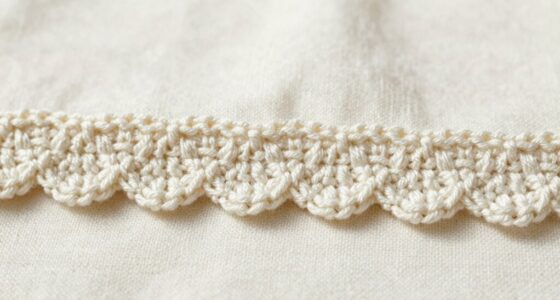
When choosing a seam finish, consider your fabric type, garment use, and how much stress it will endure. Light fabrics like silk need delicate finishes like French seams, while heavy materials like denim suit overlocked or flat-felled seams for durability. For stretch fabrics, bias binding works well. Think about the garment’s lifespan and washing needs to pick a finish that won’t fray or weaken over time. If you keep exploring, you’ll discover how to make the best choice for every project.

Get business pricing on tools and workshop supplies
- Business-only prices and quantity discounts
- Tax-exempt purchasing
- Multiple users, one account, clear invoices
Key Takeaways
- Match the seam finish to the fabric’s weight, texture, and stretch properties for optimal durability and appearance.
- Consider the garment’s intended use and stress points to select a suitable, long-lasting seam finish.
- Use delicate finishes like French seams for lightweight or fragile fabrics to prevent bulk and maintain softness.
- Opt for robust finishes such as flat-felled seams or overlocking on heavy or high-wear garments for added strength.
- Evaluate washing and wear patterns to choose seam finishes that withstand laundering and daily use.

Ever wondered how to give your garments a professional touch? Choosing the right seam finish is essential in achieving a polished look and ensuring your clothing holds up over time. The key factors to weigh are seam finish durability and fabric compatibility considerations. These elements influence how well your seams will endure regular wear and washing, and whether the finish will work seamlessly with the fabric you’re working with.
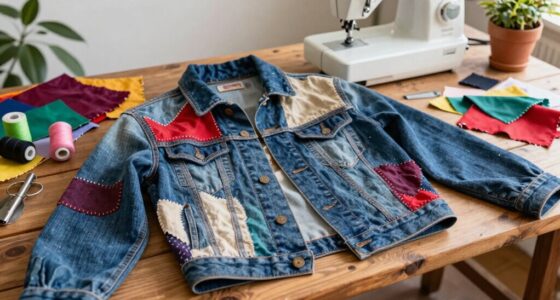
First, think about the seam finish durability. If you’re making a garment that will see frequent use, like activewear or everyday clothing, you want a finish that withstands washing, stretching, and handling without fraying or coming apart. Overlocked seams, also known as serged edges, offer excellent durability because they secure the raw edges tightly, preventing unraveling. Flat-felled seams, often used in jeans, provide an ultra-strong finish that’s both durable and attractive. In contrast, simple pinking shears or zigzag stitches can be quick solutions but may not offer the longevity needed for high-wear items. Your choice should match the garment’s expected lifespan and the stress it will endure. To enhance seam strength, consider seam reinforcement techniques, especially for heavy-duty garments.
Choose durable seam finishes like overlocked or flat-felled for high-wear garments to ensure longevity and resilience.
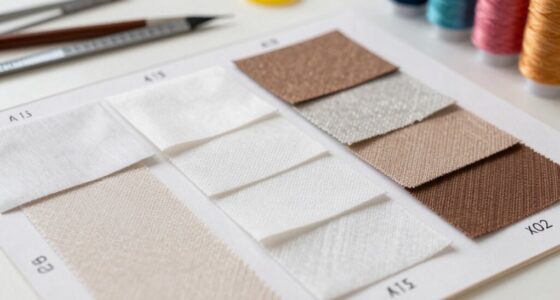
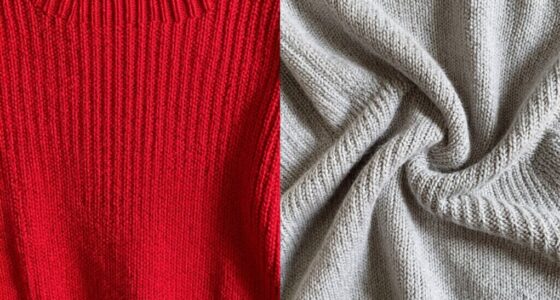
Next, consider fabric compatibility considerations. Different fabrics behave differently, and some finishes work better with certain materials. For lightweight fabrics like silk or chiffon, a delicate finish such as a rolled hem or French seam works well, as it preserves the fabric’s softness and prevents bulk. Heavier fabrics like denim or canvas are better suited to more robust finishes like overlocking or flat-felled seams, which can handle the extra strain without fraying. Additionally, some fabrics may shrink or distort after washing, so selecting a seam finish that accommodates these changes is crucial. For example, a bias-bound seam can be a good choice for stretch fabrics, as it allows for flexibility without compromising the seam’s integrity. Incorporating seam finish techniques that are compatible with your fabric can help ensure a clean, professional result. It’s also helpful to understand fabric behavior and how different finishes interact with it to achieve the best results.
Ultimately, your choice of seam finish should balance durability with fabric compatibility. Consider how the garment will be used, how often it will be washed, and the type of fabric involved. Take the time to evaluate these factors, and you’ll end up with a professional-looking garment that not only looks great but also lasts. Remember, the right seam finish isn’t just about appearance; it’s about creating a structure that supports the garment’s function and longevity.
As an affiliate, we earn on qualifying purchases.
Frequently Asked Questions
Can I Combine Different Seam Finishes on One Garment?
Yes, you can combine different seam finishes on one garment. Doing so allows you to optimize seam finish durability in high-stress areas while enhancing seam finish aesthetics in visible sections. For example, use a serged finish where durability matters, and a clean finish for decorative parts. Mixing finishes gives your garment a professional look and long-lasting quality, ensuring each seam performs well and looks great.
How Do Seam Finishes Affect Garment Stretchability?
Ever wondered how seam finishes impact your garment’s stretchability? They play a key role in maintaining seam durability and preserving fabric texture. Some finishes, like zigzag or serging, allow more stretch, making garments more flexible. Others, like French seams, are less stretchy but add durability and a smooth finish. Your choice affects how comfortable and resilient your clothing feels, so pick accordingly based on fabric type and stretch needs.
Are Seam Finishes Necessary for All Fabric Types?
Seam finishes aren’t necessary for all fabric types, but they considerably enhance seam durability and prevent fabric fraying, especially with delicate or loosely woven materials. You’ll want seam finishes on fabrics prone to fraying or those subjected to frequent washing and wear. For sturdier fabrics like denim or canvas, raw edges might suffice. Choosing the right seam finish depends on the fabric’s durability needs and how much wear and tear the garment will endure.
How Do I Properly Press Seam Finishes?
To properly press seam finishes, start by pressing the seam allowances open or to one side, depending on your seam finish technique. Use a hot iron with steam, ensuring the fabric’s heat setting matches its type. Apply pressing methods like pressing cloths to prevent shine or damage. Always press gently, avoiding stretching the fabric, and hold the iron in place for a few seconds to set the seam finish neatly.
What Tools Are Best for Applying Seam Finishes?
Think of your tools as craftsmen’s brushes, shaping seam finish durability and aesthetics. For best results, use sharp scissors or rotary cutters for clean edges, pinking shears for zigzag finishes, and sergers or overlock machines for strong, neat seams. Seam rollers and pressing tools help set the finish smoothly. These tools guarantee your seam finishes are both durable and visually appealing, elevating your sewing project with precision and care.
As an affiliate, we earn on qualifying purchases.
Conclusion
Choosing the right seam finish guarantees your garments stay durable and professional-looking. Remember, about 80% of garments fail prematurely due to poor finishing techniques. By understanding your fabric and project needs, you can select the perfect seam finish that prolongs your piece’s life and enhances its appearance. So, next time you sew, make certain to choose wisely—your creations will thank you with lasting beauty and strength. Happy sewing!
As an affiliate, we earn on qualifying purchases.
bias binding tape for stretch fabrics
As an affiliate, we earn on qualifying purchases.
As an affiliate, we earn on qualifying purchases.
Halloween Picks
halloween
As an affiliate, we earn on qualifying purchases.