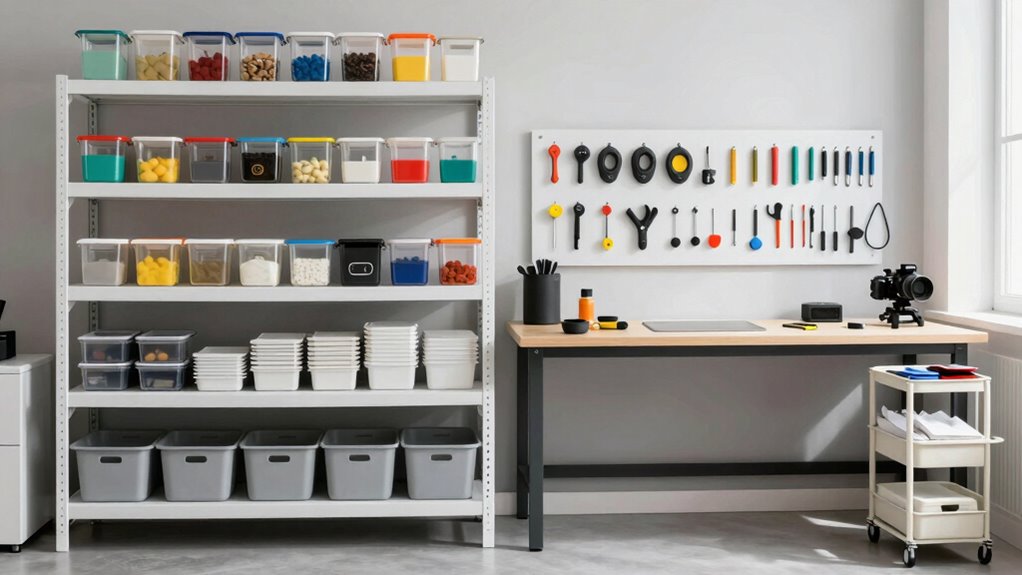

Storage for supplies focuses on keeping items organized, labeled, and easy to access for inventory management, ensuring everything is in its right place. In contrast, storage for workflow aims to support your work process by placing tools and materials where they’re most needed, reducing movement and increasing efficiency. Both approaches work together to create a balanced workspace. Keep exploring to discover how you can optimize your storage for both organization and productivity.

Get business pricing on tools and workshop supplies
- Business-only prices and quantity discounts
- Tax-exempt purchasing
- Multiple users, one account, clear invoices
Key Takeaways
- Storage for supplies prioritizes orderliness, easy access, and clear labeling for inventory management.
- Storage for workflow emphasizes arranging items to support efficient work processes and reduce movement.
- Inventory-focused storage aims to maintain a well-organized stock, while workflow-focused storage enhances productivity.
- Proper storage for supplies simplifies tracking and restocking; storage for workflow improves task flow and speed.
- Combining both approaches creates a balanced workspace that is organized and supports efficient work operations.
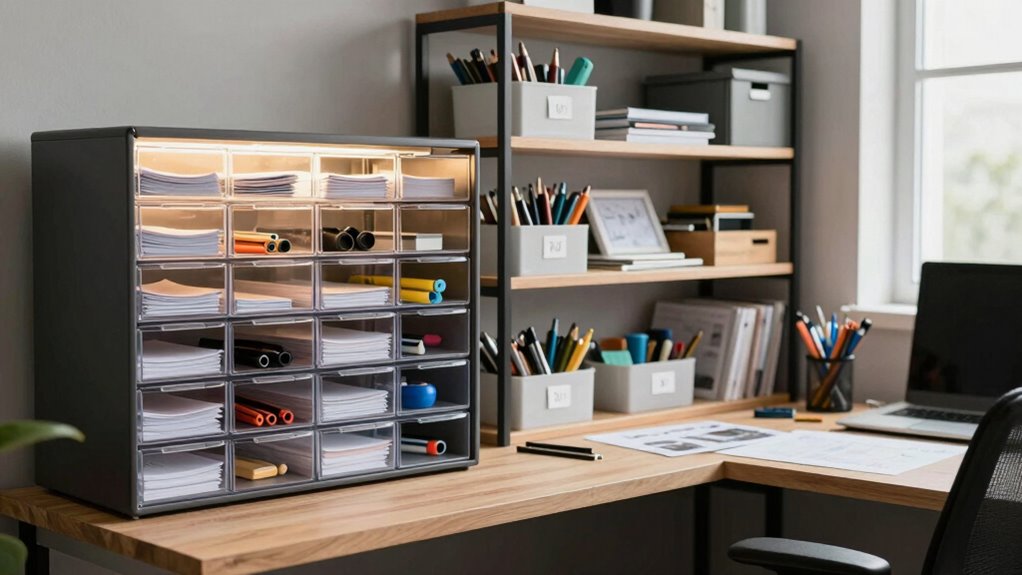
Have you ever wondered how proper storage can streamline your workflow and keep supplies organized? The key lies in understanding the difference between storage designed for supplies and storage meant for workflow. When you focus on inventory organization, you’re aiming to keep everything in its place, easily accessible, and clearly labeled. This approach guarantees that your supplies are organized by type, size, or usage frequency, reducing the time you spend searching for what you need. Space optimization is essential here—you want your storage solutions to maximize every inch of available space without creating clutter. Using shelving units, bins, and labels allows you to maintain a tidy, efficient inventory, preventing overstocking or shortages, and making sure your supplies are always ready when you need them. Incorporating space optimization strategies can further enhance your storage efficiency, ensuring your workspace remains both functional and environmentally conscious. Additionally, understanding storage layout principles can help you design a system that adapts to changing needs over time.
On the other hand, storage for workflow emphasizes how work moves through your space. It’s about arranging your supplies and tools in a way that supports your process, rather than just storing everything neatly. This type of storage encourages a logical flow—placing frequently used items within arm’s reach or in the order you use them. When you design for workflow, you’re not only considering inventory organization but also how to reduce unnecessary movement and interruptions. For example, placing essential tools near your workstation minimizes trips across the room, saving you time and energy. It’s about space optimization with a focus on efficiency—ensuring that your workspace promotes seamless task execution. Recognizing workflow patterns can help you design your storage layout more effectively and intuitively.
The real difference between the two lies in their purpose: inventory organization aims for orderliness, while storage for workflow prioritizes efficiency. Proper storage for supplies makes it easier to keep track of inventory levels, prevent waste, and streamline restocking processes. Storage for workflow, however, directly impacts your productivity by reducing delays and making your work environment intuitive. To achieve a balanced setup, you need to combine the principles of both: organize your supplies so they’re easy to find, but also arrange them in a way that supports your natural work rhythm. Space optimization becomes a critical strategy in this process, helping you create a workspace that’s not only neat but also highly functional.
In the end, understanding the distinction allows you to tailor your storage solutions to your specific needs. Whether you’re managing a large inventory or simply trying to improve your daily workflow, knowing when to focus on organization versus flow can make all the difference. It’s about creating a space where everything has a purpose, and your work moves smoothly from start to finish.
Popular right now

De'Longhi Linea Classic Espresso Machine with Adjustable Milk Frother

Vitamix Propel Series 750 Professional-Grade Blender, 4 Programs, Black

Dyson Ball Animal 3 Extra Upright Vacuum
As an affiliate, we earn on qualifying purchases.
Frequently Asked Questions
How Do I Determine the Optimal Storage Size for My Needs?
To determine the ideal storage size, start by evaluating your inventory needs and analyzing your current usage. Focus on inventory organization to identify what items you need to store and how often. For space efficiency, measure your available area and plan storage solutions that maximize effectiveness without overcrowding. Regularly review and adjust your storage size based on changing demand, ensuring you have enough room while avoiding wasted space.
What Security Measures Are Recommended for Sensitive Supplies?
To safeguard sensitive supplies, you should implement access control systems, limiting entry to authorized personnel only. Combine this with surveillance systems like cameras to monitor activity and deter theft or tampering. Regularly review access logs and update permissions as needed. Using secure locks and alarm systems further strengthens security. These measures help protect your supplies from unauthorized access and guarantee accountability, giving you peace of mind.
How Often Should Storage Areas Be Reorganized or Updated?
You should reorganize and update your storage areas at least every three to six months to maintain ideal space utilization. Regularly reviewing your storage organization helps identify clutter, outdated supplies, and inefficient layouts. This process guarantees space optimization, keeps your workflow smooth, and prevents unnecessary delays. By staying proactive, you guarantee your storage remains functional, accessible, and aligned with your current needs, ultimately boosting productivity and safety.
What Are Cost-Effective Storage Solutions for Small Businesses?
To save costs, you should focus on simple, versatile storage options like stackable bins and shelving units, which enhance inventory management and space optimization. Reuse existing furniture or invest in modular solutions that can grow with your business. Prioritize organization to reduce wasted space and improve workflow. Regularly reassess your storage setup to guarantee it remains efficient without overspending, helping you keep costs manageable while maintaining effective storage.
How Can Storage Design Improve Overall Workflow Efficiency?
Imagine transforming your workspace into a lightning-fast, efficiency powerhouse. Proper storage design supercharges your workflow by streamlining inventory management and maximizing space optimization, so you can find what you need in seconds. Well-planned storage solutions eliminate chaos, reduce clutter, and boost productivity, making your operations run smoother than ever. With intentional design, you’ll experience a workflow so seamless, it feels like your workspace has been magically upgraded overnight.
Conclusion
Understanding the difference between storage for supplies and workflow is like knowing when to pack a picnic basket versus setting up a kitchen—each has its purpose. By organizing supplies where they’re needed and workflow where tasks unfold, you create a smooth, efficient space. Think of it as tuning a fine instrument; when each part harmonizes, your workspace sings with productivity and ease. Master these distinctions, and you’ll turn chaos into a well-orchestrated symphony of success.