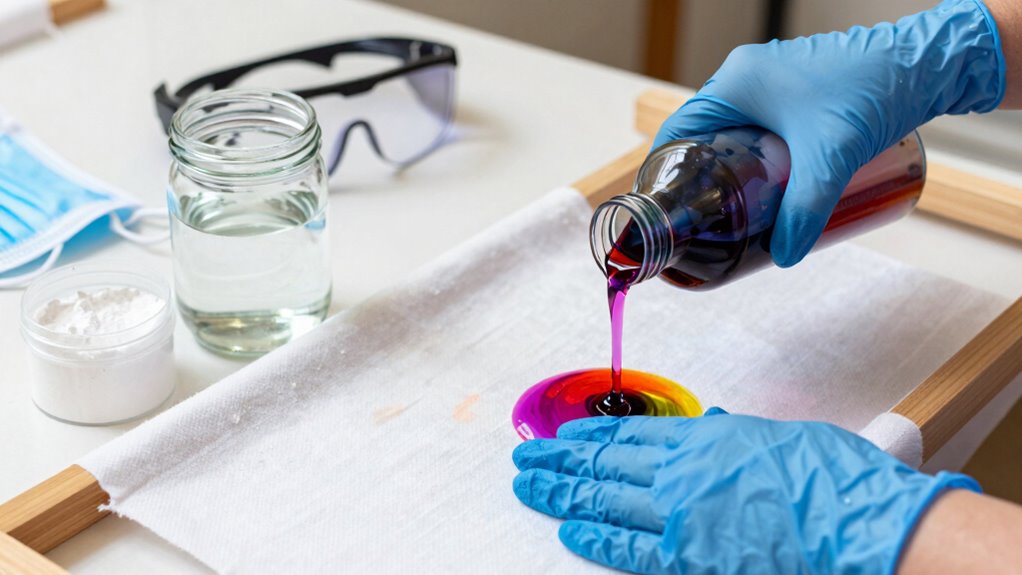

To stay safe when hand-dyeing, always wear gloves, goggles, and a mask to prevent stains, fumes, and unexpected reactions. Handle dyes carefully in a well-ventilated area, following manufacturer instructions to avoid messy spills and hazardous chemical interactions. Keep your workspace organized and clean, quickly cleaning any spills. If you want to learn how to protect your skin, avoid fumes, and prevent surprises, keep exploring these helpful safety tips.
Key Takeaways
- Always wear gloves, goggles, and masks to protect skin, eyes, and respiratory system during dye handling.
- Work in a well-ventilated area and open windows or use fans to minimize fume inhalation.
- Follow manufacturer instructions carefully to avoid incompatible dye mixtures and unexpected chemical reactions.
- Clean spills immediately with appropriate materials and dispose of contaminated items safely.
- Wash hands thoroughly after dyeing and avoid touching face or eyes to prevent stains and irritation.
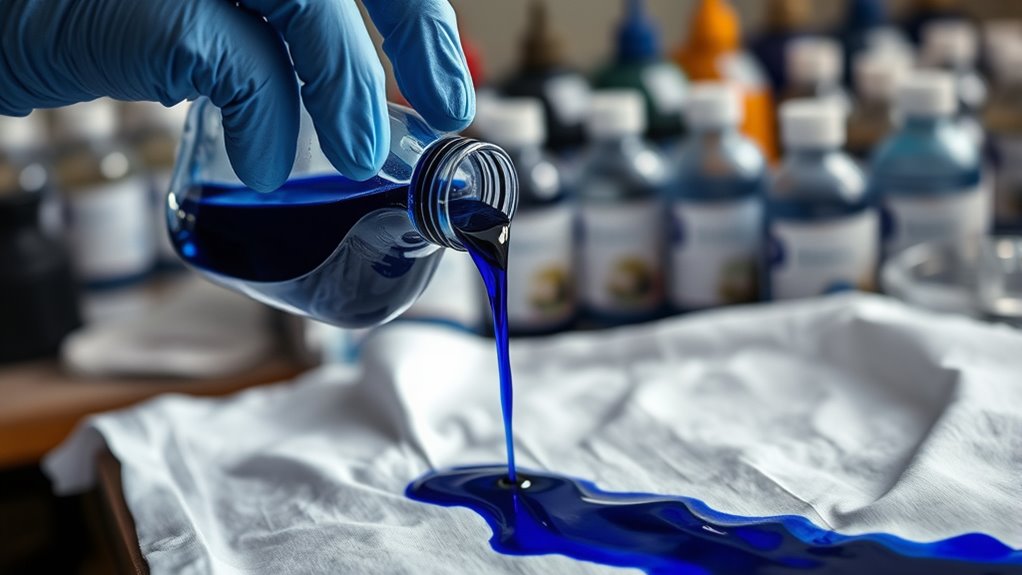
Hand-dyeing can be a fun and creative way to customize fabrics, but it’s important to prioritize safety throughout the process. When working with dyes, you’re exposed to chemical hazards that can pose health risks if not handled properly. These chemicals can cause skin irritation, respiratory issues, or more serious health problems if inhaled or ingested. That’s why wearing protective gear is essential. Before you start, gather gloves, goggles, and a mask to shield your skin, eyes, and lungs from potential splashes, fumes, and airborne particles. Gloves, especially nitrile or rubber ones, create a barrier against harsh chemicals, preventing contact with your skin. Goggles protect your eyes from splashes that could cause irritation or injury, while a mask helps you avoid inhaling fumes or dust that can irritate your respiratory system.
Always read the safety instructions on your dye products before starting. Many dyes contain chemicals that can become airborne or splash during mixing and application. Using protective gear isn’t just a good idea—it’s a must. When mixing dyes, do so in a well-ventilated area to minimize inhalation of fumes. If you’re working indoors, open windows or use a fan to improve airflow. Keep your workspace clean and organized to prevent accidental spills and contact with chemicals. If a spill occurs, clean it up immediately with appropriate materials, and dispose of contaminated items safely.
Handling dyes with care helps you avoid mystery reactions that can happen if chemicals interact unexpectedly. For example, mixing incompatible dyes or chemicals can produce strange colors, fumes, or even hazardous reactions. Always follow the manufacturer’s instructions about which products can be combined safely. Never reuse or mix leftover dyes without understanding their chemical compatibility. Protecting your skin is equally important. Avoid direct contact with dyes by always wearing gloves, and wash your hands thoroughly after working, even if you wore gloves. If dye gets on your skin, wash it immediately with soap and water to prevent staining and irritation.
Frequently Asked Questions
Can Hand-Dyeing Damage My Skin Permanently?
No, hand-dyeing usually won’t cause permanent skin damage if you take proper precautions. Your skin sensitivity varies, so wearing gloves can prevent unwanted dye absorption that might lead to irritation. If you do get dye on your skin, wash it off promptly to avoid any lasting stains or reactions. With careful handling, you can enjoy dyeing without worrying about long-term harm to your skin.
What Are the Long-Term Health Risks of Dye Fumes?
Imagine inhaling a faint, persistent fog that slowly seeps into your lungs and mind. Long-term dye fumes can pose serious health risks, like chronic respiratory issues and neurological effects. Over time, these fumes may cause breathing difficulties or impact your nervous system. To protect yourself, always work in well-ventilated areas, wear a mask, and limit exposure. Staying cautious keeps you safe from hidden dangers lurking in dye fumes.
Are There Eco-Friendly or Non-Toxic Dye Options?
Yes, there are eco-friendly and non-toxic dye options available. You can use plant-based dyes, which are derived from natural sources like flowers, leaves, and roots. Pair them with natural mordants, such as alum or iron, to set the colors safely. These options are safer for your health and the environment, reducing harmful fumes and stains, and making your dyeing process more sustainable and eco-conscious.
How Should I Dispose of Leftover Dyes Safely?
You should always follow proper dye disposal methods to guarantee safe waste management. Pour leftover dyes into a sealable container, then check local regulations for disposal guidelines—many areas require you to take them to designated hazardous waste facilities. Avoid pouring dyes down the drain, as this can harm the environment. When in doubt, contact your local waste management authorities for specific instructions on safe dye disposal.
Can Hand-Dyeing Cause Allergic Reactions Over Time?
Yes, hand-dyeing can cause allergic sensitization and skin irritation over time. You might develop an allergy if you repeatedly expose your skin to certain dyes, especially if you have sensitive skin or don’t wear gloves. To reduce risks, always wear protective gear, wash your hands thoroughly afterward, and monitor your skin for any signs of irritation or allergic reactions. If you notice symptoms, consult a healthcare professional promptly.
Conclusion
Remember, safety is key when hand-dyeing. While stains and fumes might seem intimidating, proper precautions make all the difference. Don’t let fear hold you back—just wear gloves, work in a well-ventilated area, and follow instructions carefully. With these simple steps, you can enjoy vibrant colors without risking your health or ending up with mysterious reactions. So go ahead, get creative—safely! Your beautiful dyes are waiting, and safety ensures they’re just as fun as they are stunning.