To set effective, child-safe crafting rules at home, establish clear boundaries for crafting areas using visual cues like tape or signs, and choose age-appropriate, non-toxic materials. Supervise actively but give kids some independence to build responsibility. Store supplies safely in labeled containers and teach proper handling and cleanup routines. Encourage kids to participate in rule-setting and regularly review safety practices. Keep these tips in mind, and you’ll create a safe, creative space they’ll enjoy—if you continue, you’ll uncover more ways to make it work seamlessly.
Key Takeaways
- Define clear, visual boundaries for crafting areas using color codes, labels, and cues at eye level.
- Use age-appropriate, non-toxic materials and safe tools like rounded scissors and washable paints.
- Supervise children actively, teaching proper tool handling and involving them in safety rule-setting.
- Organize supplies in labeled containers, store hazardous tools out of reach, and minimize clutter.
- Regularly review safety practices with children, involve them in safety checks, and reinforce ongoing safety awareness.
child-safe craft supplies non-toxic paints
As an affiliate, we earn on qualifying purchases.
As an affiliate, we earn on qualifying purchases.
Establish Clear Boundaries for Crafting Areas

To keep your child safe during craft time, establishing clear boundaries for crafting areas is vital. Crafting space boundaries help define a dedicated zone where your child can create freely without risking accidents or messes spreading elsewhere. A safety zone delineation ensures they understand which areas are off-limits and which are for crafts only. Use visual cues like tape, rugs, or furniture to mark the crafting zone clearly. Explaining these boundaries from the start helps your child respect the designated space and stay safe. Consistency is key, so reinforce the boundaries regularly. Additionally, understanding projector contrast ratios can help you optimize the environment for better visibility and safety during craft activities. Implementing smart home automation features such as motion sensors or alerts can also remind your child of the boundaries and prevent them from wandering into unsafe areas. Consider lighting conditions to ensure the crafting space is well-lit, reducing the risk of accidents and making it easier for your child to see their work clearly. By setting firm crafting space boundaries, you create a secure environment where your child can enjoy their craft projects with minimized risk of injury or chaos.
child-friendly safety scissors rounded tips
As an affiliate, we earn on qualifying purchases.
As an affiliate, we earn on qualifying purchases.
Select Age-Appropriate Materials and Tools
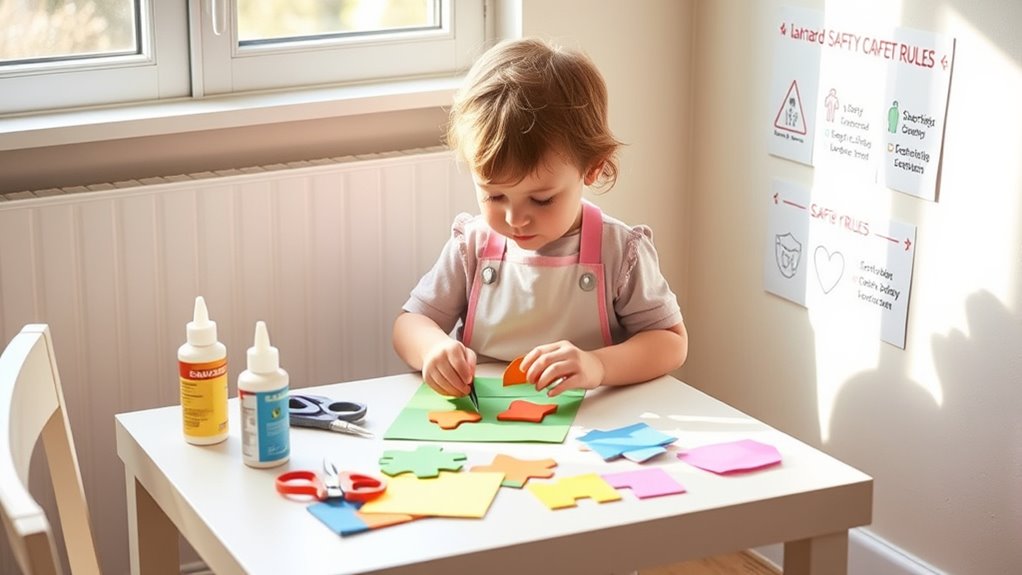
Choosing the right materials and tools for your child’s craft projects is essential for guaranteeing safety and encouraging creativity. Use age-appropriate supplies to prevent accidents and build confidence. Select non toxic paints that are safe for children’s skin and easy to wash off. Opt for child friendly scissors with rounded tips to reduce cuts. Here’s a quick guide:
| Material/Tool | Suitable Age Range |
|---|---|
| Non toxic paints | 3+ years |
| Child friendly scissors | 4+ years |
| Glue sticks | 3+ years |
| Safety scissors | 4+ years |
| Thick paper/cardboard | All ages |
Always supervise your child during craft time to guarantee they use these materials correctly and safely. Additionally, understanding proper piercing care and hygiene can help prevent infections if your child shows interest in body art or jewelry, emphasizing the importance of safe practices. Incorporating safe crafting practices into your routine can further reduce risks and foster a positive, confidence-building environment for your young creator. Being aware of auditory processing challenges can also help you accommodate your child’s sensory needs during craft activities, ensuring a more enjoyable experience. Recognizing age-appropriate complexity in craft activities can help keep your child engaged without feeling overwhelmed. Moreover, selecting materials that are compatible with various electric bikes can inspire creativity while ensuring safety during craft projects, especially when working around tools and electrical components.
crafting area boundary tape and signs
As an affiliate, we earn on qualifying purchases.
As an affiliate, we earn on qualifying purchases.
Implement Supervision Strategies That Promote Independence

Supervising your child’s craft activities while encouraging their independence helps them develop confidence and responsibility. Use supervision techniques that set clear boundaries without micromanaging, allowing your child to make choices and learn from mistakes. For example, establish specific rules about handling scissors or hot glue, then step back to let them practice within those limits. Incorporating modern safety features into craft supplies can further enhance safety during activities. The key is maintaining an independence balance—providing enough oversight to ensure safety while fostering autonomy. Regular supervision techniques help you stay connected with your child’s progress and safety needs without overly controlling their actions. Check in periodically, offer guidance when needed, and praise their efforts to build trust. This approach helps your child feel secure and capable, promoting safe exploration and skill development. By understanding child development stages, caregivers can better tailor supervision strategies to support growth and independence. Additionally, staying informed about safety standards can help you choose the safest materials and tools for your child’s projects. Being aware of environmental considerations can also guide you in setting up a safe and eco-friendly crafting space at home.
labeled storage containers for craft supplies
As an affiliate, we earn on qualifying purchases.
As an affiliate, we earn on qualifying purchases.
Create a Safe Storage System for Supplies and Tools

Creating a safe storage system for craft supplies and tools is essential for maintaining a secure and organized workspace at home. Start by grouping similar items together to improve storage organization, making it easier for your child to find what they need and put things away. Use sturdy, clearly labeled bins or containers to keep small supplies like beads, markers, and glue sticks separate and visible. For tools such as scissors, glue guns, or craft knives, make certain they are stored in a designated area with childproof locks or high shelves out of reach. Prioritize tool accessibility by placing frequently used items within easy reach, but always keep sharp or hazardous tools securely stored. A well-thought-out storage system minimizes clutter and reduces safety risks during craft time. Incorporating proper storage habits can help reinforce safe behavior and keep the workspace organized over time. Additionally, considering safe water use practices, such as avoiding water-based spills near electrical tools, can help prevent accidents. Ensuring that child-safe storage solutions are in place encourages responsible handling of supplies and supports ongoing safety. Furthermore, implementing safety protocols regularly can help maintain a secure environment as your child’s crafting skills develop.
Teach Kids Proper Handling and Cleanup Procedures
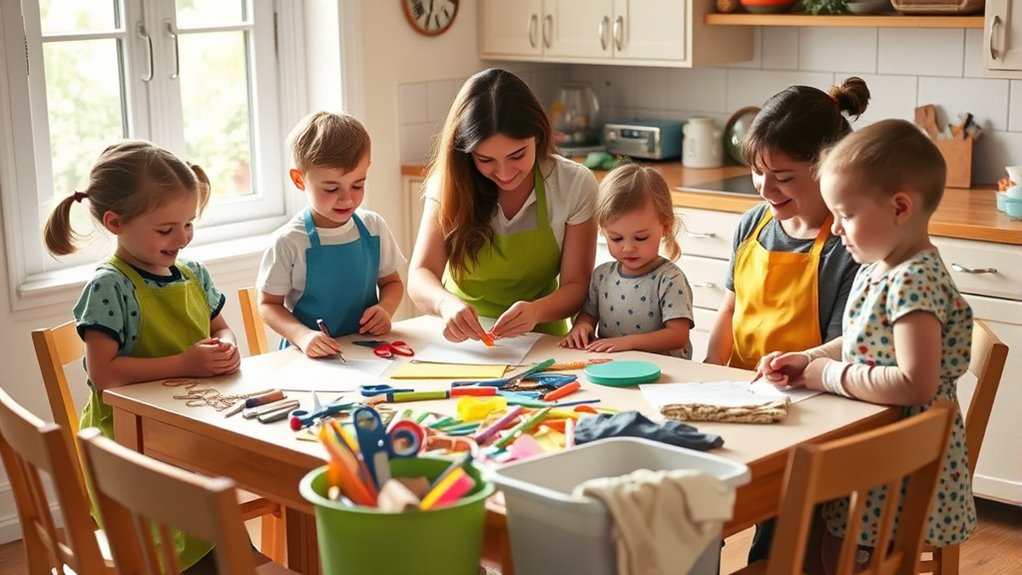
Teaching kids proper handling and cleanup procedures is essential to keep craft time safe and organized. Show them how to carefully handle scissors, glue, and other tools, emphasizing safety. When spills happen, teach kids to handle spills immediately by blotting or cleaning with paper towels, preventing messes from spreading. Explain the importance of proper disposal by encouraging them to throw away used paper, empty containers, and scraps in designated bins. Reinforce the habit of tidying up after each activity, making cleanup part of the craft routine. Incorporating proper safety procedures into craft activities fosters a sense of discipline and care. Introducing safe handling practices helps children develop responsibility and awareness of potential hazards. Consistent supervision and guidance during craft sessions further ensures safety and helps children internalize these important habits. Practicing organized cleanup routines regularly can also improve overall efficiency and reduce accidents. Additionally, teaching children about child‑safe craft materials ensures they use appropriate supplies that minimize risks. Clear instructions and consistent practice will make craft sessions safer and more efficient for everyone involved.
Encourage Creative Freedom While Maintaining Safety Guidelines

While encouraging kids to explore their creativity, it’s important to establish safety guidelines that keep everyone protected. You want to foster artistic expression without crossing safety boundaries. To do this, set clear rules that balance freedom and safety. For example, allow them to choose their projects, but enforce the use of safe tools and materials. Use a simple chart to clarify boundaries:
| Artistic Expression | Safety Boundary | Allowed Materials |
|---|---|---|
| Drawing, painting | No toxic paints | Washable markers |
| Building with blocks | No sharp edges | Soft glue or tape |
| Collages | No small parts | Child-safe scissors |
This approach encourages kids to be creative while respecting safety guidelines, making crafting both fun and secure. Additionally, understanding which essential oils are safe for children can help you incorporate natural remedies into your routines without worry. For example, selecting child-safe essential oils ensures the use of natural products that are gentle and appropriate for young skin and immune systems.
Use Visual Cues and Labels to Reinforce Rules
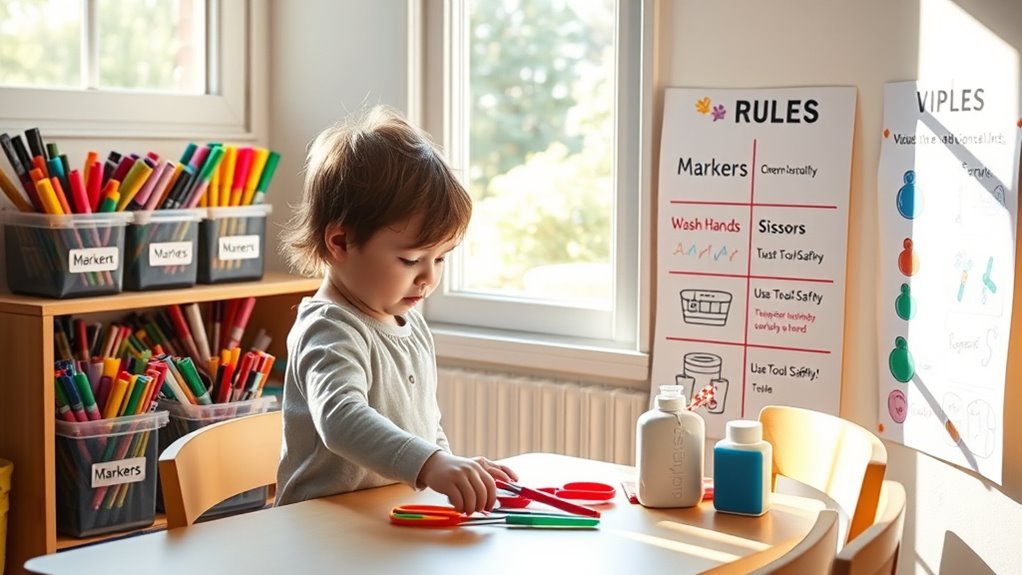
Using visual cues and labels helps children understand safety rules quickly and clearly. Color-coded zones, simple instructions, and friendly warning symbols create an easy-to-follow system. These visuals make it easier for kids to stay safe while enjoying their craft time.
Color-coded Safety Zones
Color-coded safety zones are an effective way to help children easily recognize which areas are safe for crafting and which are off-limits. By establishing clear boundaries with distinct colors, you create visual cues that reinforce safety rules. Consistent use of color coded safety zones helps children quickly identify where they can work and where they should avoid certain materials or tools. This visual cue consistency reduces confusion and encourages independence while maintaining safety. For example, designate the table area with green zones for safe activities and red zones for restricted spaces. Using consistent colors for specific zones makes it easier for children to remember rules and promotes responsible behavior. Clear, predictable color coding simplifies supervision and supports a child-friendly crafting environment.
Clear Visual Instructions
Clear visual instructions are key to helping children follow safety rules during craft activities. Using visual guidelines makes it easier for kids to understand what they should and shouldn’t do, reinforcing crafting safety without constant verbal reminders. Place clear labels on storage containers to identify sharp tools, paints, and other potentially hazardous materials. Use pictures or symbols to show the proper way to handle scissors, glue, or hot tools. Color-coded signs can highlight safe zones or danger areas, guiding children intuitively. Keep instructions simple, consistent, and visible at eye level, so kids can refer to them as needed. Visual cues help children internalize rules and foster independence while maintaining a safe crafting environment.
Friendly Warning Symbols
Friendly warning symbols are essential tools for reinforcing safety rules during craft activities. By using clear warning icons and safety symbols, you create visual cues that quickly communicate potential hazards. These symbols help children recognize when they need to be cautious, such as when handling scissors, hot glue, or sharp tools. Place warning labels near dangerous materials or equipment to reinforce rules and prevent accidents. Consistent use of familiar warning icons makes safety messages intuitive and memorable for kids. Visual cues reduce confusion and remind children to follow safety guidelines without constant verbal reminders. Incorporating safety symbols into your craft space ensures that safety becomes an integral part of the activity, empowering children to craft confidently while staying safe.
Involve Kids in Setting Their Own Crafting Rules
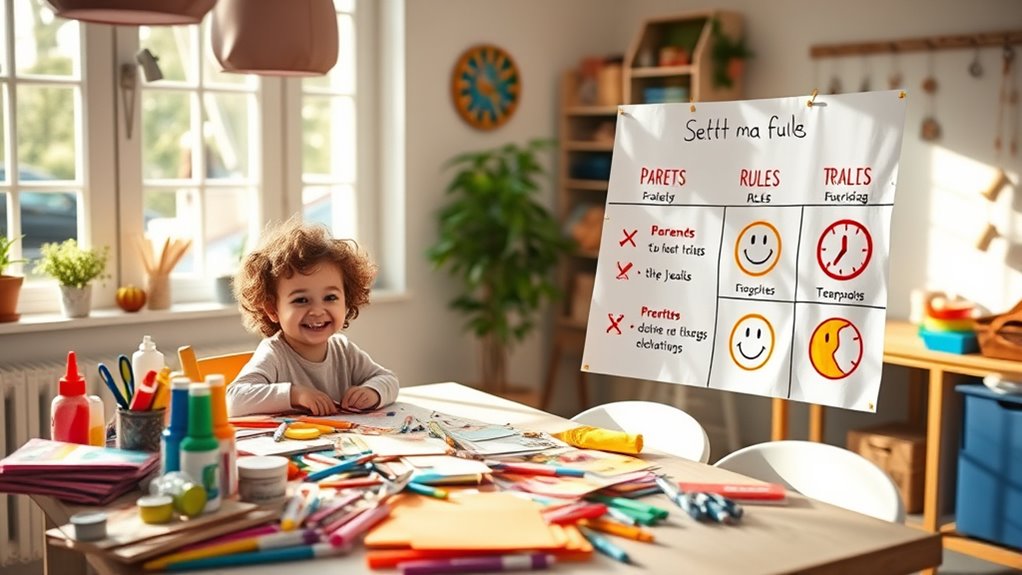
Getting kids involved in setting their own crafting rules encourages responsibility and ownership of safety practices. When you include them in the process, they’re more likely to follow the rules because they helped create them. Parental involvement shows you value their input and helps reinforce safety priorities. Encourage peer collaboration by discussing safety rules with friends or siblings during craft time, fostering a shared understanding of boundaries. Ask your kids what rules they think are important and explain why certain precautions matter. This collaborative approach empowers them to take safety seriously and builds their confidence. By involving your children in rule-setting, you create a safer crafting environment where they feel responsible and motivated to follow safety guidelines.
Regularly Review and Adjust Crafting Safety Practices

Once you’ve involved your kids in setting safety rules, it’s important to keep those guidelines effective by reviewing and updating them regularly. Conduct crafting safety audits to identify any new hazards or overlooked risks. These audits help you assess whether safety measures still work or need improvement. Schedule routine risk assessment updates to stay ahead of potential dangers as your child’s skills grow or new crafting materials are introduced. By staying proactive, you ensure your crafting environment remains safe and adaptable. Remember, safety isn’t a one-time setup; it’s an ongoing process. Regular reviews also give your kids a chance to voice concerns or suggest changes, reinforcing their understanding of safety and responsibility.
Frequently Asked Questions
How Can I Balance Safety With Encouraging Kids’ Creativity?
You can balance safety with encouraging creativity by setting clear crafting permissions and conducting risk assessments beforehand. Allow kids to explore their ideas while establishing boundaries for safe tools and materials. Encourage them to assess potential risks and make decisions accordingly. This approach fosters independence and creativity, showing them how to be responsible while enjoying the craft process. Always supervise and adjust rules as they grow more confident and skilled.
What Are Signs My Child Is Ready for More Independent Crafting?
You’ll notice your child’s ready for more independent crafting when they confidently handle basic tools like scissors and glue without constant help, signaling crafting milestones. For example, Emily, age 7, began creating detailed projects solo, showing independence indicators. When your child consistently follows safety rules, manages supplies responsibly, and initiates projects, it’s a clear sign they’re ready for increased independence in crafting.
How Do I Handle Disagreements About Safety Rules?
When disagreements about safety rules arise, you should practice parental negotiation by calmly discussing concerns with your child. Listen to their perspective, then explain your safety priorities. Aim for a safety compromise that respects their growing independence while maintaining essential boundaries. Reinforce the importance of safety in a positive way, encouraging your child to take responsibility and understand why certain rules are in place, fostering trust and cooperation.
What Are Alternative Safety Options for Very Young Children?
You can keep your little one completely safe by choosing age-appropriate tools and non-toxic materials for crafting. Use blunt scissors, child-safe glue, and washable paints to reduce risks. Always supervise closely, and create a designated, clutter-free crafting zone. This approach makes safety feel like a fortress, protecting your child from harm while they enjoy creative fun. Your care transforms ordinary crafting into a secure, joyful adventure.
How Often Should Safety Practices Be Reviewed With Kids?
You should review craft safety and reinforce rules with your kids regularly, ideally every few weeks or whenever you notice changes in their behavior or skills. Consistent rule reinforcement keeps safety top of mind and helps prevent accidents. Make safety discussions engaging and age-appropriate, encouraging your kids to ask questions. Regular reviews guarantee everyone remembers the rules, making craft time safer and more enjoyable for everyone involved.
Conclusion
By setting clear boundaries and involving your kids in safety rules, you create a trusting environment that encourages creativity. Did you know that children who participate in safety planning are 30% more likely to follow rules? Regularly reviewing your crafting safety practices guarantees they stay effective as your kids grow. With consistent guidance and age-appropriate tools, you’ll foster a fun, safe space where your children can explore their creativity confidently.