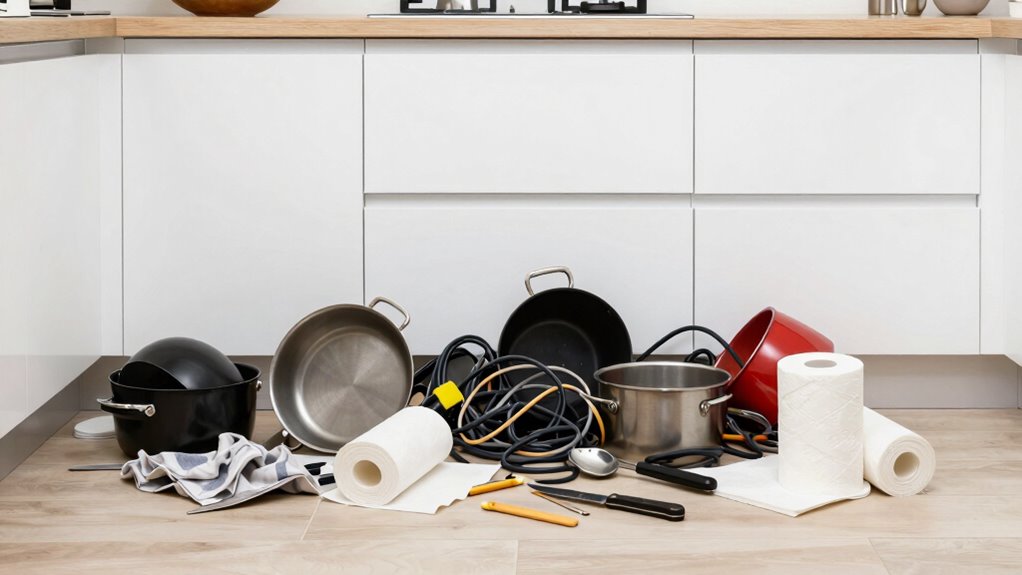

Clutter in your space doesn’t just look untidy—it’s a hidden safety hazard. It raises fire risks by acting as fuel near heat sources and can block ventilation, increasing heat buildup. Clutter also obstructs emergency exits and narrow pathways, slowing your escape during a fire. Plus, it creates tripping hazards, especially in low light, and hides potential dangers that you might miss. If you want to protect yourself and your loved ones, understanding how clutter impacts safety is essential—there’s more to discover.

Get business pricing on tools and workshop supplies
- Business-only prices and quantity discounts
- Tax-exempt purchasing
- Multiple users, one account, clear invoices
Key Takeaways
- Clutter near heat sources increases fire risk by acting as fuel and trapping heat.
- Blocked exits caused by clutter hinder quick evacuation during emergencies.
- Clutter creates trip hazards, increasing slips, trips, and falls, especially in low-light conditions.
- It impairs hazard detection, allowing safety issues to go unnoticed until they cause harm.
- Regular clutter management improves safety by maintaining clear pathways and reducing fire hazards.
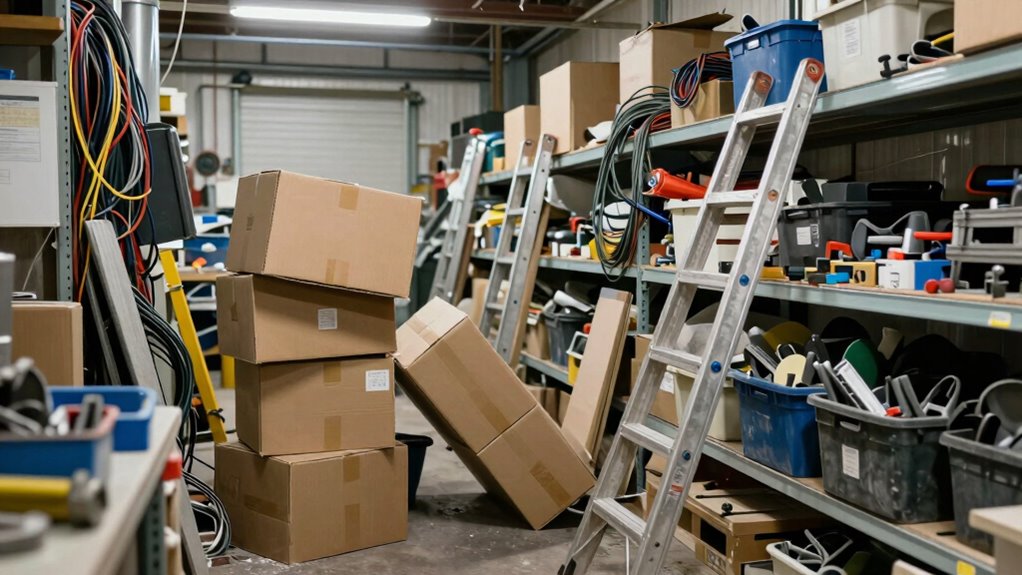
Have you ever considered how clutter can pose serious safety risks in your home or workplace? It’s easy to overlook the dangers that piles of unused items, scattered papers, or misplaced belongings can create. Clutter doesn’t just make spaces look untidy; it can actively threaten your safety in ways you might not realize. One of the most essential concerns is the increased risk of fire hazards. When clutter accumulates near heat sources, electrical outlets, or appliances, it can quickly become a fire’s fuel, spreading flames faster and making it harder to control an emergency. Plus, clutter can trap heat or block ventilation, further elevating the danger of fires starting.
Clutter near heat sources increases fire risk and hampers ventilation, making emergencies more dangerous.
Another urgent safety issue linked to clutter revolves around emergency exits. When pathways are blocked or narrowed by clutter, evacuating your home or workplace during an emergency becomes considerably more difficult. Imagine a fire breaking out, and you need to get out quickly—if your escape routes are obstructed by boxes, furniture, or piles of clutter, you’ll be forced to take longer, more dangerous routes or, worse, become trapped. Clutter can also cause slips, trips, and falls, especially in low-light conditions or when items are hidden beneath heaps of belongings. These accidents can result in serious injuries, particularly if they happen near exits or stairways. Regularly organizing your space and removing unnecessary clutter can significantly reduce these hazards and improve overall safety. Additionally, clutter can hinder the ability to identify hazards early, making it more difficult to address safety issues before they escalate.
Your safety depends on keeping clear, accessible routes and minimizing fire hazards. It’s essential to regularly assess your space and remove unnecessary clutter, especially around emergency exits and heat sources. By doing so, you create a safer environment that reduces the risk of fires spreading and ensures everyone can evacuate swiftly in an emergency. Remember, clutter can make even simple tasks hazardous, and in an emergency, the consequences become even more severe. Regularly inspecting your space for fire risks and keeping pathways clear can significantly reduce potential dangers. Additionally, understanding how clutter contributes to hazards can help motivate ongoing efforts to maintain a safer environment.
Taking the time to tidy up isn’t just about aesthetics; it’s a key safety measure. Clear pathways and eliminate piles that could ignite or obstruct a quick escape. Keep emergency exits unobstructed at all times, and be cautious about storing flammable items near heat sources. Regularly inspecting your space for clutter and addressing hazards can prevent accidents before they happen. The safety of everyone in your home or workplace hinges on your awareness and proactive efforts to keep clutter under control. Small changes now can make a considerable difference if an emergency arises, ensuring that safety remains a top priority in your environment.
As an affiliate, we earn on qualifying purchases.
Frequently Asked Questions
How Does Clutter Affect Emergency Evacuation Times?
Clutter greatly slows down your emergency evacuation times by blocking access to emergency exits and hindering obstacle clearance. When pathways are cluttered, you may struggle to find or reach exits quickly, increasing the risk of injury and chaos during an emergency. Clearing clutter guarantees unobstructed routes, allowing you to evacuate swiftly and safely. Regularly maintaining clear pathways and emergency exit areas is essential for effective and rapid evacuation.
Can Clutter Increase the Risk of Fire Hazards?
Clutter acts like a tinderbox, turning your space into a fire hazard. It can hide electrical hazards, increasing the risk of sparks or shorts, while also inviting pest infestations that chew through wires, adding fuel to the fire. When clutter piles up, it blocks escape routes and makes firefighting difficult. By keeping your space tidy, you reduce these risks, creating a safer environment where fire and pests are kept at bay.
What Are the Psychological Effects of Clutter-Related Safety Issues?
Clutter-related safety issues can profoundly impact your mental health, leading to feelings of stress and anxiety. When your space is chaotic, you experience cognitive overload, making it harder to focus and make decisions. This mental strain can cause frustration and emotional exhaustion over time. By organizing your environment, you reduce these psychological effects, creating a calmer, more manageable space that supports better mental well-being and clearer thinking.
How Does Clutter Impact Children’s Safety at Home?
A cluttered home is a safety hazard for children, and as the saying goes, “A place for everything, and everything in its place.” Clutter hazards, like loose cords or toys, increase the risk of trips, falls, and injuries. You can protect your child’s safety at home by regularly organizing and removing clutter, ensuring walkways are clear, and keeping potential hazards out of reach. Safety starts with a tidy space.
Are There Specific Clutter Types More Dangerous Than Others?
Certain clutter types pose more danger, especially clutter categorization that involves sharp objects, heavy items, or loose cords. These can cause injuries if you’re not careful. To minimize risks, you should use effective storage solutions like bins, shelves, and cord organizers. Keep hazardous items out of children’s reach and regularly tidy up. Proper storage not only declutters but considerably reduces the chance of accidents, keeping your home safer for everyone.
As an affiliate, we earn on qualifying purchases.
Conclusion
So, don’t let clutter pile up and turn your space into a safety hazard. Remember, a cluttered environment is like a ticking time bomb — it’s only a matter of time before accidents happen. Stay proactive and keep things organized; it’s better to prevent problems than to deal with the fallout. When you clear the clutter, you clear the way for safety, peace, and peace of mind. Don’t wait until it’s too late.
As an affiliate, we earn on qualifying purchases.
As an affiliate, we earn on qualifying purchases.
Fall Picks
fall essentials
As an affiliate, we earn on qualifying purchases.