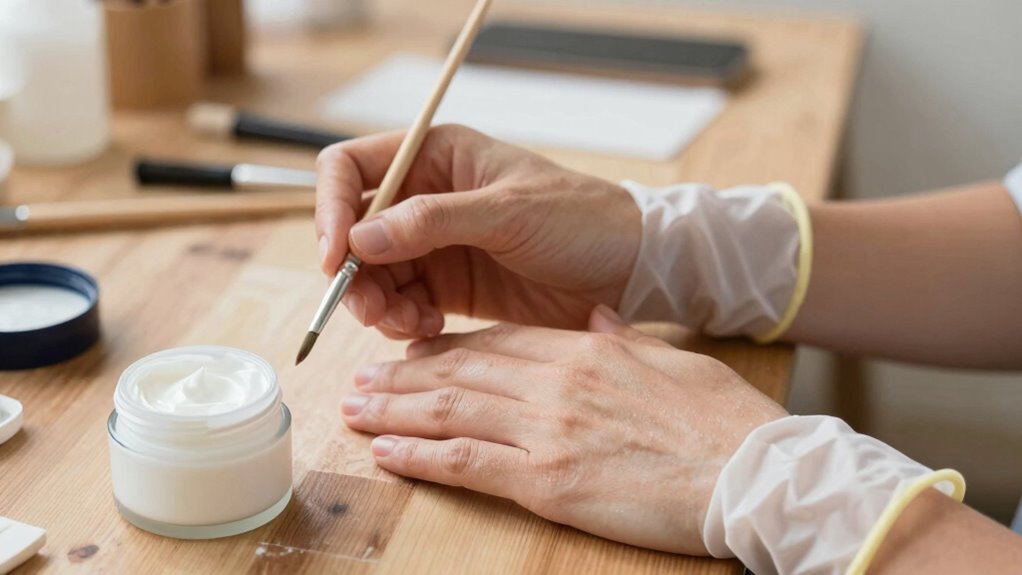

To protect your skin during repetitive craft work, handle chemicals carefully by wearing gloves and working in well-ventilated areas. Maintain good posture and take breaks to stretch, reducing strain and skin irritation from repetitive movements. Organize your workspace to prevent accidental injuries, and use protective gear like gloves and safety tools. Regularly moisturize and stay hydrated to strengthen your skin’s barrier. Keep learning more simple tips to keep your skin safe and healthy while enjoying your craft projects.

Get business pricing on tools and workshop supplies
- Business-only prices and quantity discounts
- Tax-exempt purchasing
- Multiple users, one account, clear invoices
Key Takeaways
- Wear protective gloves and handle chemicals carefully to prevent skin contact and irritation.
- Take regular breaks to stretch and adjust posture, reducing friction and strain on the skin.
- Keep your workspace organized and store chemicals safely to minimize accidental exposure.
- Moisturize skin frequently and use barrier creams to strengthen and protect against irritants.
- Work in well-ventilated areas and wash hands thoroughly after crafting sessions.
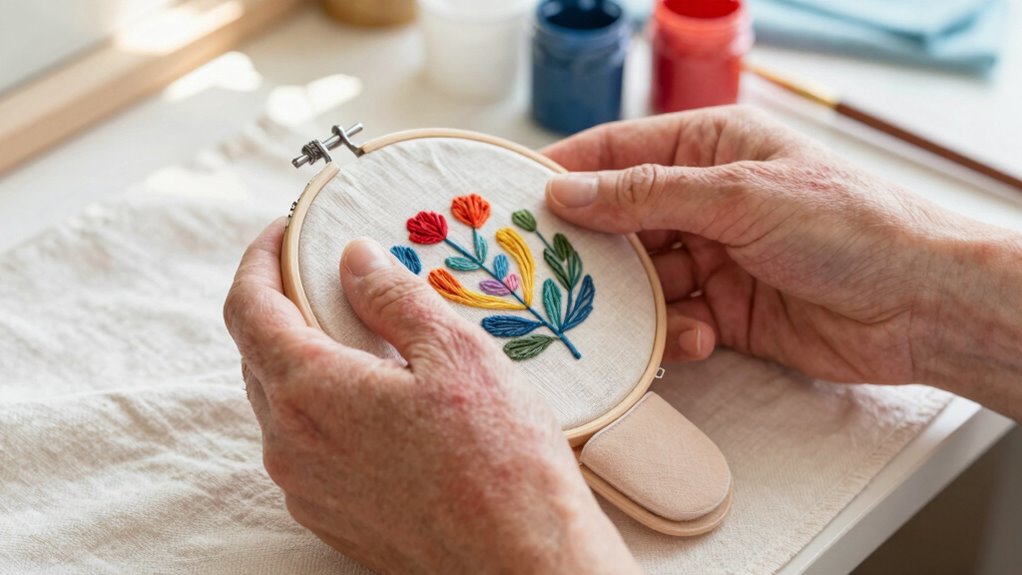
Repetitive craft work can be enjoyable, but it often puts your skin at risk of irritation, dryness, and even long-term damage. When you’re immersed in activities like knitting, painting, or jewelry making, you might not realize the potential hazards, especially from chemical exposure. Many craft supplies contain chemicals—dyes, adhesives, solvents—that can cause allergic reactions or skin sensitivities if you don’t take proper precautions. It’s important to handle these substances carefully, wearing gloves when necessary, and working in well-ventilated areas to minimize inhalation and skin contact. Regularly washing your hands after crafting sessions helps remove residual chemicals, preventing buildup that could lead to irritation over time.
Repetitive craft activities can cause skin irritation and chemical sensitivities without proper precautions.
In addition to chemical exposure, maintaining ergonomic safety is vital for protecting your skin and overall well-being during long crafting sessions. Poor posture or repetitive movements can lead to strain, which might indirectly affect your skin by causing stress or inflammation in the affected areas. Make sure your workspace is set up to promote good ergonomics—adjust your chair and work surface so that your hands and wrists are aligned comfortably, and take frequent breaks to stretch and reset your posture. This not only prevents musculoskeletal issues but also reduces the risk of skin issues caused by friction or pressure from awkward positions. Incorporating ergonomic practices can further enhance your comfort and skin health during extended crafting periods. Remember, using proper tool handling techniques can significantly decrease the chance of accidental injuries that compromise your skin’s integrity.
You should also consider the type of tools you use. Sharp blades, hot glue guns, or other craft implements can cause accidental cuts or burns that compromise your skin’s integrity. Wearing protective gloves and using tools properly can mitigate these risks. When working with adhesives or paints, apply them carefully to avoid splashes or spills that may contact your skin. If you do get any chemicals on your skin, wash the area immediately with soap and water to prevent absorption and irritation. Incorporating safety measures can further help in reducing the risk of accidents or chemical exposure during crafting. Additionally, being aware of your surroundings and keeping your workspace organized can help prevent accidental injuries that might harm your skin. Developing a safe workspace environment ensures that hazards are minimized and your skin remains protected throughout your craft sessions.
Another step to protect your skin is to establish a routine of regular skincare. Moisturize before and after crafting to keep your skin barrier strong against irritants and dryness. Look for products suited for sensitive skin, especially if you notice redness or soreness after working. Also, consider using barrier creams or ointments in areas prone to friction or contact with chemicals, which can create a protective layer on your skin. Additionally, staying hydrated and maintaining a healthy diet can support your skin’s resilience against environmental stressors and chemical irritants. Remember, maintaining a consistent skincare routine enhances your skin’s ability to recover and defend itself from the effects of repetitive craft work.
As an affiliate, we earn on qualifying purchases.
Frequently Asked Questions
Can Specific Materials Cause More Skin Irritation Than Others?
Yes, specific materials can cause more skin irritation than others, especially if you have chemical sensitivity or material allergies. Certain substances like latex, nickel, or harsh adhesives often trigger reactions. To minimize irritation, identify and avoid materials that cause sensitivities. Wearing protective gloves and choosing hypoallergenic options can help prevent skin issues during repetitive craft work. Always test new materials on a small skin patch first to check for reactions.
How Often Should I Take Breaks to Protect My Skin?
You should take breaks every 20-30 minutes to protect your skin, much like watering a delicate plant. During breaks, hydrate your skin with moisturizer and use ergonomic tools to reduce strain. I once ignored this, and my hands became red and sore after a long session. Regular breaks keep skin hydrated, prevent irritation, and minimize fatigue, ensuring your craft sessions remain comfortable and safe.
Are There Any Natural Remedies for Skin Irritation From Crafts?
Yes, you can try natural remedies like applying coconut or almond oil to soothe irritated skin. Herbal remedies such as aloe vera gel or chamomile tea compresses also help reduce redness and inflammation. Using natural oils provides moisture and healing, while herbal remedies calm your skin. Remember to test a small patch first, and always wash your hands thoroughly after crafting to prevent further irritation.
What Are the Signs of Long-Term Skin Damage From Repetitive Work?
Did you know that 30% of repetitive work-related skin injuries go unnoticed until long-term damage occurs? Signs of such damage include persistent dryness, cracking, redness, and thinning skin. If you neglect skin hydration and fail to maintain protective barriers, your skin becomes more vulnerable to damage over time. Regularly moisturizing and using protective gloves can help prevent these issues and maintain healthy skin despite repetitive craft work.
Does Wearing Gloves Affect Dexterity or Precision in Crafts?
Wearing gloves can slightly affect your dexterity or precision in crafts, but it largely depends on the glove materials you choose. Thin, flexible gloves made from latex or nitrile tend to offer better dexterity, helping you maintain control. However, thicker or less flexible materials may cause some dexterity loss, making detailed work more challenging. Experiment with different glove types to find the best balance between protection and precision for your craft projects.
chemical-resistant gloves for crafting
As an affiliate, we earn on qualifying purchases.
As an affiliate, we earn on qualifying purchases.
Conclusion
Remember, protecting your precious skin isn’t just prudent—it’s powerful. By practicing patience, applying appropriate precautions, and prioritizing your health, you’ll prevent pain and preserve your passion. Prioritize proper precautions, protect your plates, and prolong your craft journey. With consistent care, your creative commitment can continue without costly consequences. So stay smart, stay safe, and let your skills shine without suffering the scars of neglect. Your skin’s safety is your success—safeguard it fiercely!
ergonomic craft workspace accessories
As an affiliate, we earn on qualifying purchases.
As an affiliate, we earn on qualifying purchases.
craft safety gloves and barrier creams
As an affiliate, we earn on qualifying purchases.
As an affiliate, we earn on qualifying purchases.
Fall Picks
fall essentials
As an affiliate, we earn on qualifying purchases.