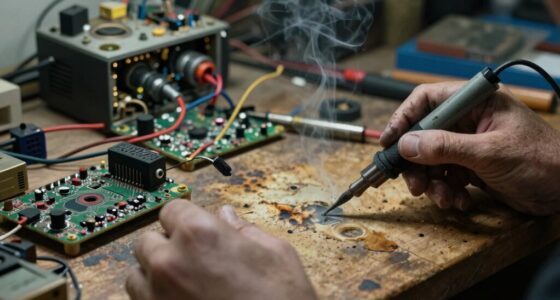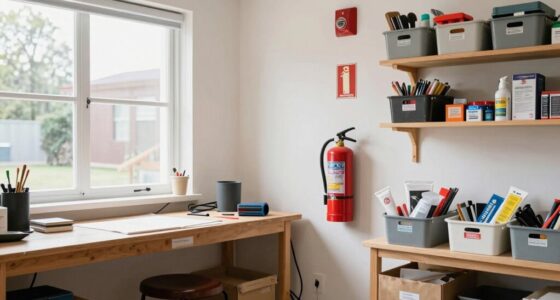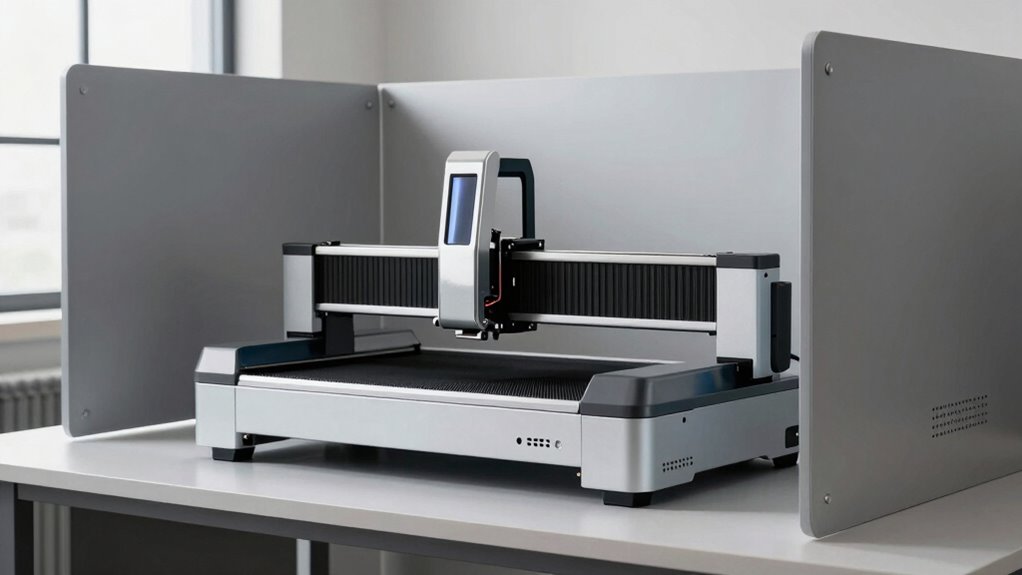

Yes, you really need an enclosure for your desktop laser to stay safe and meet safety standards. It helps contain laser emissions, prevent accidental exposure, and keep debris, fumes, and stray beams under control. An enclosure also protects others in shared spaces and guarantees your workspace remains compliant. Using the right materials enhances safety and performance. If you want to understand more about why an enclosure is essential and how to choose the right one, keep exploring this topic.

Get business pricing on tools and workshop supplies
- Business-only prices and quantity discounts
- Tax-exempt purchasing
- Multiple users, one account, clear invoices
Key Takeaways
- Enclosures reduce laser radiation exposure, ensuring safer operation in shared or busy workspaces.
- They contain debris, fumes, and dust, maintaining a cleaner and healthier environment.
- Enclosures prevent accidental laser exposure during operation, especially in non-dedicated areas.
- The need depends on laser power, wavelength, and intended use, influencing safety requirements.
- Proper enclosure materials enhance safety, compliance, and overall effectiveness of desktop laser setups.
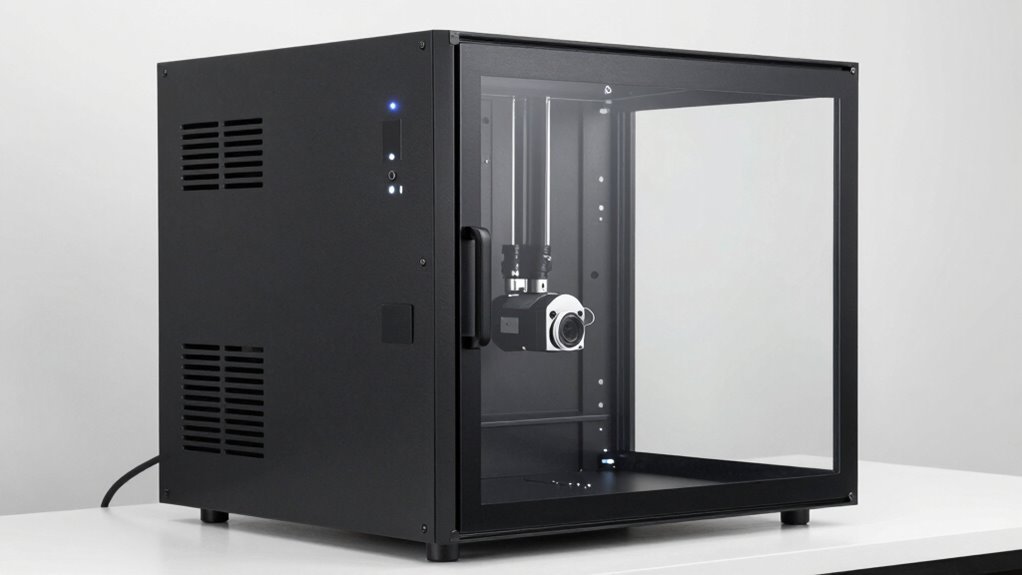
Have you ever considered how to safely operate a desktop laser? It’s a question worth pondering, especially given the potential hazards involved. Laser safety isn’t just about wearing protective glasses; it also involves controlling the environment where you use your laser. An enclosure can drastically reduce risks by containing laser emissions and preventing accidental exposure. When deciding whether you need an enclosure for your desktop laser, think about the kind of work you do, your workspace, and safety standards.
Considering a desktop laser? An enclosure enhances safety by containing emissions and preventing accidental exposure—evaluate your workspace and safety needs.
Using an enclosure isn’t simply about convenience; it’s about safety and compliance. The right enclosure materials play a vital role in guaranteeing effective laser safety. Materials such as acrylic, polycarbonate, or specialized laser safety panels are designed to absorb or block laser beams, reducing the chance of harmful exposure. Acrylic is popular because it’s transparent, allowing you to see your work while providing a barrier against laser light. Polycarbonate, on the other hand, offers additional impact resistance, which can be beneficial if your workspace involves frequent handling or accidental bumps. Whatever materials you choose, they should be rated for the specific wavelength and power level of your laser to guarantee protection.
By installing an enclosure, you create a controlled environment that minimizes the risk of laser accidents. It also helps contain debris, fumes, and dust generated during laser cutting or engraving, which can be harmful if inhaled over time. A well-designed enclosure can limit your exposure to laser radiation, especially during long sessions or when working with higher-powered lasers. It also prevents stray beams from reflecting off surfaces, which can pose a risk to your eyes and skin. Proper enclosure materials are essential for ensuring the safety and effectiveness of your laser setup. Additionally, using a correctly rated enclosure can help ensure compliance with safety standards. Considering the importance of laser safety in various settings, investing in an enclosure that meets these standards is a prudent choice.
If you’re working in a shared or busy workshop, an enclosure becomes even more essential. It acts as a physical barrier, keeping others safe from accidental exposure while you’re operating the laser. Plus, it can help you stay compliant with safety regulations that might apply to your setting, whether at home or in a professional environment.
Ultimately, whether you need an enclosure depends on your specific use case, workspace, and safety considerations. But investing in one, especially made from appropriate enclosure materials, is a smart move. It not only guarantees your safety but also enhances your overall work environment, so you can focus on your projects without worry. In the end, proper laser safety measures, including a suitable enclosure, are essential for responsible and secure laser operation.
Popular right now

Vitamix Propel Series 510 Professional-Grade Blender, 3 Programs, Black

Vitamix Propel Series 750 Professional-Grade Blender, 4 Programs, Black

Hisense 85 U6 Pro Series Mini-LED ULED 4K UHD HDR Gaming AI Smart Fire TV (85U6SF Pro)
As an affiliate, we earn on qualifying purchases.
Frequently Asked Questions
Are Enclosures Necessary for Small Desktop Laser Cutters?
Yes, enclosures are necessary for small desktop laser cutters to guarantee safety and improve performance. You’ll find various laser enclosure types, like acrylic or metal, suited for different needs. Regular enclosure maintenance is essential to keep it clear of dust and debris, which can affect laser operation. An enclosure not only protects you from laser exposure but also helps contain fumes and debris, creating a safer, cleaner workspace.
What Materials Are Best for Laser Enclosure Construction?
You should choose materials with high durability and heat resistance for your laser enclosure. Metals like steel or aluminum are excellent because they withstand heat and impact, guaranteeing safety and longevity. High-quality acrylic also works well, offering clear visibility and decent heat resistance. Avoid low-grade plastics that may warp or melt over time. Prioritize sturdy, heat-resistant materials to protect your workspace and confirm your laser operates safely and effectively.
How Much Does a Typical Laser Enclosure Cost?
Ever wondered how much a laser enclosure costs? Typically, a basic laser enclosure ranges from $200 to $600, depending on size and materials. For an all-encompassing cost comparison, you’ll find options from DIY kits, which are cheaper, to custom-built enclosures, which tend to be pricier. Your choice depends on your safety needs, workspace, and budget. Investing in a quality enclosure guarantees safety without breaking the bank.
Can a Laser Enclosure Improve Safety During Operation?
Yes, a laser enclosure improves safety during operation by containing laser safety hazards and preventing accidental exposure. It minimizes the risk of harmful laser reflections and airborne particles, protecting you and your workspace. The enclosure benefits include reducing safety concerns, ensuring compliance with regulations, and creating a controlled environment for precise work. Investing in an enclosure makes your laser setup safer and more professional, giving you peace of mind while working.
Are DIY Enclosures Effective and Safe for Laser Machines?
DIY enclosures can be effective if you prioritize safety and design well. Focus on laser enclosure aesthetics to create a sturdy, professional look, but don’t overlook ventilation system efficiency. Proper ventilation ensures fumes are safely vented, minimizing hazards. If you carefully plan your DIY enclosure, using quality materials and adequate ventilation, it can be both safe and functional, offering protection without jeopardizing safety standards.
Conclusion
While an enclosure isn’t always essential, it’s worth considering for safety and cleanliness. An enclosure acts like a shield, protecting you from laser fumes and accidental exposure. Remember, “Prevention is better than cure,” especially when dealing with powerful tools like lasers. Investing in an enclosure might seem optional, but it can save you from potential hazards down the line. Stay safe, stay smart, and choose what best fits your workspace and needs.