
TL;DR

Get business pricing on tools and workshop supplies
- Business-only prices and quantity discounts
- Tax-exempt purchasing
- Multiple users, one account, clear invoices
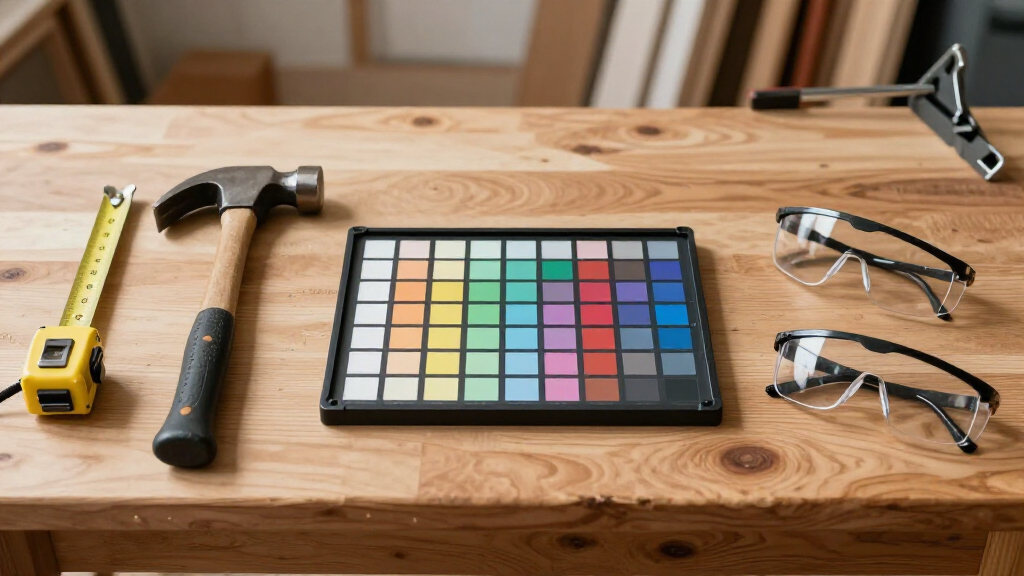
The ColorChecker, the essential 24-square color calibration chart in photography, celebrates its 50th anniversary. Its influence on color accuracy and workflow remains significant, with renewed industry attention on its legacy.
The ColorChecker, widely regarded as photography’s most important color calibration chart, is celebrating its 50th anniversary this year. Developed in the early 1970s, this iconic 24-square color reference has become a staple in professional and amateur photography workflows. Its milestone prompts renewed interest in its legacy and ongoing role in ensuring color accuracy across digital imaging platforms.
The ColorChecker was first introduced in the early 1970s by the company X-Rite, designed to provide a standardized set of color references for photographers, videographers, and color scientists. Over the decades, it has become an industry standard, used in studios, labs, and fieldwork to calibrate cameras, monitors, and printers. The chart’s 24 squares include a range of skin tones, primary colors, and neutral grays, enabling precise color correction and consistency across different devices and lighting conditions.
Recent search interest in the ColorChecker has spiked, according to industry trend signals, although the specific trigger remains unconfirmed. Experts note that this renewed attention coincides with broader discussions about color management, digital workflow accuracy, and the chart’s historical significance. While the core design has remained largely unchanged, some newer versions incorporate additional features, such as spectral data and compatibility with advanced calibration software.
Industry professionals highlight that, despite digital tools and software advancements, the ColorChecker remains a fundamental reference point. Many photographers and colorists attest to its enduring utility in achieving consistent, predictable color results, especially in complex lighting environments. The 50-year milestone is seen as a testament to its lasting influence, though some industry observers speculate about future innovations that could supplement or replace traditional charts.
Why the 50th Anniversary Reinforces Its Industry Role
The 50th anniversary of the ColorChecker underscores its ongoing importance in professional photography and digital imaging. Despite technological advances, the chart’s standardized color references continue to serve as a reliable benchmark for achieving accurate color reproduction. Its longevity attests to its fundamental role in workflows that demand consistency, from commercial product shoots to cinematic productions. The renewed interest suggests that, even in a digital age, traditional calibration tools retain their relevance, especially as the industry seeks to standardize color across increasingly complex workflows.
Popular right now

KitchenAid Classic Series 4.5 Quart Tilt-Head Stand Mixer K45SS, Onyx Black

De'Longhi Linea Classic Espresso Machine with Adjustable Milk Frother

Vitamix Propel Series 750 Professional-Grade Blender, 4 Programs, Black
As an affiliate, we earn on qualifying purchases.
Historical Impact and Evolution of the ColorChecker
Introduced in the early 1970s by X-Rite, the ColorChecker was initially designed to aid photographers in achieving accurate color reproduction under varying lighting conditions. Its design has remained largely consistent, with the original 24 squares representing key color references. Over the decades, it has become a trusted industry standard, used worldwide in various imaging disciplines. The chart’s significance grew with the digital revolution, as it provided a tangible reference point amid the transition from film to digital sensors and displays. Recent years have seen a resurgence in interest, driven by advancements in calibration software and a focus on color fidelity in high-end imaging sectors.
While the core product remains unchanged, newer versions have incorporated spectral data and enhanced material durability, reflecting ongoing efforts to improve precision and longevity. The anniversary marks not only a celebration of its history but also an acknowledgment of its enduring utility in an evolving technological landscape.
Unconfirmed Factors Behind Renewed Interest
While industry trend signals indicate a spike in searches and discussions surrounding the ColorChecker, the specific reasons for this renewed focus remain unconfirmed. It is unclear whether this is driven by industry anniversaries, new product releases, or broader debates about color management in digital workflows. No official statements or announcements have linked the anniversary to a particular campaign or event, leaving some aspects of the renewed interest speculative.
Future Developments and Industry Adoption Trends
As the 50th anniversary celebrations continue, industry experts suggest that the ColorChecker’s role will persist, possibly complemented by new calibration technologies. Manufacturers may release updated versions or software integrations to enhance its utility. Additionally, the anniversary could spark further discussions about standardization and the development of next-generation calibration tools. For now, the focus remains on celebrating its legacy while observing how it adapts to future digital imaging challenges.
Key Questions
Why is the ColorChecker considered so important in photography?
The ColorChecker provides a standardized set of color references that help photographers and colorists calibrate devices and ensure consistent, accurate color reproduction across different lighting conditions and media.
Has the design of the ColorChecker changed over the years?
Its core design has remained largely unchanged since its introduction in the 1970s, though newer versions may include spectral data and improved materials for durability and precision.
Why is there renewed interest in the ColorChecker now?
Search interest has spiked recently, though the exact cause is unconfirmed. It may be related to the anniversary, industry discussions on color management, or new product launches.
Will the ColorChecker be replaced by newer technology?
While some believe digital tools might eventually supplement or replace traditional charts, many professionals still rely on the ColorChecker for its proven reliability and simplicity, especially in complex workflows.
What is planned for the future of the ColorChecker?
Expect potential new versions, software enhancements, and continued integration into professional workflows as the industry evolves, with the anniversary serving as a milestone for ongoing relevance.
Source: hn