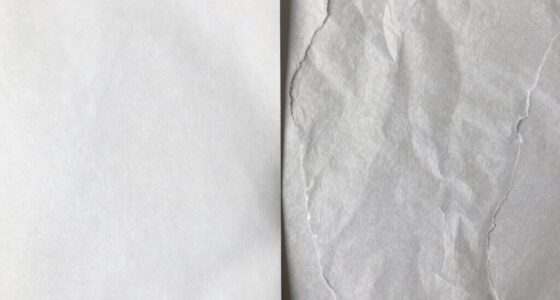
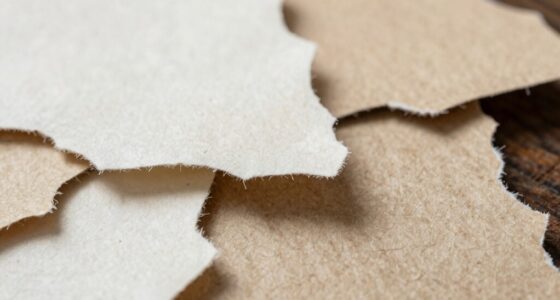
Your fold accuracy greatly impacts the overall look of your project because precise folds create a polished, professional finish, while uneven or sloppy folds can make it look amateurish. When your folds are accurate, they enhance symmetry, balance, and visual harmony, making your design appear intentional and refined. Small mistakes become noticeable, and imperfections can distract or diminish the project’s quality. Keep exploring, and you’ll discover how mastering fold accuracy can truly elevate your craftsmanship.

Get tools and workshop supplies delivered free — and shop member deals
- Fast, free delivery on millions of items
- Access to Prime Big Deal Days deals on October 6–7
- Prime Video, Amazon Music and more included
Key Takeaways
- Precise folds create clean lines, enhancing the overall polished appearance of the project.
- Accurate folding ensures symmetry and balance, making the design more visually appealing.
- Consistent creases improve structural integrity and durability over time.
- Small errors in fold accuracy can make the project look unfinished or amateurish.
- Attention to detail in folds elevates craftsmanship, making the final piece look professional and intentional.
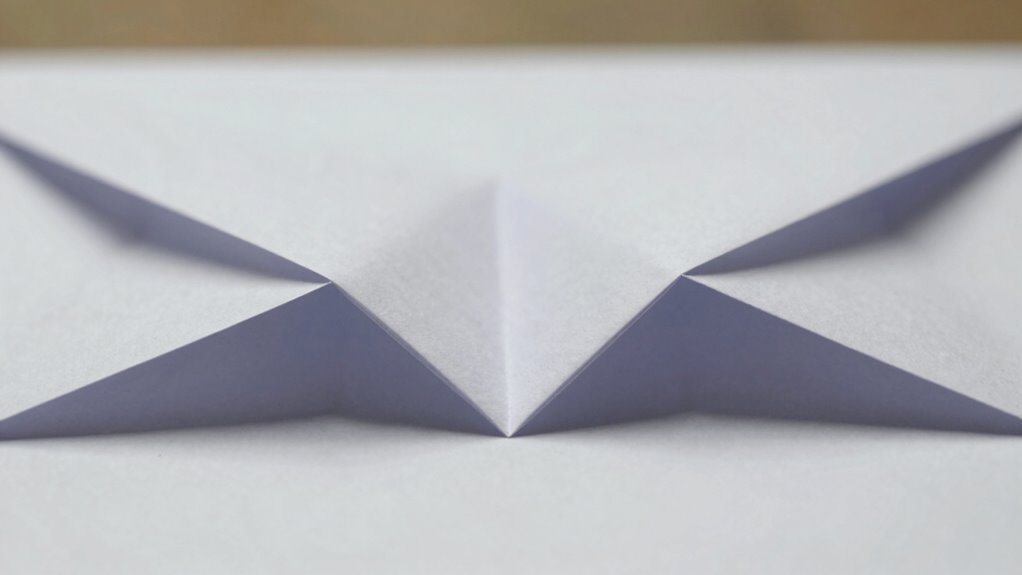
Have you ever wondered how the accuracy of your folds can impact the overall look of a project? It’s not just about making neat creases; it’s about how those creases transform the entire appearance. The quality of your paper plays a significant role here. Thinner, softer paper might fold more easily but can also be prone to tearing or developing uneven edges if you’re not careful. On the other hand, thicker, high-quality paper holds its shape better, allowing for cleaner, sharper folds. When your paper is good quality, even a small misstep in folding can be less visible, giving your project a more polished and professional look. Conversely, with lower-quality paper, imperfections stand out more, making the entire project appear sloppy or amateurish.
Folding techniques are just as essential. Mastering the right method ensures your folds are precise and consistent. For example, using a bone folder or a similar tool can help you create crisp, clean lines, especially on thicker paper. Without proper technique, you might end up with uneven edges, wrinkles, or misaligned folds that detract from the overall aesthetic. The way you handle the paper, the pressure you apply, and the accuracy of your crease all influence the final appearance. If you rush or aren’t attentive to detail, your project’s look suffers. Precision in folding means aligning edges perfectly and applying the right amount of pressure—this results in sharp, neat lines that elevate the entire design. Additionally, understanding fold accuracy and how it affects the project’s final look can help you develop better skills over time. Recognizing the importance of paper qualities can also guide you to choose the right materials for each project. Developing a keen eye for fold alignment ensures consistency and a professional finish. Moreover, paying attention to fold symmetry can significantly enhance the harmony and balance of your design.
When you take the time to focus on fold accuracy, it becomes clear how much it changes the project’s visual appeal. Small, precise creases can turn a simple design into something striking. On the other hand, inconsistent folds can make even the most elaborate designs look unfinished or untidy. Achieving fold accuracy isn’t just about aesthetics; it’s also about the durability of your project. Well-made folds hold their shape longer, maintaining the integrity of your work over time. It’s a skill that combines understanding your paper’s qualities with employing proper folding techniques, and the payoff is a finished piece that looks intentional and refined. Ultimately, paying attention to fold accuracy transforms your craft from average to exceptional, emphasizing the importance of precision in every crease.
As an affiliate, we earn on qualifying purchases.
Frequently Asked Questions
How Does Fold Accuracy Impact Production Time?
Fold accuracy directly impacts your production time because precise folding techniques streamline the process, reducing errors and rework. When manufacturing precision is high, you spend less time fixing misaligned folds, which speeds up overall production. Conversely, inaccurate folds cause delays, as corrections take extra effort. By prioritizing accurate folding techniques, you guarantee smoother workflows and faster completion, ultimately saving time and maintaining high-quality results.
What Tools Are Best for Achieving Precise Folds?
Think of your tools as the compass guiding your artistic voyage. To achieve precise folds, use specialized folding techniques like bone folders, and measurement tools such as rulers or grid mats. These tools serve as your steady hands, ensuring every line is sharp and accurate. With them, you’ll create crisp, professional-looking projects that reflect meticulous craftsmanship, transforming your work from rough sketches into polished masterpieces.
Can Fold Accuracy Vary Between Different Paper Types?
Yes, fold accuracy can vary between different paper types. You’ll notice that paper texture and weight influence how well your folds hold and how precise they look. Thicker or textured papers may require different folding techniques, making it trickier to achieve perfect accuracy. Smooth, lightweight papers usually fold more neatly, helping you maintain consistent precision across your project. Adjust your techniques based on the paper to guarantee the best results.
How Do Slight Inaccuracies Affect the Final Project?
Slight inaccuracies in folding can considerably impact your project’s design consistency and material compatibility. When folds aren’t precise, edges appear uneven, and the overall look feels unprofessional. These tiny errors can cause misalignments, making the final product look sloppy or unbalanced. To maintain a polished finish, make sure your folds are as accurate as possible, especially when working with different paper types that may react differently to slight inaccuracies.
Is Fold Accuracy More Important for Large or Small Projects?
Fold accuracy is more vital for small projects because even tiny errors become highly noticeable, affecting paper quality and overall appearance. For larger projects, slight inaccuracies are less obvious, and you can often adjust folding techniques to compensate. To guarantee precision, use high-quality paper and practice careful folding techniques. This helps maintain a polished look, especially when working on detailed or delicate designs where every fold matters.
As an affiliate, we earn on qualifying purchases.
Conclusion
Just like a master chef perfects each fold to create a stunning cake, your project’s look hinges on fold accuracy. I once watched a paper artist spend hours perfecting a single fold, transforming a simple sheet into a masterpiece. It’s a reminder that small precision tweaks can dramatically change the final outcome. When you prioritize fold accuracy, you’re not just refining details—you’re shaping the entire project’s success, turning basic into breathtaking with every precise fold.
high-quality craft paper for origami
As an affiliate, we earn on qualifying purchases.
As an affiliate, we earn on qualifying purchases.
As an affiliate, we earn on qualifying purchases.
Fall Picks
fall essentials
As an affiliate, we earn on qualifying purchases.