
TL;DR

Get business pricing on tools and workshop supplies
- Business-only prices and quantity discounts
- Tax-exempt purchasing
- Multiple users, one account, clear invoices
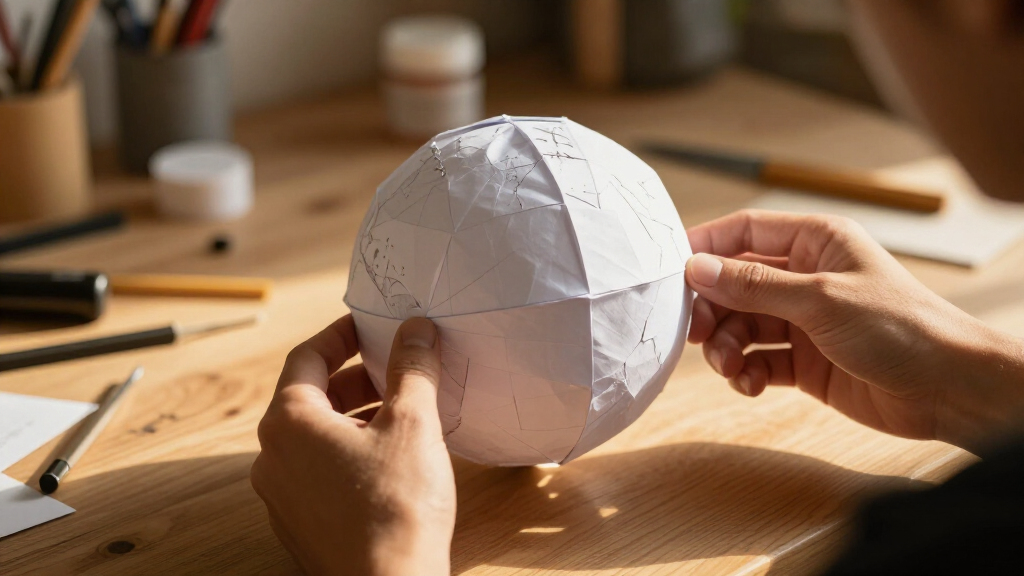
A new trend of folding paper globes is emerging, combining art and sustainability. Experts say they offer a creative, eco-friendly alternative to traditional globes. The development is still in early stages, with widespread adoption yet to be seen.
Folding paper globes have recently emerged as a new craft trend, attracting attention from artists, educators, and sustainability advocates. These globes are designed to be folded from flat sheets of paper into three-dimensional spherical shapes, offering an eco-friendly alternative to traditional globes made of plastic or metal. The development is notable for its combination of artistic expression and environmental consciousness, with early demonstrations garnering social media attention.
Several artists and craft enthusiasts have begun sharing tutorials and prototypes of folding paper globes, emphasizing their simplicity and sustainability. Unlike conventional globes, which often involve complex manufacturing processes and non-biodegradable materials, these paper globes are made from recyclable or biodegradable paper sheets, which can be folded without glue or cutting tools. Experts in sustainable design suggest that this approach could reduce plastic waste associated with traditional globe production.
According to Sarah Lin, a paper artist based in San Francisco, “The beauty of these globes lies in their minimal material use and the potential for customization. They can be painted, decorated, or scaled to different sizes, making them versatile for educational and artistic purposes.” While the concept has been around in some craft circles, recent viral videos and social media posts have propelled it into broader public awareness.
Manufacturers and DIY communities are exploring different folding techniques, some inspired by origami, to improve the structural stability and aesthetic appeal of these globes. However, the process remains largely manual, and mass production has not yet been established. The trend is still in its early adoption phase, with no large-scale commercial products available yet. You can find useful tools for your craft projects in our craft supplies section.
Potential Impact on Eco-Friendly Crafting and Education
The rise of folding paper globes could influence both the craft community and educational sectors by promoting sustainable materials and hands-on learning. They offer an environmentally friendly alternative to plastic globes, which are often difficult to recycle and contribute to pollution. Additionally, the DIY nature encourages creativity and engagement, especially among students and hobbyists. If widely adopted, this trend could reduce reliance on manufactured globes and inspire further innovations in eco-conscious design.
eco-friendly paper globe craft kit
As an affiliate, we earn on qualifying purchases.
As an affiliate, we earn on qualifying purchases.
Background on Paper Craft Trends and Globe Manufacturing
Paper folding techniques, including origami, have a long history as artistic and educational tools. Recently, there has been a surge in eco-friendly crafts that emphasize sustainability and minimal waste. Traditional globes, typically made of plastic or metal, have faced criticism for their environmental footprint. The development of folding paper globes builds on these trends, combining traditional craft methods with modern sustainability concerns. Early prototypes appeared in niche craft communities in late 2023, but the concept gained broader attention in early 2024 through social media platforms.
Experts note that while paper globes are not new in craft circles, their application as functional, foldable globes for display or educational use is a recent innovation. The challenge remains in creating durable, stable structures that can withstand handling while maintaining a lightweight, foldable form.
“These globes demonstrate how minimal materials can create something both beautiful and functional, with a strong environmental message.”
— Sarah Lin, paper artist
origami globe folding instructions
As an affiliate, we earn on qualifying purchases.
As an affiliate, we earn on qualifying purchases.
Challenges in Scaling and Commercialization
It is still unclear how quickly folding paper globes can be adopted on a large scale or integrated into commercial manufacturing. The durability and stability of the paper globes under regular use remain concerns, and there is no established production process or market presence yet. Additionally, questions about cost, material sourcing, and educational integration are still being explored by innovators and potential producers.
As an affiliate, we earn on qualifying purchases.
Next Steps for Development and Adoption
Researchers and craft communities plan to experiment with different folding techniques to improve structure and durability. Industry stakeholders are monitoring these innovations for potential commercial applications. In the coming months, organizers expect to see more tutorials, prototypes, and possibly small-scale pilot projects in educational settings. Further research will determine whether the trend can transition from niche craft to mainstream eco-friendly product.
As an affiliate, we earn on qualifying purchases.
Key Questions
Are folding paper globes durable enough for everyday use?
Currently, durability varies depending on the paper quality and folding technique. Most prototypes are intended for display or educational purposes rather than regular handling, but improvements are ongoing.
Can these globes be customized or decorated?
Yes, they can be painted, decorated, or scaled, allowing for personalization and artistic expression.
Are folding paper globes environmentally friendly?
They are considered more eco-friendly than traditional globes, as they use recyclable or biodegradable materials and involve minimal waste.
When might these globes be available commercially?
It is too early to predict exact timelines; widespread commercial availability will depend on further development and scaling efforts.
What are the main challenges facing this trend?
Key challenges include ensuring structural stability, durability, mass production methods, and market acceptance.
Source: hn
Fall yard work Picks
leaf blowers
As an affiliate, we earn on qualifying purchases.