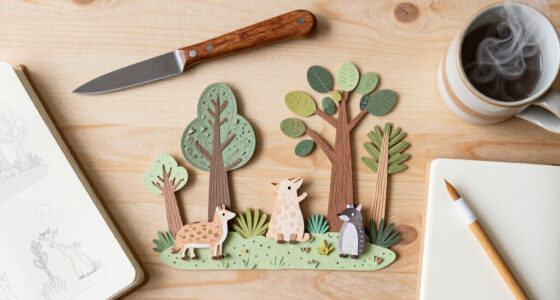

You can build layered paper designs without bulk by combining lightweight materials like vellum, acetate, or tissue paper with subtle color blending techniques that create depth without stacking thick layers. Use textured effects like stippling or dry brushing to add visual interest, and incorporate semi-transparent elements for dimension. Place darker or textured pieces behind lighter ones to enhance depth, and lift elements slightly with foam dots for a shadowed, three-dimensional look. Keep exploring for more tips to refine your layered designs.

Get business pricing on tools and workshop supplies
- Business-only prices and quantity discounts
- Tax-exempt purchasing
- Multiple users, one account, clear invoices
Key Takeaways
- Use semi-transparent materials like vellum or acetate to add layered effects without increasing thickness.
- Incorporate die-cut shapes and small elements to create depth while maintaining a lightweight feel.
- Apply subtle color blending and texturing techniques to simulate layers visually rather than physically.
- Attach elements with foam dots or double-sided tape to lift parts slightly without bulk.
- Combine textured mediums and surface enhancements for visual complexity without adding physical weight.
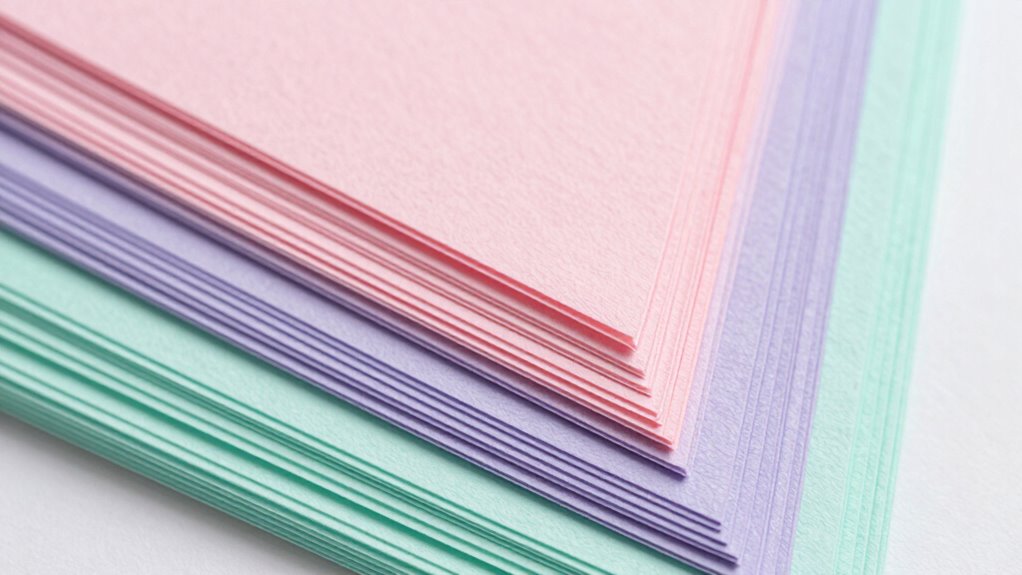
Have you ever wondered how to add depth and dimension to your paper designs? Building layers without creating bulk can seem tricky, but with the right techniques, you can achieve a multi-dimensional look that feels rich and professional. One of the key secrets is mastering color blending. Instead of stacking thick layers of paper, you can use subtle shifts in color to create the illusion of depth. For instance, blending shades gradually—like shifting from light to dark—can make elements seem to recede or come forward. Using watercolor or ink, you can softly merge hues directly onto your paper, avoiding harsh edges that add unnecessary bulk. This approach not only enhances visual interest but also keeps your design light and manageable. Incorporating visual tricks like blending and texturing can significantly elevate your layered effects without adding weight.
Master color blending to add depth and dimension without bulk in your paper designs.
Texture enhancement is another crucial tool in building layered effects without adding bulk. You can add dimension by introducing tactile elements that catch the eye without thickening your overall piece. Techniques like dry brushing, stippling, or embossing can introduce subtle textures that give the illusion of layers. For example, lightly scratching or scoring the paper creates a sense of depth, making certain areas pop without needing extra paper thickness. Additionally, using textured mediums like modeling paste or gel mediums can add surface interest, which visually mimics multiple layers. When combined with color blending, these textured touches can create a layered look that feels complex yet remains lightweight. Exploring different texturing techniques can further enhance the tactile quality of your designs and can be complemented by layered transparency effects such as vellum or acetate to add depth and interest. Incorporating lightweight materials into your projects allows for more intricate effects while maintaining ease of handling and assembly.
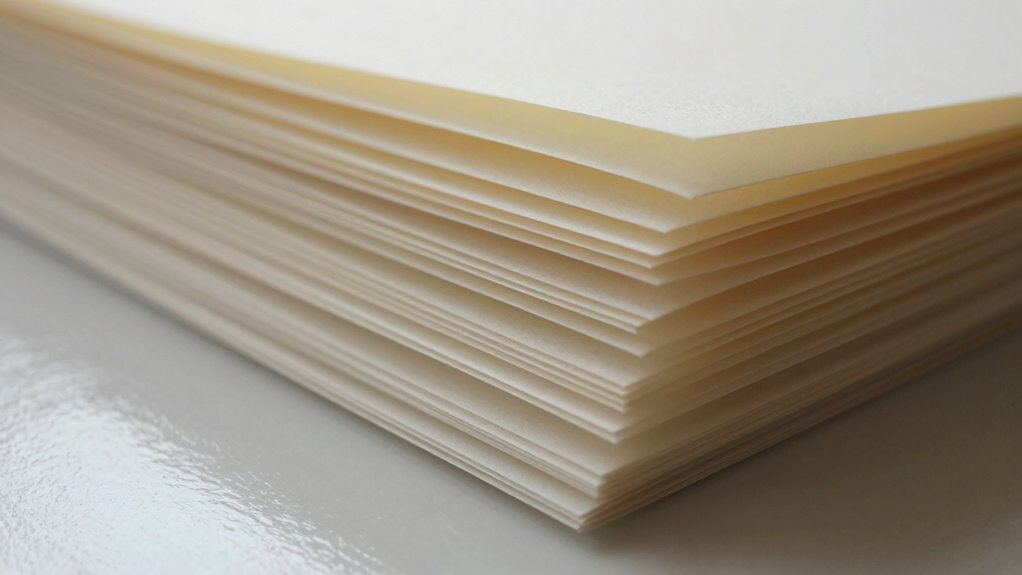
To further build depth, consider using die-cut shapes or layered transparency effects. Cutting shapes from thin paper or vellum allows you to overlay them onto your base design, creating a layered appearance without the bulk. You can also experiment with layering semi-transparent materials, such as acetate sheets or tissue paper, which add depth through transparency rather than thickness. When attaching these elements, opt for adhesive foam dots or double-sided tape sparingly, so they lift slightly and cast subtle shadows, enhancing the 3D effect without overwhelming the design. Strategic placement is essential; placing darker or more textured elements behind lighter, smoother ones can help simulate depth. This arrangement guides the viewer’s eye and makes your design appear more complex. Remember, the key is to use visual tricks—like color blending and texture enhancement—rather than physical bulk. By carefully balancing these techniques, you can create layered paper designs that look intricate and multi-dimensional, yet remain sleek and lightweight. This approach allows you to add sophistication to your projects without sacrificing ease of assembly or comfort in handling.
lightweight vellum paper for crafts
As an affiliate, we earn on qualifying purchases.
As an affiliate, we earn on qualifying purchases.
Frequently Asked Questions
What Types of Paper Work Best for Layered Designs?
For layered paper designs, lightweight papers like vellum, cardstock, and kraft work best. They allow you to add dimension without creating bulk. Opt for textured finishes to add visual interest and depth, and guarantee you coordinate colors carefully to keep layers looking cohesive. Using these materials, you can achieve intricate, layered effects that are both stylish and manageable, making your designs stand out while remaining lightweight and refined.
How Do I Prevent Layers From Warping or Wrinkling?
To prevent layers from warping or wrinkling, focus on proper surface preparation and layer adhesion. Make certain your paper is smooth and free of dust before layering. Use a light hand when applying adhesive, spreading it evenly to avoid bubbles and wrinkles. Press each layer gently but firmly, using a flat surface to maintain even adhesion. This helps keep your layers flat, secure, and free of warping or wrinkling.
Can Layering Be Done With Printed or Patterned Paper?
Like Van Gogh’s layered brushstrokes, you can layer printed or patterned paper for stunning effects. Use decorative edge techniques, such as tearing or scalloping, to add texture and dimension. Color blending strategies help seamlessly merge patterns and prints, creating depth without bulk. By carefully selecting papers and applying these techniques, you enhance your design’s complexity, making each layer a harmonious part of your artistic vision.
What Tools Are Essential for Precise Layering?
You need precision tools like a craft knife or scissors for accurate layering, and a metal ruler helps keep edges straight. Using adhesive foam dots or double-sided tape adds dimension without bulk. Master layering techniques by carefully aligning each layer and avoiding excess glue. Keep your tools well-maintained—sharp blades and clean surfaces ensure clean cuts and neat results. Proper tool maintenance prevents tearing or uneven edges, making your layered designs crisp and professional.
How Do I Secure Layers Without Adding Bulk?
Ever wondered how to secure layers without adding bulk? You should focus on ideal layer adhesion and controlling layer thickness. Use a thin adhesive spread evenly to keep layers close without creating extra bulk. Lightly pressing or using a bone folder ensures the layers stay flat and secure. By maintaining consistent layer thickness and precise adhesion, your design stays sleek and professional without unnecessary bulk.
acetate sheets for paper layering
As an affiliate, we earn on qualifying purchases.
As an affiliate, we earn on qualifying purchases.
Conclusion
Now that you know how to build layers into your paper designs without adding bulk, you’re like an artist weaving a delicate tapestry, each thread carefully placed to create depth and dimension. With a few clever techniques, your paper creations will bloom like a layered garden—full of intricate beauty and lightness. So grab your tools, let your imagination soar, and watch your designs come to life, one elegant layer at a time.
As an affiliate, we earn on qualifying purchases.
semi-transparent tissue paper for scrapbooking
As an affiliate, we earn on qualifying purchases.
As an affiliate, we earn on qualifying purchases.
Halloween Picks
halloween
As an affiliate, we earn on qualifying purchases.