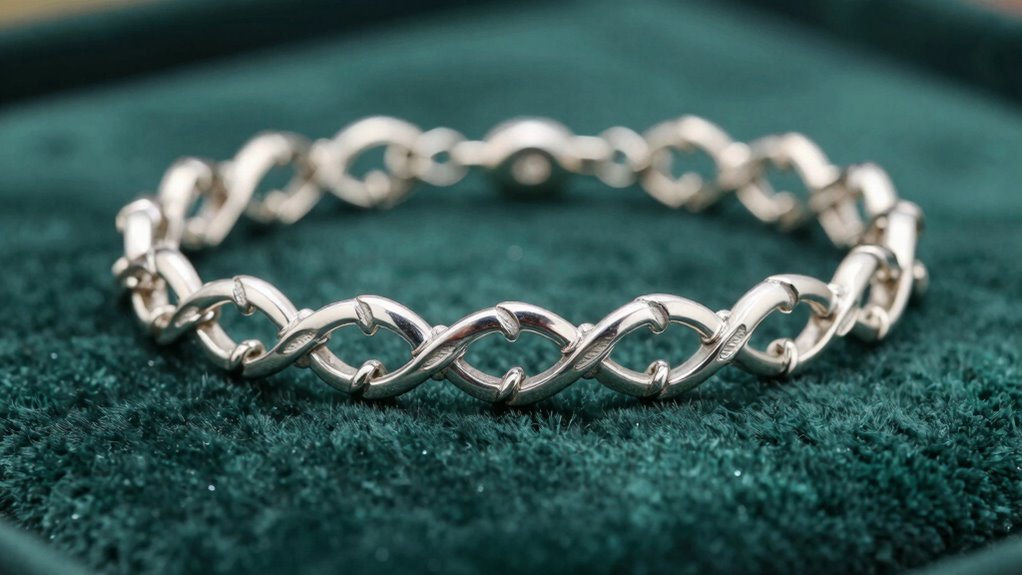

To build elegant repetition in jewelry, focus on creating harmonious patterns with consistent shapes, sizes, or colors, and balance bold contrasts with subtle variations. Use repeating elements with complementary or analogous hues to evoke unity, and mix textures or finishes for visual interest. Be strategic with repetition, highlighting key areas to guide the eye smoothly across the piece. If you keep exploring these techniques, you’ll uncover even more ways to elevate your designs with sophistication.

Get business pricing on tools and workshop supplies
- Business-only prices and quantity discounts
- Tax-exempt purchasing
- Multiple users, one account, clear invoices
Key Takeaways
- Use consistent shapes and sizes to establish a pleasing visual rhythm throughout the design.
- Incorporate complementary or analogous colors in repeating elements for cohesive harmony.
- Balance contrasting textures or materials to add sophistication without overwhelming the piece.
- Repeat specific design motifs sparingly to highlight focal points and maintain elegance.
- Ensure overall pattern stability by maintaining proportion and spacing between repetitive elements.
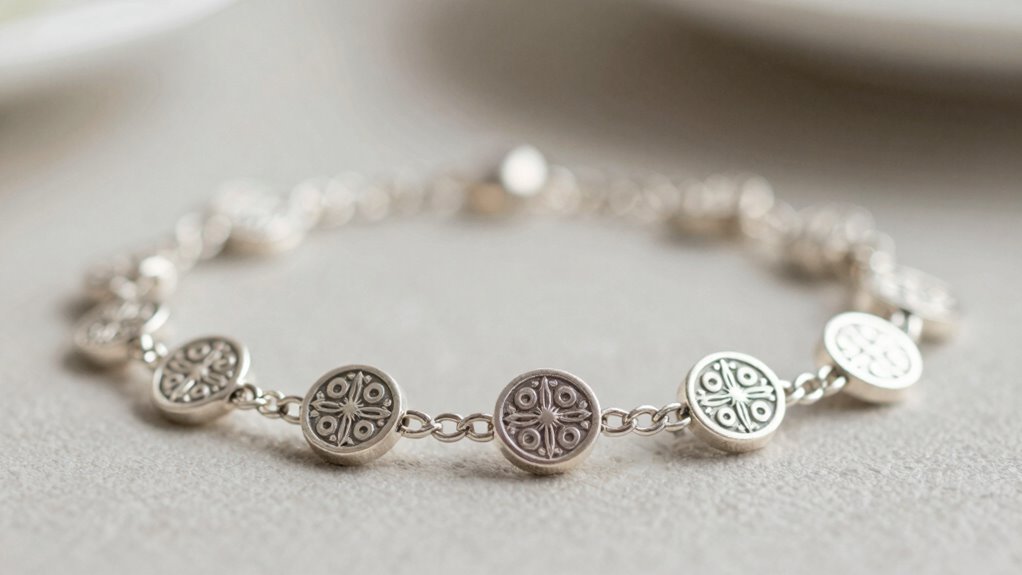
Repetition is a powerful design tool that can elevate jewelry from ordinary to extraordinary, but when used thoughtfully, it creates a sense of harmony and sophistication. To build elegant repetition into your designs, start by contemplating how color harmony influences the overall aesthetic. When you repeat elements with complementary or analogous colors, you foster a visual rhythm that’s pleasing to the eye. For instance, pairing shades of blue and green can evoke calmness and unity, while alternating warm tones like amber and rose adds vibrancy without chaos. Repetition of color creates a cohesive narrative, guiding the viewer’s gaze smoothly across the piece, and emphasizing its rhythm and balance.
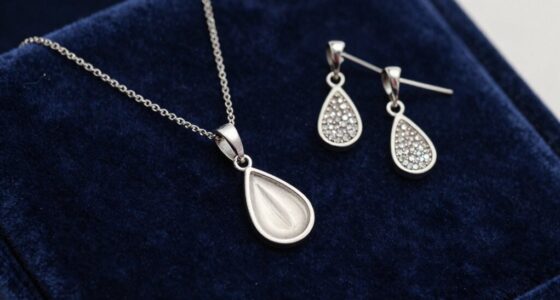
Material contrast is another key aspect to reflect on when designing with repetition. By introducing different textures, finishes, or materials—such as matte versus polished metal or smooth gemstones against rougher elements—you can create a dynamic interplay that enhances visual interest without disrupting harmony. Repeating contrasting materials in a deliberate pattern accentuates their differences, making each element stand out while maintaining a unified look. For example, alternating gold and silver beads or combining leather with metal accents can produce a sophisticated tension that draws the eye. This contrast, when repeated consistently throughout the piece, lends a sense of order and elegance that feels intentional rather than chaotic. Additionally, understanding the principles of visual rhythm helps in creating patterns that feel natural and aesthetically pleasing. Cultivating an awareness of repetition patterns allows you to craft designs that feel both cohesive and engaging.
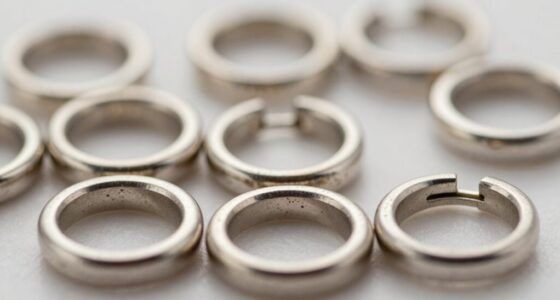
To deepen the sense of repetition, think about the size and shape of your elements. Repeating similar forms—like round beads or elongated bars—sets up a predictable visual rhythm. Varying the size slightly within the repetition can add subtle complexity, but keep the overall pattern consistent enough to maintain harmony. When you combine this with careful color harmony and material contrast, you craft a design that feels both lively and refined. The key is to strike a balance: repetition should serve as a unifying thread, not an overwhelming pattern. Use repetition sparingly in areas where you want to draw focus, and let contrasting textures and colors act as accents that elevate the overall composition.
Ultimately, building elegant repetition into jewelry hinges on your ability to coordinate these elements with precision. When color harmony guides your palette and material contrast adds depth, your designs will radiate sophistication. Thoughtful repetition doesn’t just create visual rhythm; it creates a story—one that invites the viewer to explore each element while appreciating the cohesive beauty of the whole. Paying attention to design principles ensures your creations are both harmonious and striking.
As an affiliate, we earn on qualifying purchases.
Frequently Asked Questions
What Are the Best Materials for Creating Elegant Repetition?
The best materials for creating elegant repetition in jewelry often include metals like gold, silver, and platinum, thanks to their durability and timeless appeal. These metals offer excellent material durability and are compatible with various design techniques. You should choose materials that maintain their beauty over time, ensuring the repeated patterns stay striking and consistent. Always consider metal compatibility to prevent tarnishing or damage, making your jewelry both elegant and long-lasting.
How Can Repetition Enhance Jewelry’s Visual Appeal?
Repetition enhances your jewelry’s visual appeal by creating a harmonious rhythm that draws the eye. Incorporate pattern variation to keep the design interesting, avoiding monotony. Use texture contrast to add depth and tactile intrigue, making each element stand out while maintaining unity. When you skillfully combine these techniques, your jewelry gains a sophisticated, cohesive look that captivates viewers and elevates your craftsmanship.
Are There Cultural Influences on Repetitive Jewelry Designs?
Think of jewelry as a mirror reflecting diverse cultures through repetitive patterns. You’ll find that cultural symbolism and traditional motifs heavily influence these designs, creating meaningful connections. For example, tribal patterns or Celtic knots repeat to tell stories or symbolize beliefs. By incorporating these elements, you add layers of cultural richness and elegance, making your jewelry not only beautiful but also deeply significant—an artful dance between tradition and personal expression.
How Do I Balance Repetition With Uniqueness?
To balance repetition with uniqueness, you should create pattern contrast by varying shapes, sizes, or textures within your repeated elements. Incorporate color harmony by choosing a cohesive palette that unifies your design while allowing certain pieces to stand out. You can also introduce subtle variations in each repeated motif, ensuring your jewelry remains visually engaging and distinctive, even as it employs consistent, elegant repetition.
What Tools Are Essential for Designing Repetitive Patterns?
What tools are essential for designing repetitive patterns? You’ll need a good set of sketching tools, like pencils and rulers, to craft initial ideas. Digital design software, such as Adobe Illustrator or CAD programs, helps you perfect pattern symmetry and experiment with repetitive motifs efficiently. A loupe or magnifying glass can assist in detailed work, ensuring precision. Have you considered using stencils or pattern-making stamps for consistent repetition? These tools make elegant, symmetrical designs achievable.
As an affiliate, we earn on qualifying purchases.
Conclusion
By embracing elegant repetition, you not only create jewelry that’s visually mesmerizing but also emotionally resonant. When you incorporate consistent patterns, you craft pieces that feel both timeless and harmonious. Remarkably, studies show that people are 20% more likely to remember designs with repeating elements, highlighting their power to leave a lasting impression. So, next time you design, let repetition guide you — it’s the secret to making jewelry that’s both beautiful and unforgettable.
As an affiliate, we earn on qualifying purchases.
jewelry design pattern templates
As an affiliate, we earn on qualifying purchases.
As an affiliate, we earn on qualifying purchases.
Columbus Day / Indigenous Peoples' Day Picks
long weekend sales
As an affiliate, we earn on qualifying purchases.