
If your resin cures soft on one side, it’s often due to uneven UV exposure or improper light positioning. Make sure your UV light covers the entire surface evenly and is close enough to penetrate deeper layers. Also, check that your resin is compatible and that you’re following the recommended curing times. Environmental factors like humidity or temperature can also interfere. Keep exploring for more tips to fix this issue effectively.
Key Takeaways
- Insufficient or uneven UV light exposure causes incomplete curing on one side.
- Thick resin layers can block UV light, preventing full curing on the bottom.
- Improper UV lamp positioning or incorrect wavelength reduces effective curing depth.
- Environmental factors like humidity or temperature fluctuations interfere with consistent curing.
- Resin formulation issues or incompatibility may hinder proper polymerization on one side.
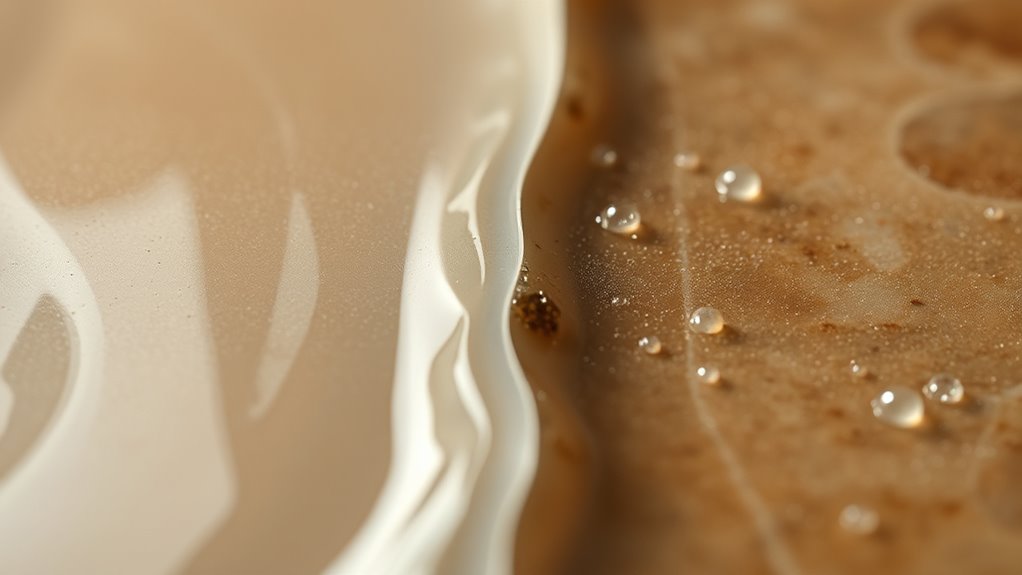
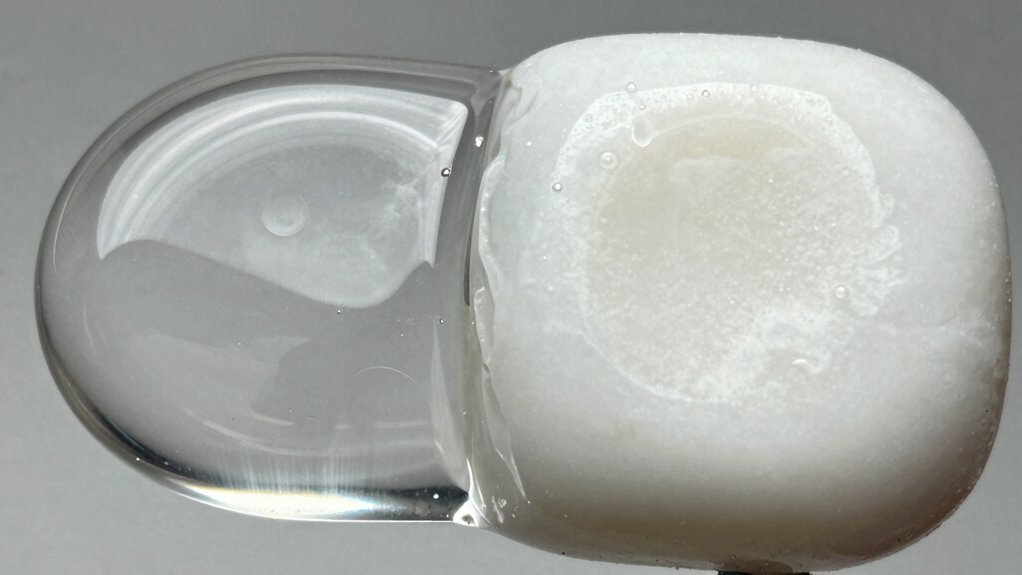
Resin curing problems can be frustrating, especially when your project doesn’t turn out as planned. One common issue is having a resin that cures soft on one side, leaving you with an uneven or tacky finish. This usually points to a problem during the curing process, often related to UV light exposure and resin formulation. Understanding these factors can help you troubleshoot and achieve a fully cured, solid piece.
First, consider how UV light exposure affects your resin. UV curing relies on a specific wavelength of light to initiate polymerization, transforming liquid resin into a solid. If the UV light isn’t penetrating evenly or isn’t strong enough, only parts of your resin will cure properly. When you notice one side remains soft, it’s often because that side didn’t receive sufficient UV exposure. This can happen if your light source isn’t positioned correctly, if the resin layer is too thick, or if the light intensity diminishes over time. To fix this, make sure your UV light is positioned close enough and that it covers the entire surface evenly. You might need to increase exposure time or use multiple light sources for thicker layers. Also, check that your UV lamp emits the right wavelength and is functioning properly to ensure efficient curing.
Next, examine your resin formulation. Not all resins are created equal, and their chemical composition can profoundly influence how they cure. Some formulations require longer UV exposure, while others need specific additives or curing agents to work correctly. If your resin is formulated poorly or is incompatible with your UV light, curing may be incomplete or uneven. Always follow the manufacturer’s instructions regarding curing times and conditions, and choose a resin suited for your project’s needs. If your resin is too thick or contains additives that hinder UV penetration, it can prevent proper curing on one side. In such cases, consider thinning the resin slightly or adjusting the formulation if possible, to improve UV light penetration and ensure a more uniform cure.
Finally, environmental factors such as ambient temperature and humidity can influence the curing process. High humidity can interfere with UV curing, causing softer spots, especially if the resin isn’t fully cured on one side. Make sure you’re working in a controlled environment, with adequate ventilation and stable temperature, to promote even curing. Pay special attention to resin formulation and how it interacts with environmental conditions to optimize your curing results.
Frequently Asked Questions
Can Humidity Affect Resin Curing Consistency?
Yes, humidity can affect resin curing consistency. Humidity interference causes moisture absorption into the resin, which can lead to uneven curing or a soft finish. When the air is too humid, the moisture reacts with the resin’s chemistry, disrupting the curing process. To avoid this, work in a dry environment, use a dehumidifier if needed, and keep your resin covered to minimize moisture exposure.
Does Resin Type Influence Curing on Different Sides?
Did you know that different resin formulations can cure unevenly because of their unique curing chemistry? Yes, the type of resin you use markedly influences how it cures on each side. Some formulations are more sensitive to light or heat exposure, leading to uneven curing. You should choose a resin with consistent curing chemistry for better results, especially when working on detailed projects or larger surfaces.
How Does Ambient Temperature Impact Curing Quality?
Ambient temperature critically impacts your resin’s curing quality. Temperature fluctuations can cause uneven curing, leading to soft spots or sticky areas. Make certain of consistent warmth, ideally between 70-80°F, to promote proper curing. Good air circulation helps maintain a stable environment, preventing temperature drops or spikes. Avoid placing resin in drafty or overly cold spaces, as these conditions hinder the curing process and can result in a soft or incomplete finish.
Are Certain Molds More Prone to Curing Issues?
Like Cinderella’s slipper, some molds are more prone to curing issues, especially those made from porous or uneven materials. Silicone molds with smooth surfaces generally produce better results, while silicone or plastic molds with textured or rough surfaces can trap air and cause curing problems. Always choose mold materials and surfaces that promote even resin flow, ensuring a flawless finish and preventing soft spots or incomplete curing.
Can Improper Mixing Cause Uneven Curing?
Yes, improper mixing can cause uneven curing. If you don’t maintain a consistent mixing consistency or use the correct resin ratio, the resin may not cure evenly. Make sure you thoroughly mix the resin and hardener to achieve a uniform blend. Skipping or rushing this step leads to areas that cure soft or remain tacky, affecting the final quality of your project. Proper mixing guarantees a smooth, consistent cure every time.
Conclusion
Think of your resin as a delicate dance partner, needing perfect synchronization to reach its full potential. When one side stays soft, it’s like missing a step in the choreography—disrupting the flow. By paying close attention to your environment and technique, you guarantee every move is precise. With patience and care, you’ll guide your resin to complete its dance flawlessly, transforming a hesitant start into a stunning finish. Keep practicing, and your artistry will shine through every time.