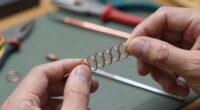
Springback happens when jewelry wire bounces back after shaping, often making your designs less precise. It’s caused by the wire’s elastic properties and varies with wire gauge and alloy. Thinner wires are more flexible and prone to rebound, while thicker or harder alloys resist springback. To control it, you can over-bend, anneal the wire, or adjust your technique. Keep exploring, and you’ll discover more ways to master your wire shaping skills.
Key Takeaways
- Springback occurs because wire elastically tries to return to its original shape after bending.
- Thinner wires and softer alloys are more prone to springback, causing shapes to revert.
- To counteract springback, make slight over-bends or pre-heat the wire through annealing.
- Using stiffer alloys like gold-filled or titanium reduces springback, helping shapes stay intact.
- Practicing shaping techniques and understanding wire properties improve control over final jewelry forms.

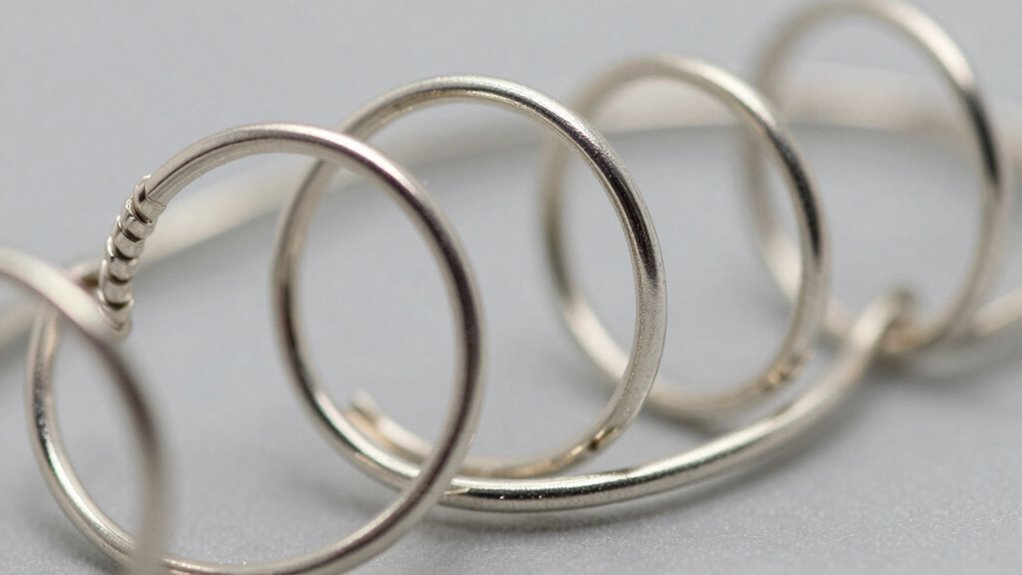
When working with jewelry wire, springback is a common challenge that can affect the final shape and fit of your piece. You might have crafted a perfect loop or coil, only to find it slightly rebound after you release it from pliers. This happens because the wire wants to return to its original shape, which can be frustrating when you’re aiming for precise, stable designs. To better understand and manage springback, it’s essential to consider factors like wire gauge and the metal alloy you’re using. These elements directly influence how much your wire will spring back after shaping.
Wire gauge refers to the thickness of your jewelry wire. Thinner wires, such as 24 or 26 gauge, tend to be more flexible and are more prone to springback because they have less material to resist the force you apply. Thicker wires, like 16 or 18 gauge, are stiffer and tend to hold their shape better, but they can also be more difficult to bend precisely without some springback. As you choose your wire gauge, think about the specific design and the level of durability you want. Thicker gauges will give you more stability but require stronger tools and more effort to manipulate.
Thinner wires are more flexible and prone to springback; thicker wires hold shape better but are harder to manipulate.
The type of metal alloy used in your wire plays a significant role in how much springback occurs. Common alloys include sterling silver, gold-filled, copper, and aluminum, each with different elastic properties. For example, sterling silver is relatively flexible but can rebound slightly after bending, especially if it’s a softer alloy. Harder alloys, such as certain gold-filled wires or titanium, tend to resist springback more, maintaining their shape after manipulation. Knowing the alloy’s properties helps you predict how your wire will behave during shaping and adjusting.
Managing springback requires understanding these factors and applying techniques to compensate for it. When you shape the wire, try to anticipate how much it will spring back by making slight over-bends or using specific tools designed to hold the wire in place. Pre-stretching or annealing your wire—heating and then cooling it—can also reduce springback by softening the metal temporarily, making it easier to bend without losing your desired shape. Additionally, understanding the elastic properties of the metal can help you choose the best approach for your project.
In short, by choosing the right wire gauge and understanding the metal alloy’s properties, you can minimize springback and create more precise jewelry pieces. With practice, you’ll learn how much to bend and adjust your wire to counteract springback, leading to better control and more professional results.
jewelry wire bending pliers
As an affiliate, we earn on qualifying purchases.
As an affiliate, we earn on qualifying purchases.
Frequently Asked Questions
How Can I Prevent Springback When Shaping Jewelry Wire?
To prevent springback when shaping jewelry wire, you should use proper shaping techniques and account for springback causes. Overbend the wire slightly beyond your desired shape, since it naturally springs back. Using softer, more malleable wire also helps. Also, work slowly and steadily, ensuring even pressure. By understanding springback causes, you can adjust your technique to achieve the perfect shape and reduce the need for repeated adjustments.
Does Springback Vary Between Different Wire Materials?
You’ll find that springback varies between wire materials, and it’s not just a one-size-fits-all deal. Different wire material differences cause springback variability, so some metals spring back more than others after shaping. For example, softer wires like gold or copper tend to spring back less, making your designs easier to hold. Keep in mind, knowing your wire’s material helps you anticipate springback and shape your jewelry with confidence.
Can Heat Treatment Reduce Wire Springback?
Yes, heat treatment can reduce wire springback by altering material properties. When you apply heat, it softens the wire, making it more ductile and easier to shape without springing back. Properly heat-treating your wire improves its flexibility and reduces internal stresses, which helps your finished designs stay in place. Just make certain you control the temperature carefully to achieve the desired effect without damaging the wire’s integrity.
What Tools Are Best for Minimizing Springback?
You should use pliers with smooth, flat jaws or specialty wire bending tools to minimize springback. These tools give you better control over wire elasticity and help shape your wire more precisely. Additionally, applying consistent pressure and working gradually lets you counteract the springback mechanics. By carefully choosing your tools and technique, you can reduce wire’s tendency to spring back, ensuring your jewelry shapes stay true to your design.
How Does Wire Diameter Affect Springback?
Think of wire diameter as the backbone of your design’s resilience. Thicker wire generally offers greater wire strength, reducing springback and helping your shapes stay put. When measuring springback, you’ll notice smaller diameters bend more easily, showing more springback. Larger diameters resist deformation better, maintaining your shape. So, choose your wire diameter wisely, balancing flexibility with strength, to guarantee your jewelry holds its intended form and your springback measurement stays in check.
annealing jewelry wire kit
As an affiliate, we earn on qualifying purchases.
As an affiliate, we earn on qualifying purchases.
Conclusion
Now you know the secret behind jewelry wire’s elusive springback—like a mischievous tide pulling your carefully crafted shapes back to the sea. With this understanding, you can anticipate and tame the wire’s rebellious spirit, turning setbacks into opportunities for mastery. Embrace the dance of tension and relaxation, and soon, your designs will flow seamlessly—artful melodies that stay in tune. Keep experimenting, and let your creativity sail smoothly through every bend and twist.
stainless steel jewelry wire 24 gauge
As an affiliate, we earn on qualifying purchases.
As an affiliate, we earn on qualifying purchases.
gold-filled jewelry wire
As an affiliate, we earn on qualifying purchases.
As an affiliate, we earn on qualifying purchases.