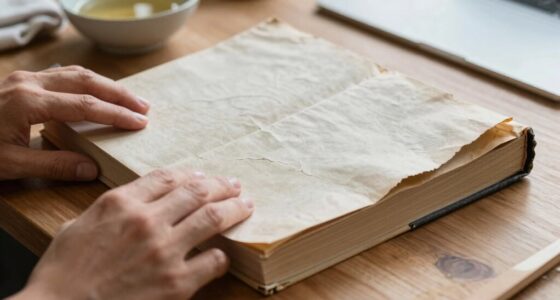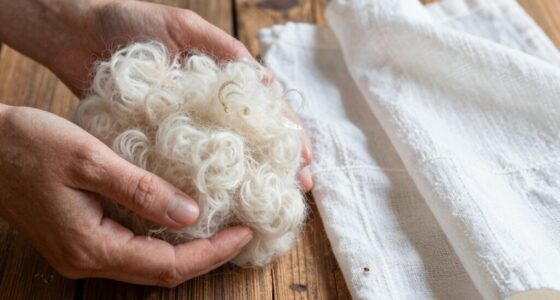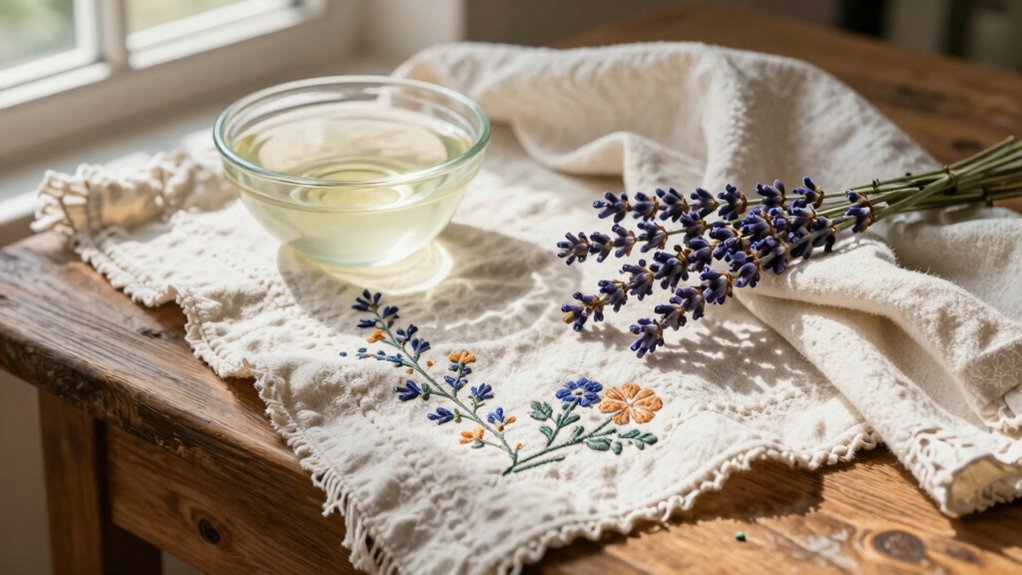

To remove musty smells from handmade textiles without perfume, start by thoroughly airing them outdoors in shaded, breezy areas to let fresh air circulate and reduce humidity. Use natural deodorizers like baking soda sprinkled lightly over the fabric or placed nearby in breathable containers, then shake or vacuum away the residue. Confirm proper storage in cool, dry spaces, and consider steaming textiles lightly afterward. Keep these tips in mind to maintain fresh, odor-free textiles over time.

Get business pricing on tools and workshop supplies
- Business-only prices and quantity discounts
- Tax-exempt purchasing
- Multiple users, one account, clear invoices
Key Takeaways
- Store textiles in cool, dry, breathable containers away from sunlight and moisture to prevent musty odors.
- Air textiles outdoors in shaded, breezy areas to reduce humidity and help eliminate odors naturally.
- Use natural deodorizers like baking soda, activated charcoal, or dried herbs to absorb odors without masking.
- Perform gentle hand washing with mild detergents and thoroughly dry textiles in shade to prevent odor buildup.
- Regularly maintain textiles with proper storage, airing, and natural deodorizers to keep them fresh over time.
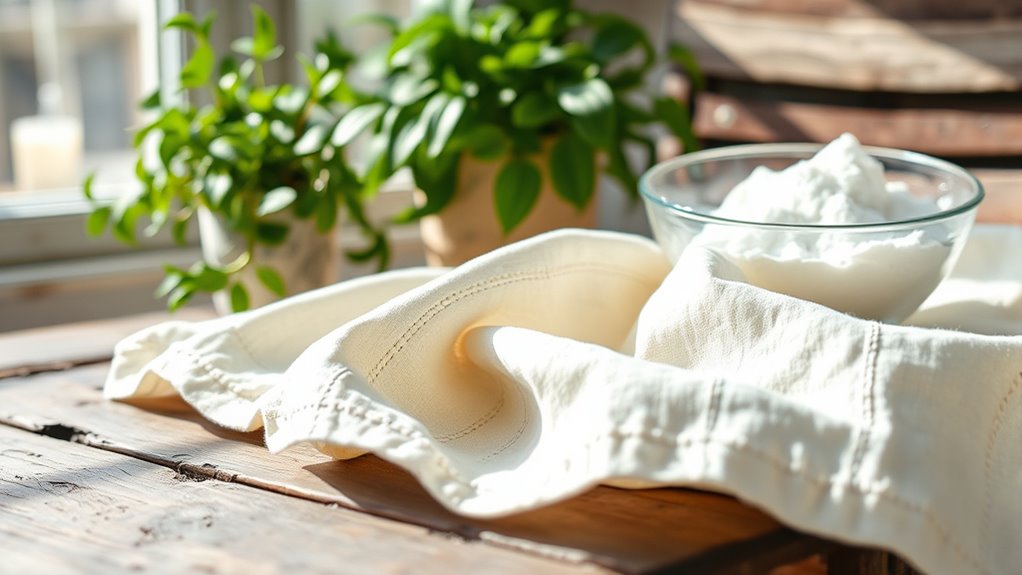
Handmade textiles often carry sentimental value and unique charm, but they can develop musty smells over time, especially if stored improperly. When that happens, it’s essential to address the odor without damaging the delicate fabric or relying on artificial fragrances. The first step is to consider your storage solutions. Proper storage is key to preventing and eliminating musty odors. You want to keep textiles in a cool, dry place, away from direct sunlight and moisture. Using breathable storage containers, like cotton bins or muslin bags, allows air to circulate and prevents mustiness from settling in. Avoid plastic bags or airtight containers that trap humidity, creating a perfect environment for mold and mildew to thrive.
Once you’ve optimized your storage solutions, the next move is to introduce natural deodorizers that absorb odors rather than mask them. Baking soda is a classic option; place small bowls of it near your textiles or sprinkle a light layer over the fabric during cleaning, then shake or vacuum it off. Charcoal briquettes or activated charcoal packets also work well—these absorb moisture and smells without leaving residues. Lavender sachets or dried herbs can add a pleasant scent while helping to neutralize mustiness, but make sure they don’t stain or damage fragile fibers. Incorporating these natural deodorizers into your storage setup keeps your textiles smelling fresh over time.
If you’re dealing with a persistent musty odor, an effective method involves airing out your textiles outdoors in a shaded, breezy area. Fresh air naturally reduces humidity and helps dissipate odors. Just be cautious about direct sunlight, which can fade or weaken delicate fibers. When you bring your textiles back indoors, consider lightly steaming or using a garment steamer to eliminate any remaining smells. The steam not only freshens the fabric but also helps kill mold spores or bacteria that might be causing the odor. Additionally, choosing a projector with high color accuracy can improve the visualization of fabrics and textures, helping you better assess their condition during cleaning and restoration.
Finally, regular cleaning is crucial. For handmade textiles, gentle hand washing with mild, natural detergents can refresh the fabric without harsh chemicals. After washing, ensure thorough drying—preferably outdoors in the shade. Consistency in storage, the use of natural deodorizers, and routine airing will help keep your cherished textiles smelling clean and beautifully preserved. By paying attention to these simple but effective steps, you’ll maintain the integrity and sentimental value of your handmade textiles for years to come.
natural odor absorber for textiles
As an affiliate, we earn on qualifying purchases.
As an affiliate, we earn on qualifying purchases.
Frequently Asked Questions
Can Sunlight Eliminate Musty Odors From Textiles?
Yes, sunlight cleaning can help eliminate musty odors from textiles. Direct sunlight exposes your textiles to UV sterilization, which kills mold spores and bacteria responsible for musty smells. To maximize this, hang your textiles outdoors in a sunny spot for a few hours. The combination of fresh air and UV rays breaks down odor-causing molecules, leaving your textiles smelling fresher and cleaner without using perfumes or chemicals.
Are Natural Remedies More Effective Than Commercial Products?
Natural remedies like herbal infusions and essential oils often work better than commercial products because they’re gentle and customizable. You can create a powerful odor-eliminating spray with herbs like lavender or tea tree oil, which combat musty smells naturally. Plus, using essential oils adds a fresh scent without chemicals. So, you’re more likely to see lasting results with these natural options, making your handmade textiles smell fresh and clean again.
How Long Should I Air Out Textiles to Remove Odors?
You should air out your textiles for at least 24 to 48 hours, allowing their fabric breathability to work its magic and facilitate odor absorption techniques. Keep them in a well-ventilated space, preferably outdoors in fresh air, to help dissipate the smell naturally. Regular airing guarantees the textiles regain their freshness without relying on perfumes, leaving them smelling clean and preserving their handmade charm.
Will Washing With Vinegar Damage Delicate Fabrics?
Washing delicate fabrics with vinegar typically won’t damage them, but you should avoid fabric softeners, as they can coat fibers and reduce breathability. Synthetic fibers are more prone to damage from harsh chemicals, so dilute the vinegar properly and opt for gentle cycles. Always test a small hidden area first. This careful approach helps remove odors without harming your textiles, keeping them soft and in good condition.
Are There Specific Storage Tips to Prevent Future Mustiness?
To prevent future mustiness, you should store your textiles in airtight containers to block moisture while ensuring proper ventilation nearby. Keep them in a cool, dry place away from sunlight, which can encourage mold growth. Regularly airing out your textiles helps maintain freshness, and adding moisture absorbers like silica gel packets can also keep humidity levels low. These simple steps safeguard your textiles from musty odors over time.
baking soda for fabric deodorizing
As an affiliate, we earn on qualifying purchases.
As an affiliate, we earn on qualifying purchases.
Conclusion
Think of your handmade textiles as treasures tucked away in a hidden chest. When you remove the musty smell, you’re opening that chest to reveal vibrant, fresh memories instead of faded, forgotten ones. With each gentle wash and fresh air, you’re restoring their true spirit—bright and alive. So, treat your textiles like precious gems, shining anew, ready to tell their stories once more. Keep caring for them, and their beauty will always remain, sparkling with life.
As an affiliate, we earn on qualifying purchases.
handmade textile storage solutions
As an affiliate, we earn on qualifying purchases.
As an affiliate, we earn on qualifying purchases.
Fall yard work Picks
leaf blowers
As an affiliate, we earn on qualifying purchases.