Wire hardness affects how flexible or durable the wire is, which matters for different tasks. Soft wire is easier to shape and bend, making it ideal for delicate work like jewelry. Half-hard wire offers a balance between flexibility and strength for more demanding applications. Harder wire resists deformation but is more difficult to manipulate. Understanding these differences helps you choose the right wire for your project’s needs and get better results. Keep exploring to learn more about wire selection.
Key Takeaways
- Wire hardness levels (soft, half-hard, hard) determine flexibility, strength, and workability for different applications.
- Soft wire is more ductile and easier to shape, suitable for delicate tasks and intricate designs.
- Half-hard wire offers a balance of durability and flexibility, ideal for general use and structural work.
- Hard wire provides maximum strength and resistance to deformation, but is less bendable and more difficult to manipulate.
- Choosing the correct hardness depends on application needs, balancing ease of shaping with durability and load capacity.
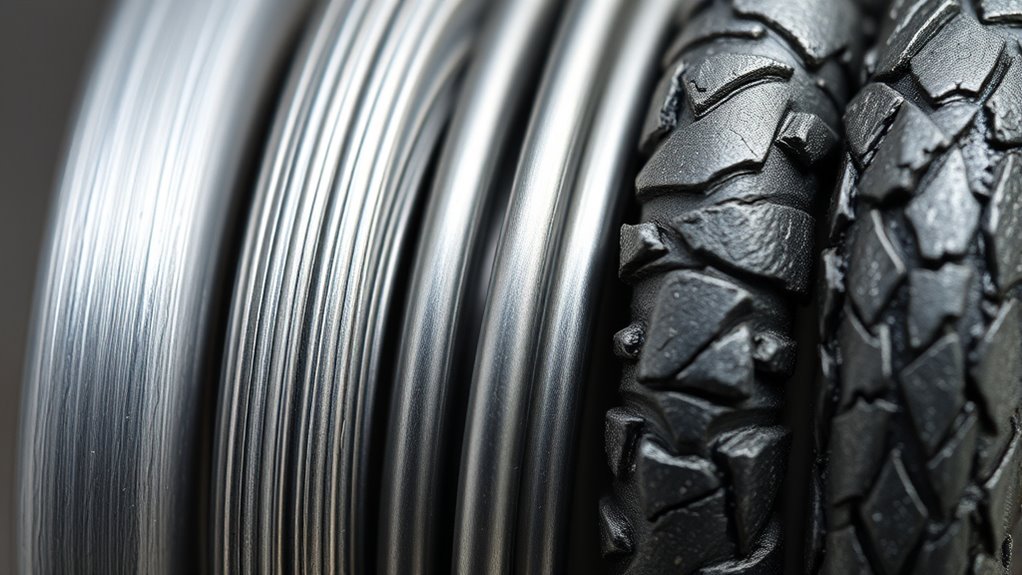
Wire hardness is a key factor that determines its strength, flexibility, and how well it performs in various applications. When evaluating wire, understanding its hardness helps you predict how it will behave under stress, how easily it can be shaped, and how durable it will be over time. Hardness directly affects properties like wire tensile strength and wire ductility. Higher hardness typically means increased tensile strength, allowing the wire to withstand greater pulling forces without breaking. However, as hardness increases, ductility usually decreases, meaning the wire becomes less capable of bending or stretching without cracking. Conversely, softer wires tend to be more ductile but may lack the strength needed for demanding tasks.
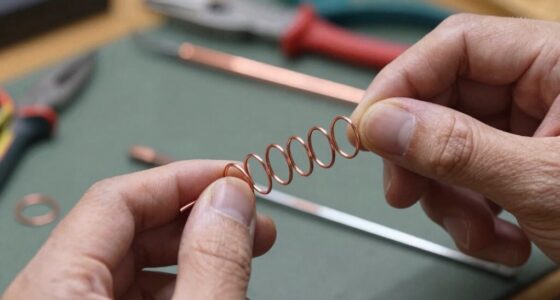
Soft wire, often used for delicate work or applications requiring high flexibility, has low hardness. It’s easier to bend, shape, and manipulate, making it ideal for intricate jewelry, electrical wiring, or crafts. Because soft wire is more ductile, it can stretch or deform without fracturing, but it may not handle high loads or tension well. This makes it less suitable for structural purposes where strength is critical. On the other end of the spectrum, half-hard wire strikes a balance. It’s harder than soft wire but still retains some ductility. This middle ground provides enough strength for many applications, such as jewelry making, where you need a wire that can hold its shape but still be worked into detailed designs.
Understanding why wire hardness matters becomes especially clear when you consider the application’s demands. For instance, in electrical wiring, you need a wire that maintains integrity under tension but isn’t overly stiff, so it can be routed easily. In jewelry, you want a wire that’s firm enough to hold its shape yet flexible enough for intricate designs and adjustments. Choosing the right hardness level depends on these factors. Harder wires are less likely to deform under load, but they’re harder to manipulate, while softer wires are easier to work with but may lack strength. Half-hard wires often provide a good compromise, allowing for both durability and workability. Recognizing the impact of hardness on wire performance is essential for selecting the correct type for your project.
Amazon Product B08GKMFWM7
As an affiliate, we earn on qualifying purchases.
Frequently Asked Questions
How Does Wire Hardness Affect Electrical Conductivity?
You’ll find that wire hardness impacts electrical conductivity because harder wires tend to be less flexible and may have increased resistance, reducing efficiency. Soft wires offer better metal flexibility, making them easier to work with, while also maintaining good conductivity. Additionally, harder wires often have improved corrosion resistance, which helps preserve conductivity over time. So, choosing the right hardness depends on balancing flexibility, durability, and electrical performance.
Can Wire Hardness Be Changed After Manufacturing?
Yes, you can change wire hardness after manufacturing through hardness adjustment methods. You might perform wire hardness testing to evaluate the current hardness level, then apply processes like annealing or tempering to soften or harden the wire as needed. These methods allow you to tailor the wire’s properties for specific applications, guaranteeing ideal performance and flexibility. Always ensure proper testing to confirm the desired hardness has been achieved.
What Tools Are Best for Working With Different Wire Hardness Levels?
You should choose the right tools based on wire hardness for tasks like wire bending and polishing. For soft wire, use lightweight pliers and simple hand tools to avoid damage. Half-hard wire requires stronger, precision tools like needle-nose pliers and mandrels for accurate shaping. When working with harder wire, use specialized tools such as wire cutters and polishing wheels to bend and smooth without deforming the material.
How Does Wire Hardness Influence Durability and Lifespan?
Wire hardness directly impacts durability and lifespan; softer wires tend to be more flexible but less resistant to wear, while harder wires offer greater strength and resistance to deformation. You’ll find that harder wires generally have better corrosion resistance, but may be less flexible. Choosing the right hardness depends on your project needs—balancing wire flexibility with durability to guarantee your wire lasts longer and performs reliably over time.
Are There Safety Considerations When Handling Hard or Soft Wires?
Handling wires is like walking a tightrope—you need to stay safe. When dealing with hard or soft wires, always wear appropriate safety gear like gloves and eye protection. Use proper handling techniques, such as avoiding excessive force or bending beyond recommended limits, to prevent injury or wire breakage. Being cautious guarantees your safety and keeps your project on track, making wire handling a skill you can master confidently.
Amazon Product B008EPVPFM
As an affiliate, we earn on qualifying purchases.
Conclusion
Understanding wire hardness helps you choose the right type for your project. While softer wires are easier to shape, they may lack durability, and harder wires offer strength but can be more difficult to work with. Don’t let concerns about difficulty deter you—using proper tools and techniques makes handling even half-hard wire manageable. Ultimately, selecting the right hardness guarantees your work is both beautiful and long-lasting, so take the time to choose wisely.
Amazon Product B0D2MN32ST
As an affiliate, we earn on qualifying purchases.
Amazon Product B0DRCVZQZV
As an affiliate, we earn on qualifying purchases.