
To achieve crisp, bounce-free letters in metal stamping, guarantee proper die alignment, consistent pressure application, and correct material selection. Use simple, bold fonts and maintain equipment and workspace conditions to prevent defects. Monitoring ink quality and environment control also helps avoid blurry impressions. By fine-tuning your process and equipment setup, you can produce high-quality, clear impressions with minimal bounce. Keep exploring these techniques, and you’ll master the secrets to perfect metal stamping results.

Get business pricing on tools and workshop supplies
- Business-only prices and quantity discounts
- Tax-exempt purchasing
- Multiple users, one account, clear invoices
Key Takeaways
- Ensure proper die alignment and positioning to achieve consistent, sharp impressions.
- Select suitable font styles, favoring simple, bold fonts for clearer stamping results.
- Maintain optimal press force—enough to prevent bounce but avoid over-compression.
- Control environmental factors like temperature and humidity to prevent ink smudging or material expansion.
- Regularly check and maintain equipment and ink quality to ensure precise, clean, and bounce-free impressions.
As an affiliate, we earn on qualifying purchases.
Understanding the Metal Stamping Process

Have you ever wondered how metal parts are precisely shaped and formed so efficiently? The metal stamping history dates back centuries, evolving from simple hand tools to highly automated processes. Today, modern stamping innovations have transformed manufacturing, enabling faster, more accurate production. You can now produce complex metal components with minimal waste and high repeatability. The process involves feeding metal sheets into a stamping press, where dies shape them through pressing, cutting, or forming. Advances like computer-aided design (CAD) and automation streamline this process, ensuring consistency and precision. Understanding these fundamentals helps you appreciate how metal stamping combines tradition with cutting-edge technology to meet modern manufacturing demands. The integration of automation technologies in metal stamping has further increased efficiency and quality control, making it an essential process in countless industries. Additionally, material selection plays a crucial role in achieving crisp letters and preventing bounced impressions in stamped metal pieces. Modern manufacturing techniques continue to evolve, integrating innovations to improve accuracy and reduce environmental impact, including eco-friendly sustainable practices adopted by industry leaders. Incorporating quality control measures at various stages helps maintain high standards and reduces defects in the final products. This blend of history and innovation makes metal stamping a essential process in countless industries.
As an affiliate, we earn on qualifying purchases.
Choosing the Right Die and Material
To choose the right die and material, you need to take into account compatibility to prevent damage and ensure quality. Selecting the appropriate thickness impacts both the stamping process and the final product, so it’s crucial to get it right. Additionally, balancing durability with cost helps you optimize performance without overspending.
Die Material Compatibility
Choosing the right die and material is essential for guaranteeing efficient and precise metal stamping. One key factor is metal compatibility, which ensures the die material can withstand the stresses of stamping without excessive wear or damage. When selecting alloys, consider their hardness, toughness, and resistance to deformation. Proper alloy selection helps prevent issues like sticking or cracking, maintaining clear, crisp impressions. Matching the die material to your chosen metal minimizes tool failure and extends die lifespan. For softer metals, you might use softer die materials, while harder alloys require more durable die materials. Always verify compatibility between your die and workpiece materials to avoid premature wear and ensure consistent, high-quality results. This careful pairing optimizes your stamping process and delivers sharp, clean letters every time.
Material Thickness Selection
Selecting the correct material thickness is essential for achieving precise and efficient metal stamping. Your choice impacts both the quality of the stamped letters and the overall process. Proper material selection ensures the material can withstand the pressure without cracking or deforming, while maintaining crisp, clean impressions. Thickness control plays a key role; too thin, and the material may bend or bounce, causing inconsistent results. Too thick, and it may require excessive force, risking damage to the die or incomplete stamping. By carefully matching the material’s thickness to your die’s specifications, you optimize the stamping process. This not only improves the clarity of your stamped letters but also minimizes waste and rework, leading to a smoother production flow. Additionally, understanding how sound vibrations can influence cellular regeneration may inspire innovative approaches to material testing and quality control in manufacturing processes. Recognizing the influence of material properties on the stamping outcome can further enhance your process efficiency and product quality, especially when considering the impact of auditory processing on worker focus and consistency. Moreover, paying attention to material consistency ensures uniform results across batches and reduces variability in production.
Durability and Cost
When it comes to metal stamping, your choice of die and material directly influences both durability and overall costs. Selecting the right combination guarantees better cost efficiency and longer-lasting parts. Durability factors include the material’s toughness and the die’s design, which affect how many impressions it can make before replacement. To visualize this, consider:
- A hardened steel die that withstands thousands of strikes without wearing down
- Thicker, high-quality metal sheets reducing the need for multiple runs
- Proper maintenance to extend die life and optimize cost efficiency
- Material selection plays a crucial role in determining how well the stamped parts hold up under repeated use
- The environmental impact of materials and processes can also influence overall project sustainability and costs.
- Understanding credit card processing security measures can help prevent costly data breaches that disrupt production.
- Regular inspection and die maintenance are essential for ensuring consistent quality and preventing unexpected failures.
Additionally, understanding market trends in gold and other precious metals can help you choose more cost-effective materials for your stamping projects. Balancing these elements helps you avoid frequent replacements and costly downtime. By understanding durability factors, you make smarter decisions that save money while maintaining quality in your metal stamping projects.
As an affiliate, we earn on qualifying purchases.
Importance of Proper Alignment and Positioning

Proper alignment and positioning are critical because even slight deviations can lead to defective stamped parts or equipment damage. You need to guarantee that the metal sheet is correctly aligned with your stamping press, which depends heavily on proper workspace ergonomics. A well-organized workstation reduces the risk of misalignment and helps maintain consistent results. When selecting the font style for your stamped letters, choose a size and style that fit your equipment’s specifications and that can be aligned precisely. Regularly check that the material is positioned correctly before stamping to prevent mistakes. Proper alignment minimizes errors, reduces waste, and ensures the crispness of your letters. Paying attention to these details keeps your stamping process efficient and your final products professional. Additionally, understanding the essential tools involved can further improve the accuracy and quality of your stamped items, especially tools like alignment jigs and positioning gauges that enhance precision in the process. Incorporating ergonomic workspaces can also help maintain precise positioning over longer production runs, reducing fatigue-related errors and supporting consistent quality in your stamped products. Implementing proper maintenance routines for your equipment can also help sustain alignment accuracy and prolong the lifespan of your tools.
professional metal stamping tools
As an affiliate, we earn on qualifying purchases.
As an affiliate, we earn on qualifying purchases.
Techniques for Achieving Sharp, Clear Impressions
To get sharp, clear impressions, you need to focus on proper die alignment to guarantee even contact. Applying ideal press pressure helps prevent smudges or distortion in your stamped parts. When both are set correctly, you’ll achieve consistent, high-quality results every time. Additionally, maintaining your power tools and equipment properly ensures precision and longevity in your stamping projects. Regular maintenance routines are essential for documenting your process and ensuring consistent performance. Using well-maintained stamping dies also contributes significantly to achieving crisp, well-defined letters. Moreover, understanding material properties can help optimize your stamping parameters for better results.
Proper Die Alignment
Achieving sharp, clear impressions in metal stamping relies heavily on precise die alignment. Proper die positioning ensures that the stamp’s features align perfectly with the workpiece, preventing blurred or distorted letters. Focus on alignment accuracy by carefully checking and adjusting the die before each press. Visualize the die sitting perfectly in the press, with the edges and features matching seamlessly to the material below. Think of:
- *A well-centered die, like a needle in a eyelet*
- *Consistent spacing, like beads on a string*
- *Stable positioning, like a house on a foundation*
Optimal Press Pressure
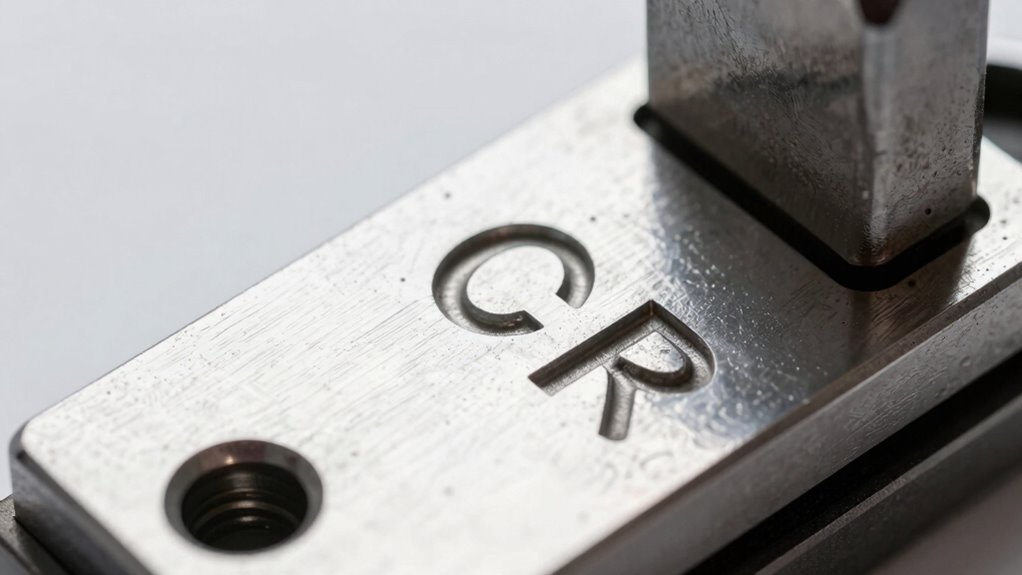
Have you ever wondered how to get the cleanest, most detailed impressions in your metal stamping projects? The key lies in applying the right press force. Too much force can cause bounces or distortion, while too little results in shallow, unclear impressions. To optimize impression quality, start with a moderate press force and adjust gradually. Consistent pressure ensures sharp, crisp letters without bouncing or smudging. Use a calibrated press or a force gauge to maintain uniformity. Pay attention to the material’s thickness and die design, as these factors influence the ideal pressure. Remember, achieving the perfect impression isn’t about brute strength but precision. Fine-tune your press force for each project to ensure your stamped metals have clear, professional-looking detail every time.
Common Issues That Lead to Bounced or Blurred Letters

Bounced or blurred letters often result from issues in the stamping process that disrupt the clarity of the imprint. These problems can stem from inconsistent font styles or improper ink application. When font styles are too intricate or delicate, they may not transfer cleanly, causing smudging or incomplete impressions. Poor ink application can lead to uneven coverage, resulting in blurred or faint letters. Additionally, if the ink isn’t properly absorbed or dried, impressions can bounce back or smear. Visualize these issues as:
Inconsistent fonts and poor ink coverage cause blurred or bouncing stamped letters.
- Ink smudging beyond the intended lines
- Letters appearing fuzzy or incomplete
- Impressions bouncing back from the surface
Addressing these problems involves choosing appropriate font styles and ensuring consistent ink application, which are key to achieving crisp, clear stamped letters every time.
Tips for Preventing Impression Defects
To prevent impression defects, start by selecting font styles that are simple and bold enough to transfer cleanly. Consistent ink quality is essential—ensure your ink remains uniform in viscosity and coverage to avoid smudging or faint impressions. Additionally, monitor the ambient temperature in your workspace; extreme heat or cold can impact ink flow and stamping pressure, leading to blurred or incomplete impressions. Keep the stamping environment stable, as fluctuations can cause material expansion or contraction, affecting accuracy. Regularly check ink levels and consistency, and maintain a controlled temperature to promote uniform impressions. By managing ink quality and ambient conditions, you’ll minimize impression defects and achieve crisp, clear lettering every time.
Maintenance and Inspection of Stamping Equipment

Regular maintenance and inspection of your stamping equipment are essential for ensuring consistent performance and preventing costly breakdowns. Follow proper lubrication protocols to keep moving parts smooth and reduce wear. Regularly check and confirm equipment calibration to maintain accurate impressions and alignment. During inspections, look for signs of wear or damage. Maintain a clean workspace to prevent debris buildup that can interfere with operation. Keep an eye on these key areas:
- Lubrication points, ensuring they’re well-oiled and free of contaminants
- Calibration settings, confirming they match specifications
- Wear parts, replacing damaged or worn components promptly
Troubleshooting and Fine-Tuning Your Stamping Setup
When your stamping results aren’t meeting expectations, troubleshooting becomes essential to identify and resolve issues quickly. Start by checking your stamping equipment calibration to ensure everything is aligned correctly. Proper calibration guarantees consistent pressure and depth, reducing errors like bounced impressions or uneven letters. Always prioritize metal stamping safety by wearing protective gear and maintaining a clean workspace to prevent accidents. If the letters aren’t crisp, verify that your dies are sharp and properly set. Adjust the pressure or stroke length as needed, making small incremental changes to avoid over-stressing the equipment. Regularly inspect tooling for wear or damage. Fine-tuning your setup with careful calibration and safety practices helps achieve precise, clean impressions every time, minimizing waste and rework.
Frequently Asked Questions
How Does Material Thickness Influence Letter Clarity?
Material thickness directly affects letter clarity because thicker materials provide better surface consistency and support for crisp stamping. Thinner sheets may lead to uneven impressions or bouncing, reducing clarity. A consistent thickness ensures smooth contact and sharp, legible letters. Additionally, a good surface finish enhances detail retention, preventing smudges or distortions. So, selecting the right thickness and maintaining surface quality are essential for clear, professional-looking stamped letters.
What Environmental Factors Affect Stamping Quality?
Think of stamping like baking bread—environmental factors can make or break the final result. High humidity causes oxidation, leading to dull, unclear impressions, while temperature fluctuations can warp metal, affecting clarity. To guarantee crisp, clean letters, you need to control temperature and prevent oxidation, maybe by using protective coatings or climate-controlled environments. Keeping these factors in check lets you achieve consistent, high-quality stamped metals every time.
Can Different Fonts Impact Impression Sharpness?
Different fonts can definitely impact impression sharpness because font legibility and design consistency matter. If you choose complex or decorative fonts, the details may not stamp clearly, leading to blurred or uneven impressions. Conversely, simple, bold fonts tend to produce crisper, more legible results. Always consider how the font’s design aligns with your stamping process to guarantee consistent, high-quality impressions that are sharp and easy to read.
How Does Punch Speed Affect Imprint Precision?
Think of punch speed like a swift arrow hitting its mark; too fast or too slow can cause blurred impressions. When you maintain the tool properly and sharpen your operator skills, you guarantee consistent speed, leading to sharp, precise imprints. Rushing can cause bounce-back or misalignment, so controlling punch speed is key. Regular tool maintenance keeps everything running smoothly, helping you achieve crisp letters without bouncing impressions every time.
Are There Safety Considerations During Metal Stamping?
Yes, safety is essential during metal stamping. You should always wear appropriate personal protective equipment, like gloves and eye protection, to prevent injuries. Make certain machine safety features are in place and functioning, such as safety guards and emergency stops. Follow proper procedures and stay alert to avoid accidents. Regularly inspect equipment to guarantee safety mechanisms work correctly, and never bypass safety features, keeping yourself protected at all times.
Conclusion
By paying close attention to your tools and process, you’ll craft impressions as crisp as morning frost on a still lake. Keep your equipment well-tuned and your alignment steady—think of it as guiding a gentle breeze to shape a perfect bloom. With patience and care, you’ll turn each stamp into a lasting masterpiece, avoiding the subtle pitfalls that can blur your work. Ultimately, your craftsmanship will shine as clearly as sunlight breaking through the clouds.
Fall Picks
fall essentials
As an affiliate, we earn on qualifying purchases.