Celtic knot patterns are challenging because they involve endless, interwoven lines that require precision, patience, and a clear understanding of weaving techniques. You must carefully plan the over-and-under pattern to keep the flow seamless and avoid overlaps, which can break the design’s harmony. Properly designing these patterns relies on sketching and visualizing every step before starting. Continuing will reveal how mastering these techniques turns intricate designs into timeless symbols.
Key Takeaways
- Celtic knots require precise weaving of over-and-under lines to create seamless, continuous loops, demanding high accuracy and patience.
- Planning involves detailed sketches or grids to visualize the interlacing pattern and maintain symmetry throughout the design.
- Achieving harmony in the pattern depends on consistent line widths and careful attention to the flow of interwoven lines.
- Mastery of interlacing techniques is essential to preserve the logical over-under sequence and avoid overlaps or breaks.
- The intricate symbolism and complex design process make Celtic knot patterns both a technical challenge and a creative expression.
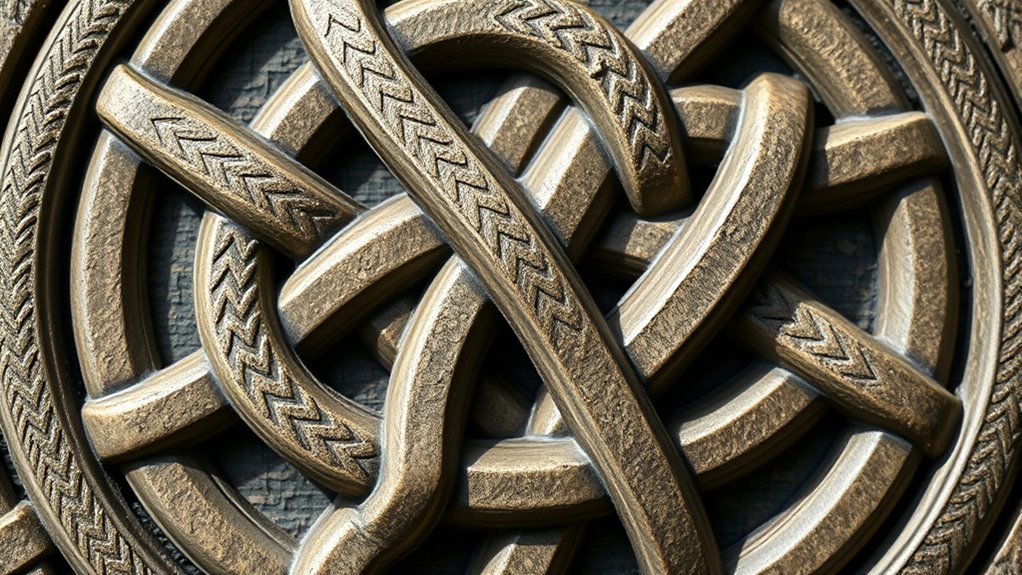
Celtic knot patterns are intricate designs that have fascinated people for centuries with their endless loops and symbolic meaning. These patterns are more than just decorative; they embody a rich history rooted in spirituality, eternity, and interconnectedness. When you start exploring how to create these designs, you’ll quickly realize that mastering the interlacing techniques is essential. These techniques involve weaving lines over and under each other in a continuous flow, creating the seamless, unbroken loops that define Celtic knots. Each pattern demands precision, patience, and an understanding of how the lines interweave without breaks or overlaps that don’t follow the design’s logic. It’s not just about making something look beautiful—it’s about maintaining the flow and harmony that give Celtic knots their mesmerizing quality.
Understanding the historical symbolism behind these patterns enhances your appreciation and guides your planning process. Many of the traditional motifs represent concepts like eternity, spiritual growth, or interconnectedness of life. For example, endless loops illustrate the idea of eternity or the eternal cycle of life and death, while specific shapes may symbolize protection or unity. When you plan your design, keep in mind these symbolic meanings—they can influence the complexity and style you choose. Incorporating traditional motifs or adapting them to your personal symbolism can deepen the significance of your work, making it resonate more profoundly with viewers. Recognizing the importance of symbolism can also help you make design choices that carry meaningful messages.
Embrace traditional motifs and symbolism to deepen your Celtic knot designs and enrich their meaning.
Planning a Celtic knot pattern involves more than just drawing lines; it requires careful foresight. You need to visualize how the lines will weave, ensuring they flow smoothly from start to finish. To make this easier, sketch a basic grid or outline first, marking where the interlacing will occur. This helps you keep track of the over-and-under pattern and maintain symmetry. Remember, the difficulty often lies in maintaining consistent line widths and ensuring the pattern’s continuity. As you develop your design, pay attention to the balance between complexity and clarity—overly intricate knots can become confusing, but simple ones might lack the depth you desire.
In essence, creating Celtic knot patterns is both a technical challenge and an artistic journey. By understanding and applying interlacing techniques, respecting the historical symbolism, and planning meticulously, you can craft designs that are visually stunning and meaningful. It’s a process that tests your patience and precision, but the result is a timeless piece that echoes centuries of tradition. With practice, you’ll find that each knot you create not only enhances your skills but also deepens your connection to this ancient art form.
As an affiliate, we earn on qualifying purchases.
Frequently Asked Questions
How Do Celtic Knot Patterns Symbolize Eternity?
You see, Celtic knot patterns symbolize eternity through their continuous, unbroken loops, embodying the symbolism of infinity and endless life. These intricate designs often carry deep spiritual significance, representing eternal love, interconnectedness, and the cycle of life. By weaving endless paths without a start or end, they remind you of the everlasting nature of the spirit, unity, and the infinite connections that bind everything together.
What Materials Are Best for Creating Celtic Knot Artwork?
You should choose textured paper or metal ink for creating Celtic knot artwork, as these materials enhance the intricate details and traditional feel. Textured paper provides a sturdy surface that highlights fine lines, while metal ink adds a shimmering, durable finish, making your designs stand out. Both options help you capture the timeless complexity of Celtic knots, giving your artwork a professional and authentic look.
Can Beginners Easily Learn to Draw Celtic Knots?
You can definitely learn to draw Celtic knots as a beginner. Picture yourself gradually weaving lines, each stroke building confidence through simple beginner techniques. The learning curve might seem steep at first, like climbing a tangled hill, but with patience and practice, you’ll see progress. Focus on mastering basic patterns first, then layer complexity. Soon, your drawings will flow smoothly, revealing intricate knots you once thought impossible.
Are There Cultural Variations in Celtic Knot Designs?
Yes, there are cultural variations in Celtic knot designs. You’ll notice differences in regional motifs and cultural symbolism across Ireland, Scotland, and Wales. These variations often reflect local history, beliefs, and artistry. When exploring Celtic knots, you can appreciate how regional motifs influence patterns, making each design unique. Understanding these cultural elements helps you create more authentic and meaningful knot art, enriching your appreciation of Celtic heritage.
How Can Digital Tools Assist in Designing Celtic Knots?
Designing Celtic knots with digital tools is like having a blueprint in your hands. You can use digital sketching to experiment freely, adjusting curves and overlaps easily. Knot pattern software streamlines the process, helping you plan complex designs accurately and efficiently. These tools let you visualize patterns before committing to paper, making intricate Celtic knot creation more manageable and precise, especially for beginners or detailed projects.
interlacing design sketching tools
As an affiliate, we earn on qualifying purchases.
As an affiliate, we earn on qualifying purchases.
Conclusion
Now that you understand the intricate dance of lines and loops, you can truly appreciate the artistry behind Celtic knot patterns. They’re like winding rivers that weave through time, demanding patience and precision. With each careful step, you’re crafting a tapestry of history and symbolism. So, embrace the challenge, let your creativity flow, and watch as your own masterpiece becomes a timeless knot—beautiful, complex, and uniquely yours.
Celtic knot weaving pattern stencil
As an affiliate, we earn on qualifying purchases.
As an affiliate, we earn on qualifying purchases.
As an affiliate, we earn on qualifying purchases.