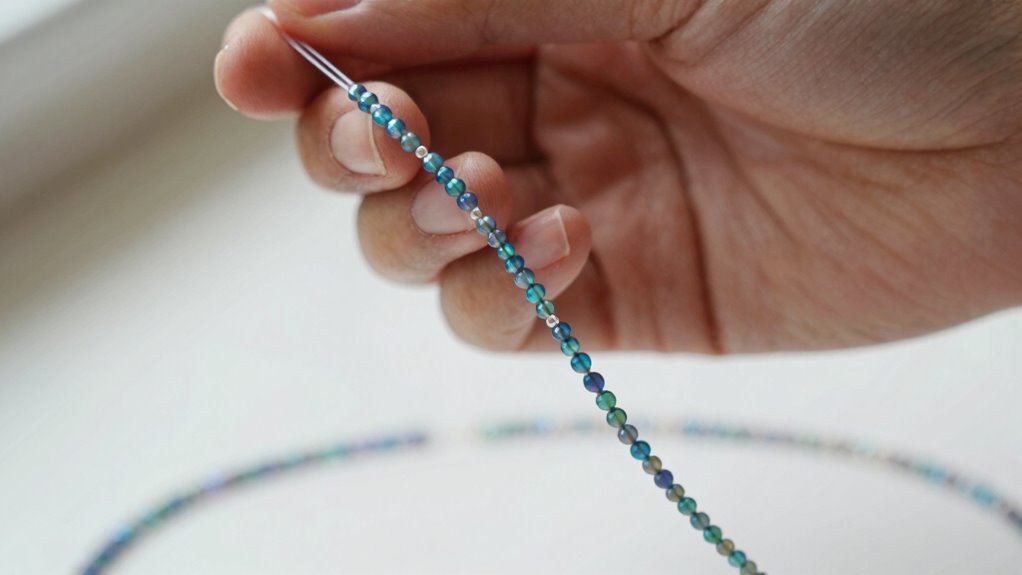

Over time, your bead stringing stretch necklace gets longer because the elastic cords used in the design weaken and lose their elasticity. As the elastic becomes less resilient, it allows the jewelry to expand and fit more loosely around your neck. This natural wear process is common with frequent use, but you can learn how to improve your necklace’s durability and keep it looking new when you explore the solutions that follow.
Key Takeaways
- Stretch jewelry uses elastic cords that expand over time, causing necklaces to lengthen with frequent wear.
- Repeated stretching weakens elastic fibers, gradually increasing necklace length due to material fatigue.
- Poor-quality elastic or insufficient finishing can lead to loss of elasticity, making necklaces appear longer.
- Regular stretching during wear, especially over time, results in the elastic cords losing their original tension.
- Properly secured elastic ends and high-quality materials help maintain the original length of stretch bead necklaces.

Bead stringing stretch is a simple yet versatile technique that allows you to create comfortable, flexible jewelry pieces. When you choose this method, you’re working with materials that offer excellent flexibility, which means your necklaces can easily stretch and adapt to different body shapes or movements without feeling tight or restrictive. This material flexibility is key to the appeal of stretch jewelry because it ensures your piece remains comfortable over time, even with frequent wear. It also makes the process of putting on and taking off your necklace effortless, as there’s no need for clasps or complicated closures. Instead, your jewelry can slide smoothly over your head, providing a seamless experience that’s both practical and stylish.
Another important factor that contributes to the longevity of your stretch necklaces is clasp durability—or rather, the lack of one. Since stretch jewelry doesn’t rely on traditional clasps, the durability of the elastic or stretchy cord becomes critical. High-quality elastic cords are designed to withstand repeated stretching without breaking or losing their elasticity. This resilience ensures that your necklace remains functional and looks good over time, even after months of use. When selecting materials, you want to prioritize those with strong, durable properties that resist fraying or snapping, which can happen with poor-quality elastic. Good clasp durability means you won’t have to worry about your necklace suddenly falling apart because the cord has weakened. Instead, you can enjoy your jewelry for years, knowing it will hold up through daily wear and tear.
Furthermore, because stretch jewelry relies heavily on the quality of its material, you should be mindful of how the elastic is finished. Many crafters double knot or add a dab of jewelry adhesive to secure the ends, enhancing overall clasp durability. While traditional clasps are absent, these small measures help prevent accidental breakage at the connection points, extending the life of your piece. The combination of material flexibility and thoughtful finishing techniques ensures your bead stringing stretch jewelry remains comfortable, safe, and reliable for everyday wear. You’ll notice that the more attention you give to selecting high-quality elastic and proper finishing, the longer your jewelry will stay looking beautiful and feeling comfortable.
Frequently Asked Questions
How Can I Prevent Stretch in Beaded Necklaces?
To prevent stretch in your beaded necklaces, focus on using high-quality beads with good bead elasticity and make certain your stringing material is strong and flexible. Opt for a sturdy clasp that can withstand tension and daily wear. Regularly check your necklace for signs of stretching or wear, and restring it if necessary. Properly choosing durable materials and secure clasps keeps your necklace fitting perfectly without lengthening over time.
What Types of Beads Are Most Prone to Stretching?
You’ll find that elastic beads are most prone to stretching because of bead elasticity and material fatigue. Over time, the elastic cord loses its firmness, causing the beads to stretch and the necklace to lengthen. Beads made from soft plastics or rubber also tend to stretch more quickly. To prevent this, choose beads with higher durability and avoid excessive tension during wear, which speeds up material fatigue.
Does the Stringing Material Affect Necklace Length Over Time?
Yes, the stringing material impacts necklace longevity and how it stretches over time. For example, elastic cords tend to stretch and lose their shape, making necklaces longer. Nylon or silk threads usually hold their length better, but they can weaken with wear. You should select a durable, high-quality stringing material to prevent excessive stretching and maintain your necklace’s original length longer. Proper care also helps preserve its shape.
How Often Should I Restring a Stretched Necklace?
You should restring your stretched necklace every 1-2 years. Think of bead elasticity like a rubber band—over time, it loses its stretchiness, causing the necklace to elongate. Regular restringing restores its elasticity and keeps the beads secure. If you notice your necklace getting noticeably longer or the beads feeling loose, it’s time to restring. Proper care guarantees your jewelry remains beautiful and functional for years.
Can I Fix a Stretched Necklace Without Restringing?
Yes, you can fix a stretched necklace without restringing. Start by checking the bead elasticity; if it’s still good, adjust the clasp tension to tighten the fit. You might also gently squeeze the beads or add small rubber or silicone stabilizers inside the clasp to improve grip. However, if the elasticity has weakened, restringing is usually the best solution to restore your necklace’s original length and durability.
Conclusion
So, next time your necklace stretches a little, remember—it’s just gently telling you that it’s been through some lovely moments with you. Like a good friend, it adapts and grows with your experiences, adding character and charm. Embrace this subtle change as a sign of your shared journey. After all, a slightly longer necklace isn’t a flaw; it’s a quiet reminder of all the memories you’ve created together, quietly woven into its delicate thread.