
To build a safer resin setup in your home craft room, you should install a quality ventilation system with exhaust fans or air purifiers to remove fumes effectively. Always wear protective gear like gloves, goggles, and a respirator mask during work. Keep your workspace organized, away from food, and store materials properly in labeled containers. Regularly check safety equipment and understand product hazards. Want to create a safer, more enjoyable resin space? Keep going to find out how!

Get business pricing on tools and workshop supplies
- Business-only prices and quantity discounts
- Tax-exempt purchasing
- Multiple users, one account, clear invoices
Key Takeaways
- Install a high-quality ventilation system with strategically placed exhaust fans or air purifiers to remove toxic fumes.
- Use appropriate protective gear such as gloves, safety goggles, and respirators during all resin handling activities.
- Designate a dedicated, easy-to-clean workspace away from food and drinks, with organized storage for all supplies and safety equipment.
- Educate yourself on resin safety data sheets and handling procedures, and regularly inspect safety equipment for optimal function.
- Maintain a clean, organized environment and consistently follow safety protocols to minimize hazards and ensure a safe crafting experience.
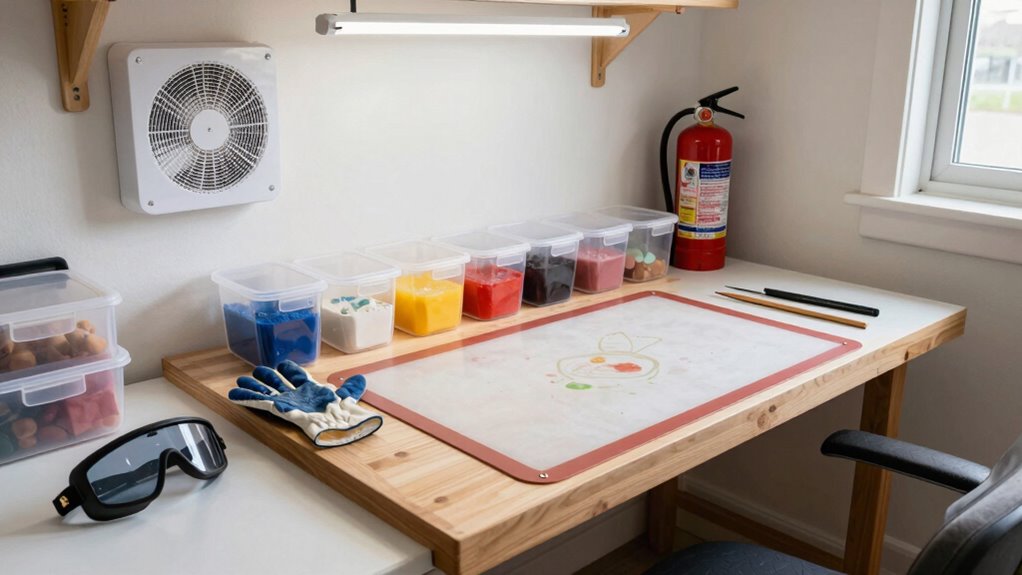
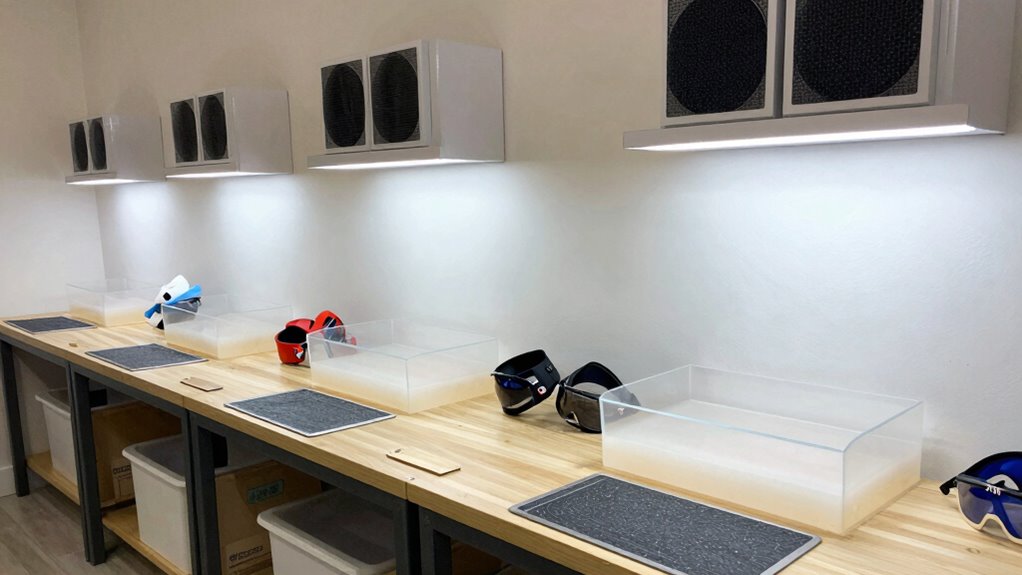
Have you ever considered the risks involved in working with resin? If you’re setting up a home craft room for resin projects, safety should be your top priority. Resin fumes and particles can pose health hazards if not managed properly. The first step is to invest in a good ventilation system. Proper ventilation helps remove harmful vapors from the air, reducing your exposure and keeping your workspace safer. A dedicated exhaust fan or an air purifier with activated carbon filters can considerably improve air quality. Position these systems strategically so fresh air flows in while fumes are expelled outside. Remember, working in a well-ventilated area isn’t just a convenience—it’s a necessity for your health.
Next, protective gear is essential. Always wear gloves made of nitrile or latex to prevent skin contact with resin, which can cause irritation or allergic reactions. Eye protection, like safety goggles, shields your eyes from splashes or accidental drips. A respirator mask rated for chemical fumes adds an extra layer of safety, especially when mixing or pouring resin. It’s tempting to skip safety gear when you’re in a rush, but doing so puts you at risk of inhaling toxic fumes or having resin come into contact with your skin or eyes. Make it a habit to put on your protective equipment every time you work with resin, no matter how small the project. Additionally, understanding the importance of proper handling techniques can further reduce potential hazards. Educating yourself about resin safety protocols can help you develop safer habits and prevent accidents. Maintaining awareness of safe work practices is equally crucial to prevent accidents and exposure.
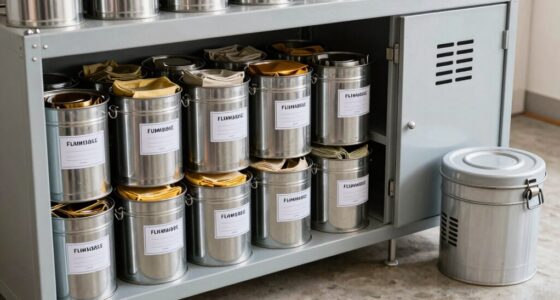
Creating a dedicated workspace also helps contain hazards. Designate an area with easy-to-clean surfaces, away from food or drink, to prevent accidental ingestion or contamination. Keep all resin supplies, tools, and safety gear organized in this space so you’re not scrambling around and potentially exposing yourself to hazards. Proper storage of resin and hardeners in labeled, sealed containers minimizes accidental spills and reduces the risk of fumes escaping. Additionally, understanding the health hazards associated with resin use encourages more cautious handling and safety practices.
Finally, educate yourself about the specific resin products you’re using. Read the labels and safety data sheets thoroughly. Understanding the risks associated with each component helps you take appropriate precautions. Regularly inspect your ventilation system and safety gear to verify they’re functioning properly. By taking these steps—installing effective ventilation systems, always wearing protective gear, and maintaining an organized workspace—you’re actively reducing the health risks involved with resin crafting. This proactive approach not only protects your well-being but also makes your creative process more enjoyable and stress-free.
As an affiliate, we earn on qualifying purchases.
Frequently Asked Questions
What Types of Resin Are Safest for Home Use?
You should choose epoxy resins labeled as low-toxicity or zero VOCs, as they typically have lower resin toxicity. Always check the safety data sheets for ventilation requirements, since proper airflow reduces exposure to harmful fumes. Using water-based or plant-based resins also minimizes health risks. Remember to wear protective gear and guarantee your workspace is well-ventilated, which helps keep resin toxicity levels safe during your crafting projects.
How Often Should I Replace Resin Safety Equipment?
You should replace your personal protective equipment (PPE) regularly, ideally after each use or if it becomes damaged or contaminated. Check your masks, gloves, and goggles frequently for wear and tear. Make sure proper ventilation at all times and clean your equipment according to the manufacturer’s instructions. Replacing PPE often helps maintain safety standards, reducing exposure risks. Prioritize replacing filters and worn-out gear to keep your resin workspace safe and effective.
Are There Eco-Friendly Resin Options Available?
Yes, eco-friendly alternatives to traditional resin do exist, offering a invigorating change for your craft space. These sustainable practices reduce toxic emissions and environmental impact, helping you create with a cleaner conscience. Look for bio-based or plant-derived resins that break down more easily and contain fewer harmful chemicals. By choosing these greener options, you transform your hobby into a mindful, eco-conscious journey that benefits both your art and the planet.
Can I Set up a Resin Workspace Outdoors?
Yes, you can set up a resin workspace outdoors, but you need to take into account outdoor ventilation and weather conditions. Make sure there’s good airflow to prevent fumes from building up. Choose a shaded, sheltered area to protect your workspace from rain, wind, and direct sunlight, which can affect resin curing. Keep an eye on weather forecasts, and be prepared to move your setup indoors if conditions become unsuitable.
What Should I Do if I Experience Resin Fumes?
When resin fumes hit, think of them as an unwelcome fog clouding your workspace. Immediately increase ventilation by opening windows and using fans, and wear protective gear like masks and gloves. Ventilation tips include placing a fan near a window to direct fumes outside. If fumes persist, take a break and step outside. Protect yourself by prioritizing fresh air, and never ignore lingering fumes—your health depends on it.
resin safety protective gear kit
As an affiliate, we earn on qualifying purchases.
As an affiliate, we earn on qualifying purchases.
Conclusion
By creating a safer resin setup, you’re not just following best practices—you’re channeling the wisdom of artisans past who prioritized safety and craftsmanship. Think of it as forging your own legendary toolkit, where each safety measure adds to your mastery. With mindful setup and precautions, you can craft stunning projects without risking your well-being. Remember, every great creator’s secret is safety first—because even the most brilliant artists know that a secure environment fuels endless creativity.
air purifier with activated carbon filter
As an affiliate, we earn on qualifying purchases.
As an affiliate, we earn on qualifying purchases.
resin storage containers labeled
As an affiliate, we earn on qualifying purchases.
As an affiliate, we earn on qualifying purchases.
Fall yard work Picks
leaf blowers
As an affiliate, we earn on qualifying purchases.