
Glazes run when their physical properties, like viscosity and surface tension, allow the molten material to flow and drip under heat. Low viscosity makes the glaze thinner and more likely to move, while low surface tension lets it spread out easily. As temperature rises during firing, the glaze becomes more fluid, increasing the chance of drips and runs. Understanding how these factors work together can help you control glaze flow—if you’re curious, explore further.

Get business pricing on tools and workshop supplies
- Business-only prices and quantity discounts
- Tax-exempt purchasing
- Multiple users, one account, clear invoices
Key Takeaways
- Low viscosity glazes become more fluid under heat, increasing the likelihood of running due to gravity.
- Surface tension influences how tightly the glaze holds together; lower surface tension promotes spreading and drips.
- Rising firing temperatures reduce glaze viscosity, making it more flowable and prone to dripping.
- Thinner application coats decrease excess material and reduce the chance of glaze running during firing.
- Adjusting composition and firing schedule helps control melting behavior and prevents unwanted drips.

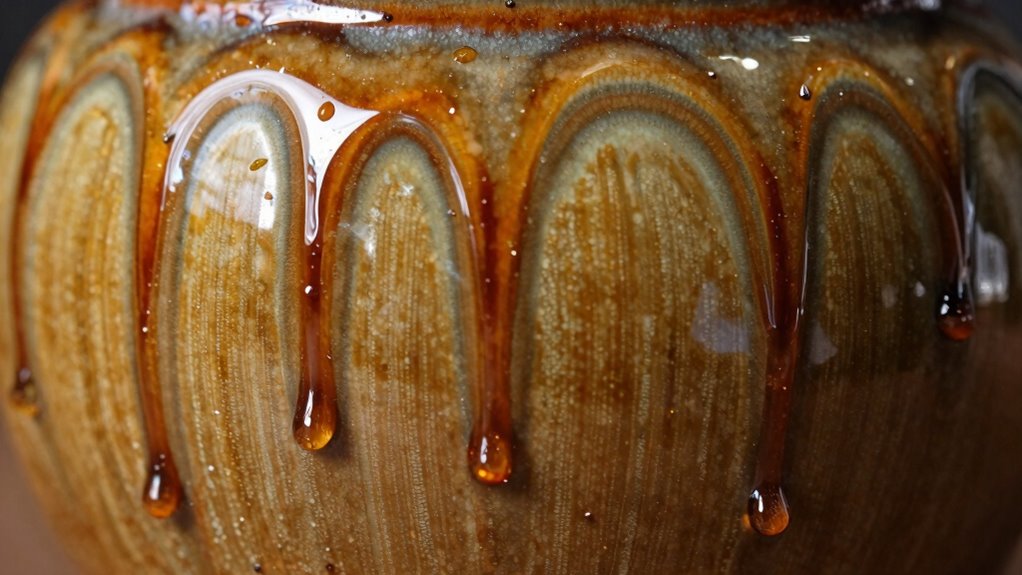
Have you ever noticed glaze running on your pottery and wondered what caused it? It’s a common question among ceramicists, and the answer lies in the physics of how glazes behave during firing. When you apply glaze to your piece, its viscosity plays a essential role in determining whether it stays put or starts to drip. Viscosity refers to the thickness or flowability of the liquid glaze. If your glaze is too thin—meaning it has low viscosity—it’s more likely to run as gravity pulls on it during firing. Conversely, a thicker, more viscous glaze resists movement, staying where you want it. But viscosity isn’t the only factor at play; surface tension also influences whether the glaze drips or adheres smoothly. Surface tension is the force that holds the liquid’s surface together, acting like an invisible skin. High surface tension causes the glaze to bead and stick tightly to the surface, reducing the chances of drips. Low surface tension makes the glaze more prone to spreading out and flowing downward, especially under the heat of the kiln.
During firing, these physical properties interact dynamically. As the temperature rises, the glaze’s viscosity decreases, making it more fluid. If your glaze has low viscosity at high temperature and the surface tension isn’t strong enough to hold it in place, it will start to flow and, ultimately, run. This is why some glazes are more prone to drips, especially those with a runny composition or those applied too thickly. The thickness of your application amplifies these effects, so a heavy coat combined with a low-viscosity glaze can cause significant drips. Additionally, the composition of the glaze—such as the amount of flux, silica, and other ingredients—affects how it melts and flows. Adjusting these ingredients, or controlling application thickness, can help you manage glaze behavior. Understanding viscosity and surface tension is key to mastering glaze control.
Understanding the relationship between glaze viscosity and surface tension allows you to predict and control drips. If you want to prevent running, consider increasing the viscosity by adding materials that thicken the glaze or reducing the amount of flux. Alternatively, you can modify your firing schedule to slow the temperature ramp-up, giving the glaze more time to set and reducing flow. Ultimately, mastering these physical principles empowers you to create glazes that stay exactly where you want them—no unwanted drips, just beautifully finished pottery.
As an affiliate, we earn on qualifying purchases.
Frequently Asked Questions
How Does Glaze Viscosity Affect Its Tendency to Run?
Your glaze viscosity directly impacts its tendency to run; lower viscosity means the glaze flows more easily, increasing the likelihood of drips and runs during firing. When your glaze has high viscosity, it’s thicker and less prone to movement, helping it stay in place. Adjusting your glaze viscosity allows you to control glaze flow, ensuring a smooth application without unwanted drips or runs on your ceramic piece.
Can Kiln Temperature Influence Glaze Dripping Behavior?
Imagine your glaze as a river flowing over your pot; kiln temperature is the current guiding its journey. Higher temperatures can cause the glaze to become more fluid, making it prone to dripping, especially with vivid glaze colors. Firing atmosphere also plays a role—oxidative or reduction environments influence how the glaze melts and flows. So, controlling kiln temperature and atmosphere helps you prevent unwanted drips and achieve your desired finish.
What Role Does Glaze Composition Play in Runoff?
Your glaze composition, including glaze chemistry, directly affects runoff. A high flux content or low melting point ingredients can cause the glaze to become fluid and run more easily. The firing atmosphere also influences this process; a reduction atmosphere can alter the chemistry, making the glaze more prone to dripping. Adjusting your glaze formulation and firing conditions helps control runoff and achieve the desired finish.
How Do Surface Textures Impact Glaze Flow?
Your piece’s surface texture acts like a landscape guiding glaze flow. Smooth surfaces reduce surface tension, encouraging drips and runs, while rough textures create friction, slowing or redirecting flow. Think of surface roughness as a rugged mountain range that traps the glaze, preventing it from cascading freely. So, the more textured your surface, the more it influences the glaze’s movement, shaping the final visual drama of your pottery.
Are There Specific Techniques to Prevent Glaze Drips?
To prevent glaze drips, you should adjust your firing schedules, opting for slower cooling to reduce thermal stress that causes running. Additionally, use careful glaze layering, applying thinner coats to minimize excess glaze that can flow undesirably. You might also experiment with different glaze compositions and brush techniques, ensuring even coverage. These methods collectively help keep your glaze intact and prevent unwanted drips during firing.
As an affiliate, we earn on qualifying purchases.
Conclusion
Understanding why glazes run helps you create beautifully controlled finishes. Did you know that even a tiny 1% increase in glaze viscosity can reduce drips by up to 50%? By mastering the physics behind glaze behavior, you can prevent unwanted drips and achieve smoother, more professional results. So, next time you fire your pottery, remember that a little science goes a long way in perfecting your craft. Keep experimenting, and your glazes will stay just where you want them.
As an affiliate, we earn on qualifying purchases.
As an affiliate, we earn on qualifying purchases.
Fall Picks
fall essentials
As an affiliate, we earn on qualifying purchases.