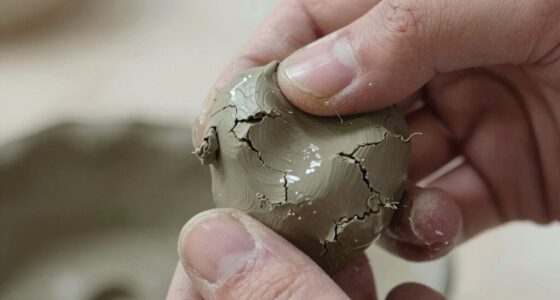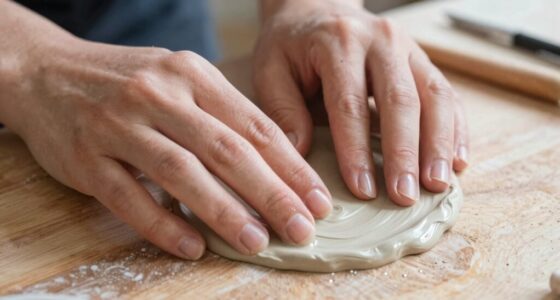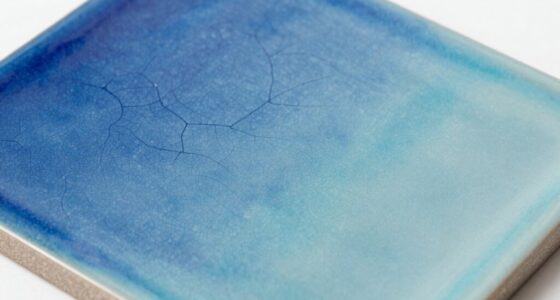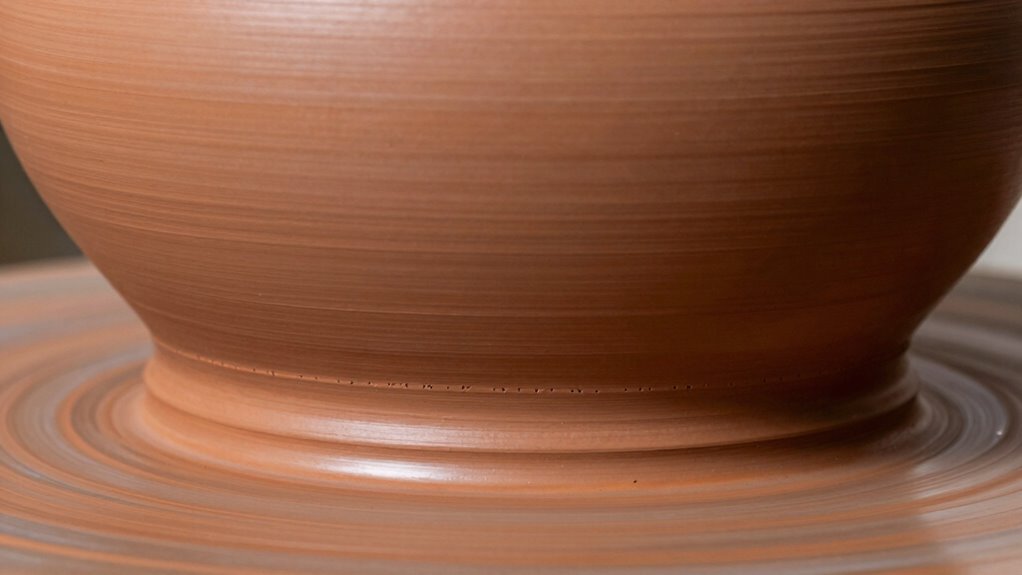
To avoid S‑cracks on your pottery bases, make sure you apply glaze evenly, avoid thick layers, and match glaze compatibility with your clay. Control your firing temperature carefully and follow a slow, steady heating and cooling schedule to prevent thermal stress. Properly dry your piece before firing to reduce internal stresses. If you keep these practices in mind, you’ll minimize cracks—continue to explore more tips to make your pottery flawless.

Get tools and workshop supplies delivered free — and shop member deals
- Fast, free delivery on millions of items
- Access to Prime Big Deal Days deals on October 6–7
- Prime Video, Amazon Music and more included
Key Takeaways
- Apply glaze evenly to prevent uneven surface tension that causes cracks.
- Follow recommended firing schedules and avoid rapid temperature changes to reduce thermal stress.
- Dry pottery thoroughly and evenly before firing to prevent internal stresses from moisture.
- Cool the kiln gradually after firing to minimize thermal shock and crack formation.
- Ensure proper glaze compatibility and avoid overly thick layers to reduce surface tension cracks.

S-cracks on pottery bases can be frustrating, but they’re often preventable with proper techniques. One of the key factors in avoiding these cracks is understanding how glazing techniques and firing temperature influence the stability of your piece. When glazing, you want to ensure your glaze is applied evenly and at the right thickness. A thick or uneven glaze can cause uneven heating during firing, which puts stress on the pottery and can lead to S-cracks. Use a consistent brushing, dipping, or spraying method to coat your piece smoothly, avoiding thick spots that may trap stress. Additionally, choosing the right glazing techniques involves understanding the compatibility of your glaze with your clay body. Some glazes shrink more during firing, and if they’re applied too thickly or improperly, they can cause surface tension that results in cracks.
Firing temperature plays a vital role in preventing S-cracks. If you fire your pottery too quickly or to a temperature that’s too high for your clay or glaze, it can cause excessive expansion or contraction, which stresses the material and leads to cracks. Always follow the recommended firing schedule for your specific clay and glaze. Slow, controlled heating allows the moisture to escape gradually and ensures even expansion throughout the piece. Rushing the firing process, especially during the initial bisque or glaze firing stages, increases the risk of thermal shock—a major cause of S-cracks. Use a kiln that’s properly calibrated so you can maintain consistent temperatures. Furthermore, keep in mind that cooling your pottery slowly after firing is equally important, as rapid cooling can cause uneven contraction and cracks. Additionally, managing the moisture content and drying process before firing is crucial to prevent internal stresses that can lead to cracks.
As an affiliate, we earn on qualifying purchases.
Frequently Asked Questions
Can Certain Clay Types Prevent S-Cracks Better Than Others?
Certain clay types can better prevent S-cracks because of their clay composition, which influences how they shrink during drying and firing. Clays with a more balanced plasticity and consistent firing temperature are less prone to cracking. You should choose clays designed for your firing temperature, as some are formulated for low or high-temperature firings. Using the right clay and firing at the correct temperature helps minimize stress and prevents S-cracks effectively.
Does the Thickness of the Base Influence Crack Formation?
Like a vintage record player, a thicker base can influence crack formation—yes, it can. A thicker base may trap stress during firing, especially if not reinforced properly. To prevent s-cracks, focus on base reinforcement and carefully control firing temperature. Thinner bases tend to flex and expand evenly, reducing stress. So, optimize your clay thickness and firing process to keep your pottery sturdy and crack-free.
How Does Ambient Humidity Affect S-Crack Development?
Ambient humidity plays a vital role in s-crack development, so you should focus on humidity control to prevent cracks. When humidity is too high or too low, it causes uneven drying and stresses the clay, leading to cracks. To guarantee crack prevention, keep your workspace at a stable humidity level, use a damp cloth or humidifier if needed, and avoid rapid drying. Consistent humidity helps your pottery stay crack-free.
Are There Specific Tools That Help Detect Early Cracks?
You can use crack detection tools like magnifying glasses or UV flashlights to spot early cracks easily. Many artisans worry about tool effectiveness, but these tools are highly effective for early crack detection, saving you time and preventing larger issues later. By regularly inspecting your pottery with these tools, you catch cracks early, ensuring your work remains strong and beautiful. Don’t hesitate—early detection keeps your pottery in top shape.
What Are the Best Storage Conditions to Prevent Cracking After Firing?
You should store your pottery in a stable, climate-controlled environment to prevent cracking after firing. Keep the temperature consistent and avoid humidity fluctuations. Make certain your glaze is compatible with your clay body and firing temperature, as mismatched glaze and clay can cause stress. Proper storage prevents sudden temperature changes and stress, helping your pottery stay intact and crack-free over time.
As an affiliate, we earn on qualifying purchases.
Conclusion
By paying close attention to your pottery’s base, you gently guide it toward perfection, avoiding those subtle s-cracks. Embrace patience and a gentle touch, allowing your craftsmanship to flourish without hiccups. Remember, every piece has its own story, and a little care goes a long way in preserving its beauty. With mindful handling, you’ll find joy in creating smooth, flawless bases that truly shine—making each piece a delightful masterpiece to cherish.
As an affiliate, we earn on qualifying purchases.
As an affiliate, we earn on qualifying purchases.
Fall Picks
fall essentials
As an affiliate, we earn on qualifying purchases.