For a home studio, choosing a pottery wheel between 8 to 12 inches in wheel head diameter works well, depending on your space and projects. If you’re a beginner or tight on room, a smaller wheel is easier to handle and store. For larger projects or more advanced work, a bigger wheel offers better capacity. Considering your comfort, space, and project needs helps you find the right fit. Keep exploring to discover more tips on selecting the perfect pottery wheel for your studio.

Get business pricing on tools and workshop supplies
- Business-only prices and quantity discounts
- Tax-exempt purchasing
- Multiple users, one account, clear invoices
Key Takeaways
- Choose a wheel size that comfortably fits your available space and workspace layout.
- Smaller wheels (8-10 inches) are ideal for beginners, detailed work, and limited areas.
- Larger wheels (12 inches or more) support bigger projects and advanced skill development.
- Consider ergonomics and body posture to prevent fatigue during extended use.
- Match the wheel size to your project types and frequency of use for optimal efficiency.
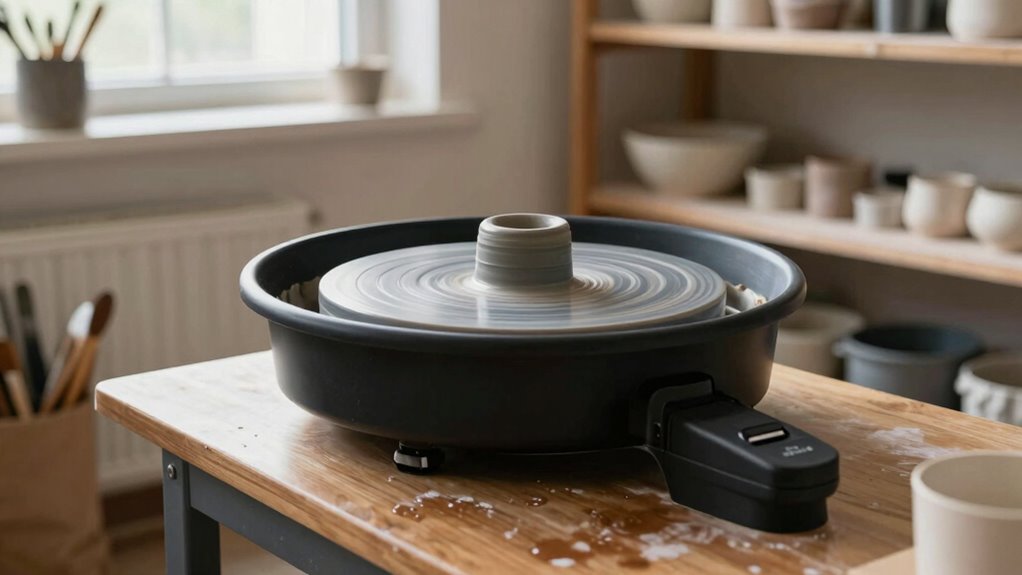
Choosing the right pottery wheel size for your home studio is essential to guarantee comfortable and efficient creation. The size of the wheel you select influences not only your comfort during long sessions but also the types of projects you can successfully complete. To make an informed decision, you need to consider the different ceramic wheel types available and the wheel head diameter, which directly impacts your work capacity and ease of use.
Choosing the right pottery wheel size ensures comfort and project suitability for your home studio.
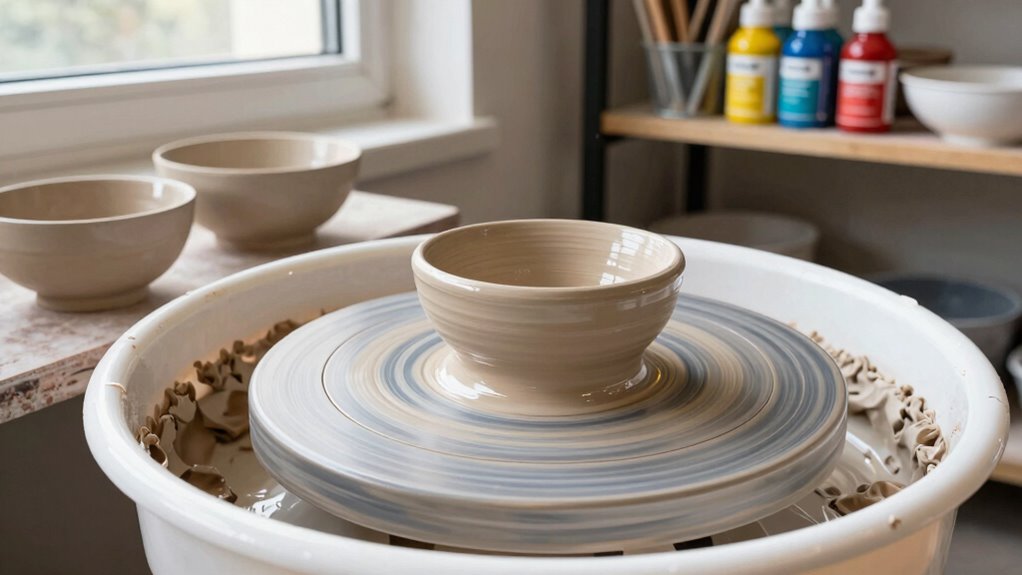
Ceramic wheel types vary, including electric and kick wheels, each with their benefits and limitations. Electric wheels are more common in home studios because of their consistent speed control and ease of operation. Kick wheels, on the other hand, require manual power and are often preferred by traditionalists or those seeking a quieter, more organic experience. Your choice between these depends on your preference, but regardless of the type, the wheel head diameter is a vital factor. The wheel head diameter refers to the surface area where you place your clay, and it determines how large your projects can be. Smaller wheel heads, around 8-10 inches, are suitable for small, detailed work like beads, small cups, or delicate figurines. Larger wheel heads, 12 inches or more, accommodate bigger pieces such as large bowls or vases and give you more room to maneuver your clay comfortably.
When you’re setting up a home studio, space is often limited, so it’s smart to balance size with functionality. A smaller wheel with a compact wheel head might fit more easily into a tight space and still handle most of your beginner to intermediate projects. However, if you plan to work on larger items or want to develop more advanced skills, investing in a wheel with a bigger wheel head diameter makes sense. It allows you to work with bigger clay slabs and produce larger, more complex pieces without feeling cramped. Additionally, considering wheel head diameter is important because it directly affects your work capacity and the types of projects you can undertake comfortably. Understanding ceramic wheel types can also help you choose the best machine for your needs. Being mindful of workspace ergonomics can also help improve your comfort and prevent fatigue during longer sessions. Remember that ergonomics also plays a role in choosing the right size, as a comfortable setup can prevent fatigue and injuries over time. Moreover, selecting the appropriate wheel size can enhance your technique, making the entire creation process more enjoyable and productive.
You should also think about your comfort during use. A wheel that’s too small or too large for your body size could cause strain, especially during extended sessions. Try to find a size that allows your arms to move freely and your wheel to sit at a height that’s comfortable for your posture. Ultimately, the right size depends on your specific needs, space constraints, and the type of work you want to do. By understanding ceramic wheel types and wheel head diameter, you can select a pottery wheel that will serve you well as you develop your skills in your home studio.
As an affiliate, we earn on qualifying purchases.
Frequently Asked Questions
Can I Upgrade My Pottery Wheel Later if Needed?
Yes, you can upgrade your pottery wheel later if needed. Many pottery wheels offer wheel size flexibility and options for Pottery wheel upgrades, allowing you to expand your capabilities as you grow more experienced or take on larger projects. When choosing a wheel now, consider models that are compatible with future upgrades, so you won’t need to replace the entire unit. This way, your investment stays valuable over time.
How Does Wheel Size Affect Clay Thickness?
Sure, a larger wheel might seem like it can handle thicker clay, but it actually forces you to be more precise with clay consistency. A bigger wheel spins faster, so controlling wheel speed becomes trickier, especially with thicker clay. Smaller wheels give you better control over clay thickness and wheel speed, making it easier to create delicate, even pieces. Ironically, sometimes smaller really is better for mastering clay work at home.
Is a Larger Wheel More Durable for Home Use?
A larger pottery wheel isn’t necessarily more durable for home use, especially if you prioritize wheel portability. Bigger wheels tend to be heavier and less portable, making them harder to move around or store. However, they often offer enhanced aesthetic appeal with more workspace and stability. If durability and ease of handling matter most, consider a medium-sized wheel that balances size, strength, and aesthetic qualities, fitting comfortably into your home studio.
What Maintenance Does a Larger Pottery Wheel Require?
You might wonder if a larger pottery wheel demands more upkeep. The truth is, wheel size considerations influence pottery wheel maintenance considerably. Larger wheels require regular lubrication to keep moving parts smooth, and their motor cooling systems need checkups to prevent overheating. You’ll also need to inspect belts and bearings more often for wear. Staying vigilant with these maintenance routines ensures your bigger wheel operates flawlessly, giving you consistent, professional results.
Are Compact Wheels Suitable for Beginners?
Yes, compact pottery wheels are suitable for beginners. These smaller pottery wheel types are lightweight, easy to set up, and perfect for learning the basics without overwhelming you. They work well with beginner pottery tools, helping you develop your skills in a manageable space. As you progress, you can decide if you want to upgrade to a larger wheel. Compact wheels are a practical, accessible choice for starting your pottery journey.
compact pottery wheel for home studio
As an affiliate, we earn on qualifying purchases.
As an affiliate, we earn on qualifying purchases.
Conclusion
Choosing the right pottery wheel size for your home studio isn’t just about space—it’s about finding a tool that sparks your creativity. Coincidentally, many artists discover that a mid-sized wheel perfectly balances power and portability, fitting seamlessly into their daily routine. When the wheel feels just right, it seems to inspire more. So, trust that your ideal size might just appear when you’re least expecting it, turning your studio into a place where your pottery dreams come alive.
As an affiliate, we earn on qualifying purchases.
professional pottery wheel for beginners
As an affiliate, we earn on qualifying purchases.
As an affiliate, we earn on qualifying purchases.
Halloween Picks
halloween
As an affiliate, we earn on qualifying purchases.