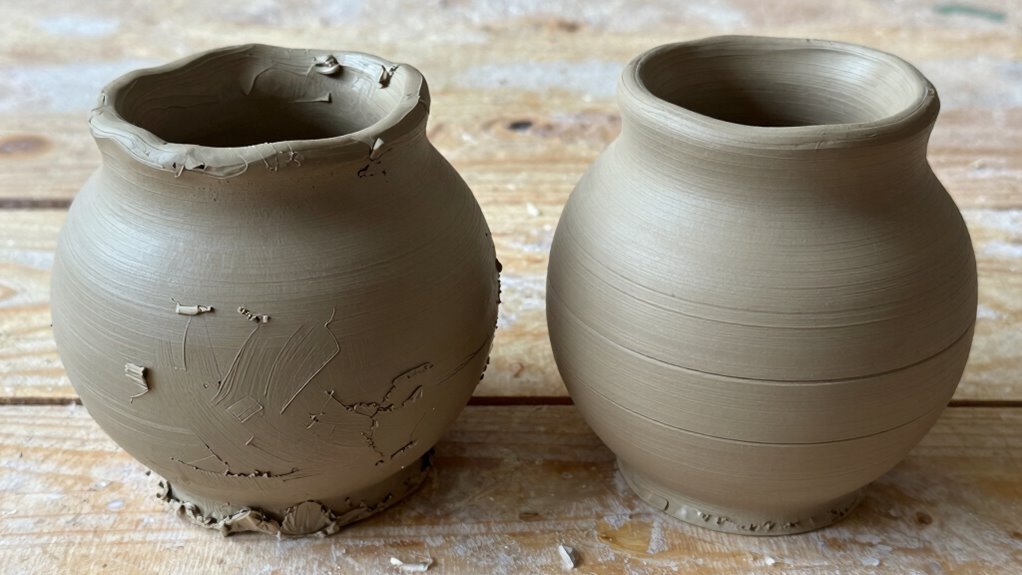

In handbuilding, many beginners miss that scoring creates tiny grooves to increase surface area and grip, while slip acts like glue to bond pieces securely. Skipping either step weakens your joints, risking cracks or separation. Properly scoring and applying slip ensures your pieces stay strong and durable over time. Catching these common mistakes and mastering technique can markedly improve your work — there’s more to discover if you keep exploring how slip and score work together.
Key Takeaways
- Scoring creates textured grooves that increase surface area, while slip acts as a glue filling those grooves for strong bonds.
- Beginners often skip scoring, relying solely on slip, which weakens joint strength and durability.
- Proper handbuilding involves both scoring and applying slip generously for secure, lasting connections.
- Proper technique requires scoring with sharp tools and applying slip evenly for optimal adhesion.
- Neglecting surface preparation or inconsistent clay conditions can compromise the effectiveness of slip and score methods.
Amazon Product B094HWZ3NN
As an affiliate, we earn on qualifying purchases.
Understanding the Role of Slip and Score in Handbuilding
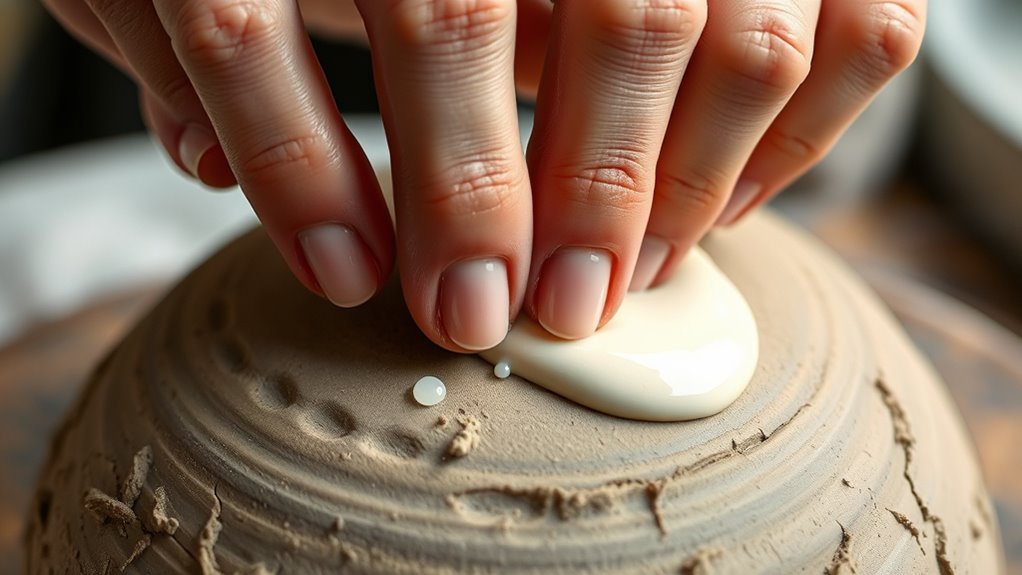
Have you ever wondered why slip and score are vital in handbuilding? These techniques play a pivotal role because they enhance adhesive properties and bonding strength between clay pieces. When you score the surface, you create tiny grooves that increase the surface area, allowing the slip to grip better. The slip acts as a glue, filling in the scored lines and forming a strong, cohesive bond. Without proper scoring, the connection between clay parts can be weak and prone to separation. Using slip and scoring together ensures your project stays intact during shaping and firing. Additionally, understanding the importance of clay ship management can help prevent structural issues in your ceramic creations. Fundamentally, they work as a bonding duo, making your handbuilt creations more durable and reliable. Mastering their use is key to building sturdy, seamless ceramic pieces.
Amazon Product B07X1PKV6Y
As an affiliate, we earn on qualifying purchases.
Common Mistakes Beginners Make When Attaching Clay
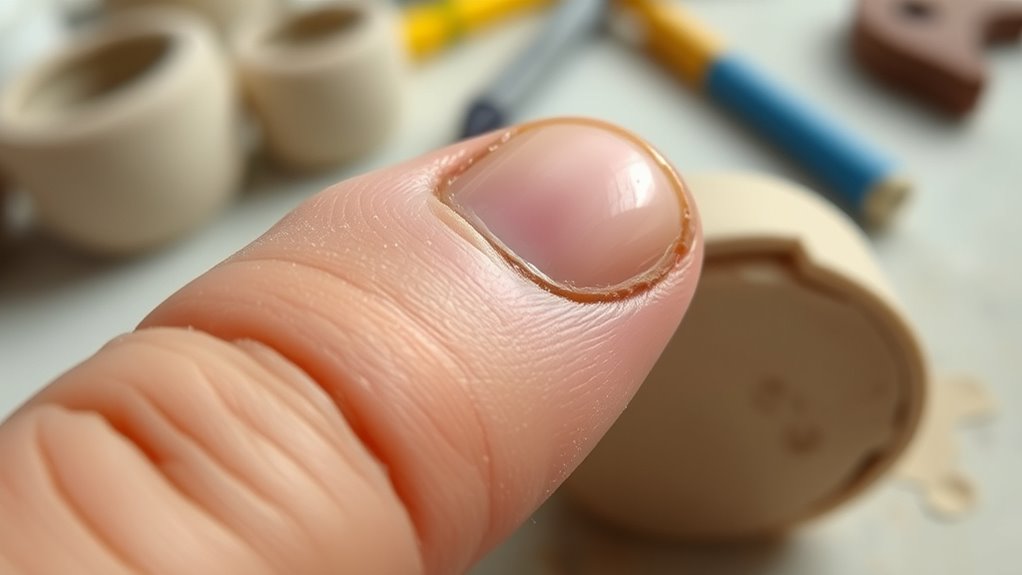
One common mistake beginners make when attaching clay is neglecting to properly prepare the surfaces before scoring and applying slip. If your clay isn’t the right consistency—too wet or too dry—it can hinder a strong bond. Wet clay may be slimy and difficult to score effectively, while dry clay won’t stick well. Additionally, rushing the surface preparation can lead to weak attachments that break easily. When you skip proper scoring, you miss the chance to create a textured surface that helps the slip adhere better. This can also affect your decorative effects, making your finished piece look uneven or less polished. Ensuring the clay is at the right consistency and properly prepared will give you stronger attachments and cleaner decorative details, improving your overall handbuilding results. Using energy-efficient techniques can also help maintain consistent clay conditions and improve your workflow. Proper surface preparation is essential for achieving durable and visually appealing ceramic pieces, and paying attention to clay consistency can make a significant difference in the strength of your work. Developing good adhesion techniques and understanding the science of clay can help prevent common attachment issues and improve the longevity of your ceramic pieces.
Amazon Product B077X73CMC
As an affiliate, we earn on qualifying purchases.
Proper Techniques for Scoring and Applying Slip

To achieve strong attachments when joining clay pieces, mastering the proper techniques for scoring and applying slip is vital. First, guarantee your clay is properly prepared—wedge it well to remove air bubbles and achieve uniform consistency. When scoring, use a sharp tool to create crosshatch marks on both surfaces to be joined, increasing surface area for better adhesion. Apply slip generously over the scored areas, acting as a glue that bonds the pieces securely. Remember, good clay preparation leads to more successful joins, which is essential for structural integrity and firing techniques. Keep in mind these deeper principles:
- Proper scoring creates a textured surface for better slip adhesion
- Applying slip evenly prevents weak spots and cracks
- Strong joints support the piece during firing, reducing breakage
- Understanding clay body preparation is key to achieving durable, seamless connections.
Amazon Product B0DQTFJYTY
As an affiliate, we earn on qualifying purchases.
How Slip and Score Affect the Strength and Durability of Your Piece
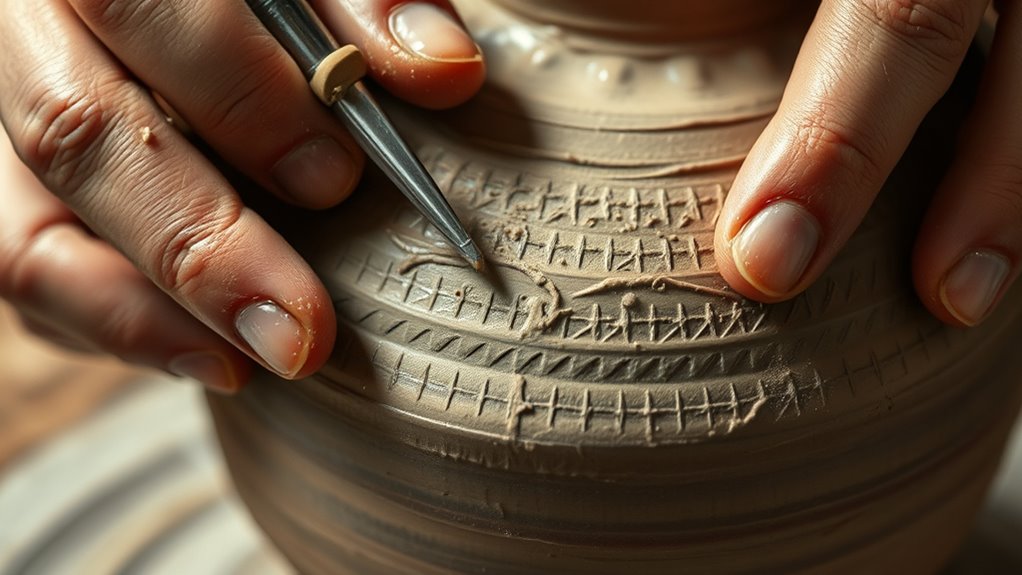
When you properly score and apply slip, you considerably enhance the strength and durability of your clay piece. This process improves clay adhesion, creating a strong bond between different clay sections. Good scoring and slip application guarantee that the joints won’t weaken or crack during drying or kiln firing. Without proper adhesion, your piece becomes fragile and prone to breaking. During kiln firing, well-joined sections withstand the intense heat better, maintaining structural integrity. Properly scored and slipped joints are less likely to delaminate or separate over time. Additionally, understanding the importance of auditory processing skills can help you better grasp the techniques needed for effective slip and score application, ensuring your projects last longer. Developing muscle memory through consistent practice can also improve your technique, leading to stronger and more durable joints. Recognizing the significance of technical knowledge can further refine your handbuilding skills, making your work more reliable. Consistent practice and patience are essential for mastering these techniques, and regularly experimenting with different clay bodies can help you understand how they respond to scoring and slipping. Practicing these techniques regularly allows you to develop consistent craftsmanship, which directly contributes to the longevity and stability of your finished piece. Ultimately, mastering this technique results in a more durable, long-lasting piece that holds together through handling, drying, and firing, giving you confidence in your handbuilding projects.
Tips for Perfecting the Slip and Score Method in Your Projects
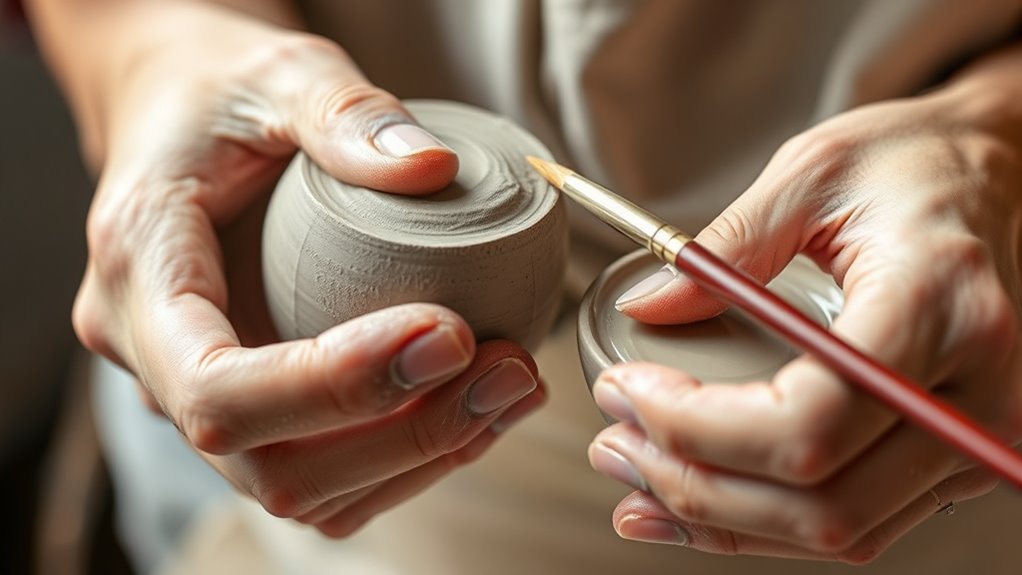
Achieving a strong, durable connection through slip and score starts with mastering proper technique. To do this, focus on maintaining the right clay consistency—neither too wet nor too dry—to ensure the slip adheres effectively. Selecting the right tools also makes a difference; use serrated ribs or scoring tools that suit your project and feel comfortable. Proper clay consistency ensures better bonding and reduces the risk of cracks or breaks. Additionally, understanding the importance of adhesion can help you troubleshoot issues with weak joints. Maintaining proper tool technique can also prevent accidental damage to your project surfaces. Remember these tips:
- Keep your clay at the ideal consistency to promote better bonding.
- Use appropriate tools to create clean, even scores, avoiding excess damage.
- Apply slip generously but evenly, ensuring full contact between surfaces.
- Consistently practice handbuilding techniques to improve your skill and achieve more reliable results.
Practicing these steps helps you develop a reliable method, resulting in stronger, more durable handbuilt pieces that stand the test of time.
Frequently Asked Questions
Can Slip and Score Be Used Interchangeably?
No, slip and score aren’t interchangeable because they serve different purposes in handbuilding. In the interchangeability debate, many beginners think they can swap one for the other, but that’s not effective. Scoring creates a rough surface for clay to grip, while slip acts as a glue to bond pieces together. Using both together ensures a stronger connection, so don’t rely solely on one technique during your clay projects.
What Clay Types Work Best With Slip and Score?
Did you know that over 80% of ceramic failures are due to poor surface preparation? When choosing clay types for slip and score, opt for earthenware or stoneware, as they offer excellent clay compatibility. These clays respond well to scoring and slipping because their surface texture helps the slip adhere securely. Always prepare your surface correctly to guarantee a strong, lasting bond, preventing cracks or breaks later on.
How Long Should I Let Scored Surfaces Dry Before Attaching?
You should let scored surfaces dry for about 15 to 30 minutes before attaching, depending on the clay’s thickness and humidity. This drying time guarantees proper surface preparation and good adhesion. When the score and slip are just dry to the touch, they create a strong bond. Rushing this step can cause the clay to crack or detach later, so be patient and wait until the surfaces feel firm.
Are There Alternative Methods to Slip and Score for Joining Clay?
Sure, there are alternative techniques to slip and score for modern joining, because who wants to wait for surfaces to dry? You could try using clay adhesives, like commercial bonding agents, or even slip brushes with watery slip for quick, seamless joins. These methods save time and effort, perfect for the impatient artist. Just remember, while innovative, they may not always be as reliable as traditional slip and score.
How Does Humidity Affect the Slip and Score Process?
Humidity impacts your slip and score process because higher moisture levels in the environment can cause clay moisture to increase, making it harder for the slip to adhere properly. In humid conditions, the moisture in the clay and slip may prevent a strong bond, leading to weak joints. You should monitor environmental factors and adjust your drying times or work in a controlled space to guarantee your clay stays at the right moisture level for secure joins.
Conclusion
So, next time you slap on some slip and hope for the best, remember—you’re building a clay fortress, not a sandcastle. Mastering scoring and slipping might not turn you into a ceramic wizard overnight, but it sure beats watching your masterpiece fall apart like a poorly built house of cards. Keep practicing those techniques, and soon your pottery will stand strong—unlike your shaky confidence after your first failed attempt. Happy handbuilding!