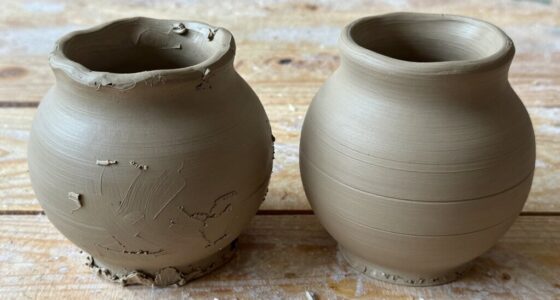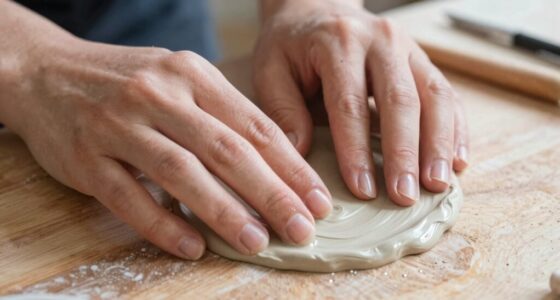
To sand bisqueware without chipping edges, use fine-grit sponges or gentle ceramic pads and keep them moist to reduce friction. Apply light, even pressure and work slowly with gentle circular motions. Handle your piece carefully and check edges often for chips or rough spots. Patience is key—by working softly and maintaining moisture, you’ll protect delicate edges. Keep going to discover more tips for safe, smooth finishing.
Key Takeaways
- Use fine-grit, gentle sanding tools and keep them moist to minimize edge damage.
- Apply light, even pressure with circular motions, avoiding forceful sanding.
- Handle bisqueware carefully, inspecting edges frequently for chips or rough spots.
- Smooth edges gradually, maintaining moisture to reduce friction and prevent chipping.
- Support fragile areas during firing and glazing to protect edges from damage.

Sanding bisqueware can be tricky because the edges are fragile and prone to chipping if you’re not careful. To prevent damage, you need to approach the process with patience and a clear strategy. Start by selecting the right tools—preferably a fine-grit sponge or gentle sanding pads designed for delicate ceramics. Avoid using coarse abrasives, which can gouge or weaken thin edges. When you begin, work slowly and evenly, applying light pressure. Moving in gentle, circular motions helps maintain the shape and prevents accidental chips.
Handle bisqueware with patience, using gentle tools and light pressure to prevent chipping.
It’s important to keep the bisqueware moist during sanding. Dipping your sponge or pad in water reduces friction and minimizes the risk of damaging fragile edges. Plus, moisture helps smooth out rough spots without removing too much material. As you sand, periodically check your progress, paying close attention to the edges. If you notice any tiny chips or uneven spots, gently smooth them out rather than trying to force the material away. This approach ensures you preserve the integrity of the piece.
Incorporate good glazing techniques into your workflow once you’ve finished sanding. Applying a consistent, smooth layer of glaze can enhance the surface and make the piece more durable after firing. Use a soft brush or spray for even coverage, and avoid over-glazing, which can cause drips or uneven finishes. Remember, proper glazing is essential for achieving a professional look and ensuring the bisqueware withstands the firing process.
Speaking of firing tips, always double-check your kiln settings and firing schedule suited for the type of glaze you’re using. A slow, controlled ramp-up minimizes stress on delicate edges and prevents cracking or chipping during the final firing. Make sure your bisqueware is thoroughly dry before firing, as trapped moisture can cause explosions or surface flaws. Also, consider supporting thin or fragile areas with kiln stilts or supports to prevent accidental damage during the firing process. Understanding kiln safety is essential for successful firing and preserving your work’s integrity.
fine grit sponge for ceramic sanding
As an affiliate, we earn on qualifying purchases.
As an affiliate, we earn on qualifying purchases.
Frequently Asked Questions
What Types of Sandpaper Are Best for Bisqueware?
You should choose fine grit sandpapers, like 400 to 600 grit, for bisqueware to avoid chipping edges. Start with a medium grit if edges are rough, then switch to a finer grit for a smooth finish. Always use dust control techniques, such as wearing a mask and sanding in a well-ventilated area, to keep dust manageable. Gentle, even pressure prevents damage and guarantees a clean, polished surface.
How Does Humidity Affect the Sanding Process?
Humidity effects can make sanding bisqueware tricky, as high moisture levels soften the clay and cause chipping. You need moisture control to keep your edges intact, so work in a dry environment or let your piece dry thoroughly before sanding. Low humidity, on the other hand, helps prevent moisture from weakening the surface. Adjust your workspace accordingly to guarantee smooth sanding without damaging delicate edges.
Can I Reuse Sandpaper Multiple Times?
Yes, you can reuse sandpaper multiple times, but its lifespan depends on the type and how well you care for it. To extend its use, clean it off gently after each use or recycle sandpaper by removing debris. Keep an eye on its effectiveness; once it becomes dull or clogged, it’s time to replace it. Recycling sandpaper helps save money and reduces waste, making your sanding projects more eco-friendly.
What’s the Ideal Pressure to Apply When Sanding?
Press gently, maintaining consistent pressure to prevent pitting or chipping. Practice pressure control by applying light, even force—think of it as tenderly tracing the surface. Too much pressure causes pitting, while too little stalls surface smoothness. Focus on finesse over force, gently gliding the sandpaper to refine texture without damage. Remember, patience produces perfect, polished pottery, so keep your grip gentle and your movements deliberate for best results.
How Do I Prevent Scratches During Sanding?
To prevent scratches during sanding, you should use gentle, even pressure and a fine-grit sanding sponge or pad. Incorporate careful glazing techniques before firing to minimize surface imperfections. Also, make certain you’re firing at the correct temperature, as over- or under-firing can make bisqueware more prone to scratches. Take your time, keep the surface moist if needed, and sand with the grain to avoid damaging the delicate edges.
moist ceramic sanding pads
As an affiliate, we earn on qualifying purchases.
As an affiliate, we earn on qualifying purchases.
Conclusion
Sanding bisqueware without chipping takes patience, but it’s totally doable with the right technique. Remember to use gentle pressure and fine grit sandpaper to keep edges smooth and intact. Did you know that proper sanding can reduce breakage by up to 30%? So, take your time and stay patient—your finished piece will thank you. With these tips, you’ll craft beautifully smooth bisqueware every time, confidently avoiding those pesky chips.
ceramic edge smoothing tools
As an affiliate, we earn on qualifying purchases.
As an affiliate, we earn on qualifying purchases.
delicate ceramic sanding sponge
As an affiliate, we earn on qualifying purchases.
As an affiliate, we earn on qualifying purchases.