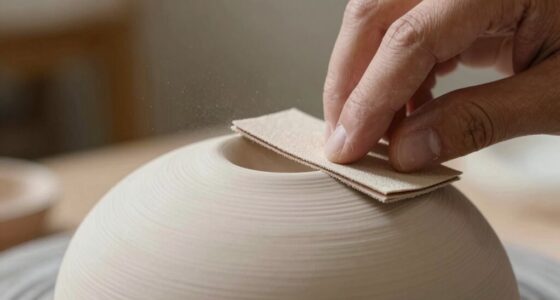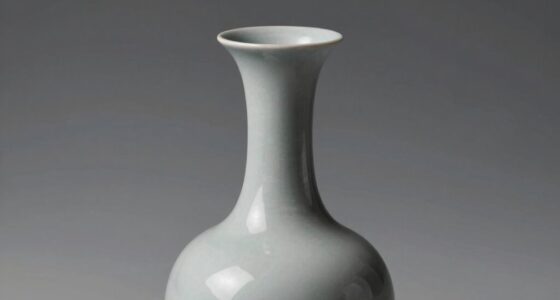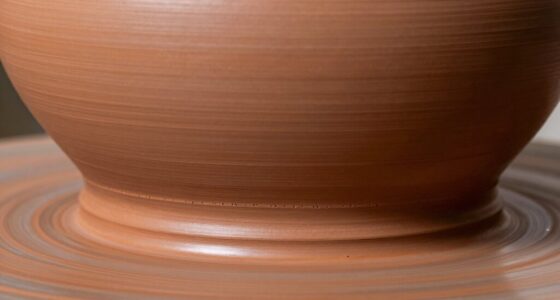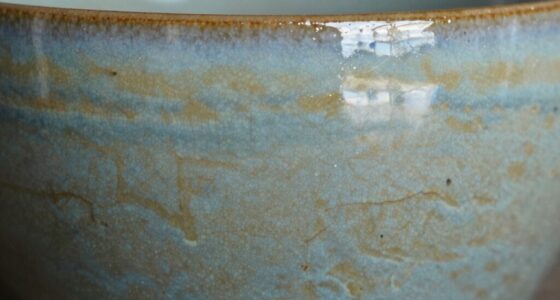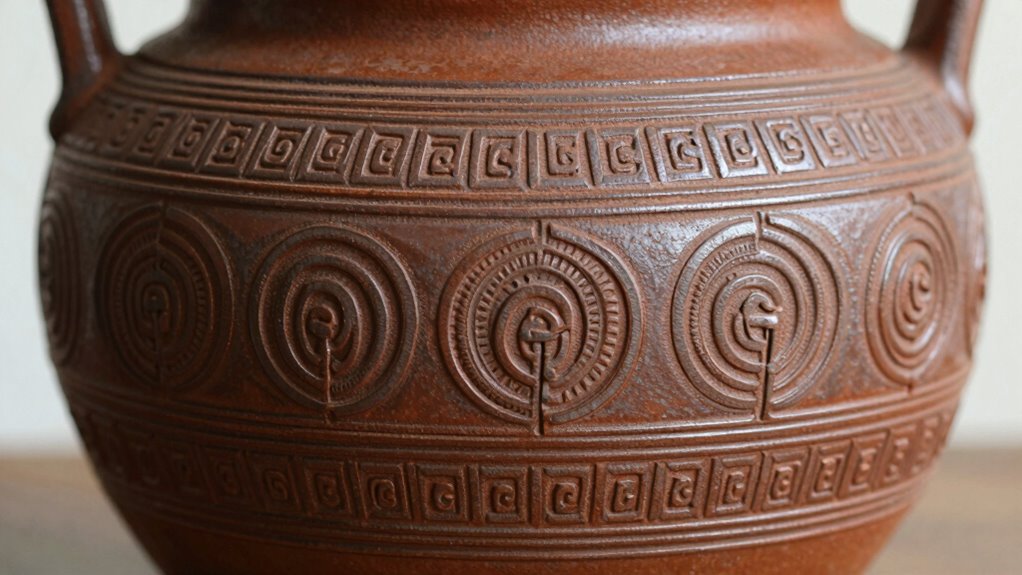

When you intentionally repeat details on pottery, you create a sense of harmony and rhythm that guides the eye smoothly across the surface. This deliberate patterning boosts the craftsmanship, making the design feel balanced and cohesive. It also evokes emotional responses, offering comfort through familiarity and a feeling of dynamic energy. If you stay with it, you’ll discover how these patterns transform simple clay into mesmerizing art, adding depth and beauty that’s worth exploring further.

Get business pricing on tools and workshop supplies
- Business-only prices and quantity discounts
- Tax-exempt purchasing
- Multiple users, one account, clear invoices
Key Takeaways
- Repetition creates visual harmony and rhythm, making pottery more aesthetically appealing.
- Purposeful pattern repetition evokes familiarity, comfort, and emotional engagement.
- Repeating details demonstrates craftsmanship, precision, and mastery of design balance.
- Patterns guide the viewer’s eye smoothly, enhancing the overall visual flow.
- Deliberate repetition adds energy and sophistication, transforming simple clay into art.
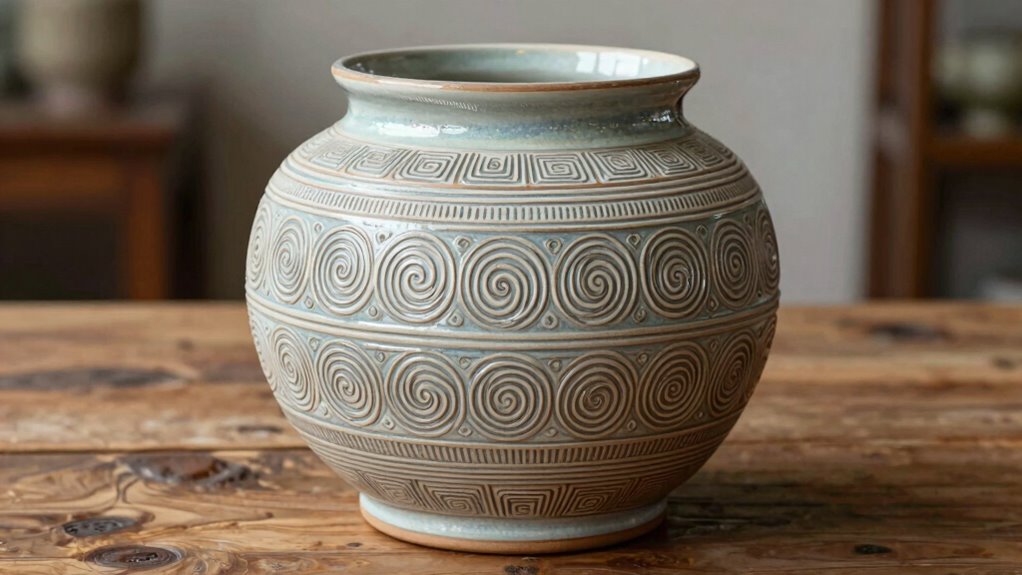
Have you ever noticed how certain pottery designs feature repeating patterns that create a sense of harmony and rhythm? It’s no accident. When you see these patterns, you’re experiencing something called ceramic symmetry—an intentional balance that makes the piece visually appealing. Repetition isn’t just about filling space; it’s about creating a visual language that guides your eye smoothly across the surface. This repetition establishes an artistic rhythm, giving the pottery a dynamic yet cohesive look that feels both lively and harmonious. When the details repeat purposefully, it’s as if the artist is whispering a visual melody that you can’t help but follow.
Repeating patterns in pottery create harmony, rhythm, and a visual melody that guides and delights the viewer.
This deliberate repetition enhances the overall aesthetic because it taps into a fundamental human appreciation for order and predictability. Your brain recognizes the pattern, which creates a sense of familiarity and comfort. It’s like listening to a favorite song—you anticipate the recurring motifs, and that anticipation makes the experience more engaging. In pottery, repeating motifs—whether geometric shapes, floral designs, or abstract symbols—act as visual anchors, making the piece feel unified rather than chaotic. The symmetry achieved through this repetition balances the form and decoration, giving the pottery a polished, intentional look that elevates its artistic value.
Furthermore, this repetition isn’t just about symmetry; it’s about rhythm—an ongoing beat that energizes the design. Artistic rhythm in pottery isn’t just aesthetic; it’s a way to communicate movement and life. When you see a pattern that repeats at regular intervals, it creates a visual pulse that draws your gaze naturally around the object. This rhythm can evoke feelings of stability, energy, or elegance, depending on how the patterns are arranged. When the details are repeated with precision, it demonstrates craftsmanship and a deep understanding of visual harmony. It’s this sense of rhythm and ceramic symmetry working together that makes the pottery not only beautiful but also compelling. Recognizing these patterns also connects to the broader concept of visual harmony, which plays a crucial role in aesthetic appreciation. Additionally, the deliberate use of pattern repetition reflects an understanding of how visual elements can influence emotional responses.
The careful arrangement of these repeating details also showcases the artist’s mastery of visual balance, ensuring no element feels overwhelming or disconnected. In the end, purposeful repetition in pottery isn’t just decoration; it’s a strategic choice that amplifies the piece’s beauty. It’s about crafting a visual experience that feels both ordered and lively. By incorporating ceramic symmetry and artistic rhythm, the artist transforms simple clay into a work of art that resonates with viewers. When you see these repeating patterns, you’re witnessing a dance of detail and harmony—an intentional design that makes pottery truly stand out. A deliberate pattern can elevate a simple object into a captivating piece of art by engaging viewers on both a visual and emotional level.
ceramic pottery with repeating patterns
As an affiliate, we earn on qualifying purchases.
As an affiliate, we earn on qualifying purchases.
Frequently Asked Questions
How Does Intentional Repetition Affect Pottery Durability?
Intentional repetition in pottery enhances its structural integrity by creating a more even distribution of stress across the piece. This technique also boosts aesthetic enhancement, making the design more visually appealing and cohesive. When you incorporate repeated details purposefully, you reinforce the pottery’s durability, reducing weak points and potential cracks. Overall, this deliberate patterning ensures your pottery remains both beautiful and resilient for longer use.
Can Repeating Details Influence the Pottery’s Cultural Significance?
You’ll find that repeating details on pottery can deepen its cultural symbolism, making it more meaningful. This deliberate repetition acts as a form of artistic storytelling, connecting generations through shared motifs. When you incorporate these patterns intentionally, it’s like creating a visual language that speaks of tradition and identity. The coincidence of repeated details resonates beyond aesthetics, inviting viewers to interpret and appreciate the rich cultural stories embedded within each piece.
What Tools Are Best for Creating Repetitive Patterns?
You should use tools like stamping blocks, carved rollers, and textured brushes to create repetitive patterns on pottery. These tools help maintain material consistency, ensuring the pattern remains uniform across the surface. For intricate pattern complexity, carving tools or slip trailers work well, allowing precise control. Repeating patterns become more seamless and visually appealing when you carefully select tools that suit your design, enhancing the overall aesthetic and cultural significance of your pottery.
Does Repetition Make Pottery More or Less Valuable?
Repetition in pottery enhances its aesthetic harmony, making it more visually appealing and cohesive. It can increase the piece’s value by demonstrating craftsmanship and attention to detail. However, if overused, it might diminish artistic originality, making the work seem less unique. Striking a balance between repeating patterns and innovative design guarantees your pottery remains both beautiful and distinctive, ultimately boosting its worth.
How Do Artists Choose Which Details to Repeat?
You choose which details to repeat based on decorative motifs and pattern symmetry that enhance visual harmony. By emphasizing certain motifs, you create a cohesive design that draws the viewer’s eye and reinforces the piece’s theme. Repeating details intentionally balances the composition, making the pottery more aesthetically appealing. You consider how pattern symmetry contributes to rhythm and unity, ensuring the repeated elements serve both decorative and conceptual purposes effectively.
As an affiliate, we earn on qualifying purchases.
Conclusion
When you intentionally repeat details on pottery, you create a rhythm that draws the eye and invites touch. It’s like the echo of a familiar melody—comforting yet surprising. Without this repetition, your piece might feel empty or plain. But when you craft deliberate patterns, you transform simple clay into a story told in every curve and line. So, embrace repetition—because in the details, your pottery truly comes alive.
artistic ceramic plates with geometric designs
As an affiliate, we earn on qualifying purchases.
As an affiliate, we earn on qualifying purchases.
As an affiliate, we earn on qualifying purchases.
Halloween Picks
halloween
As an affiliate, we earn on qualifying purchases.