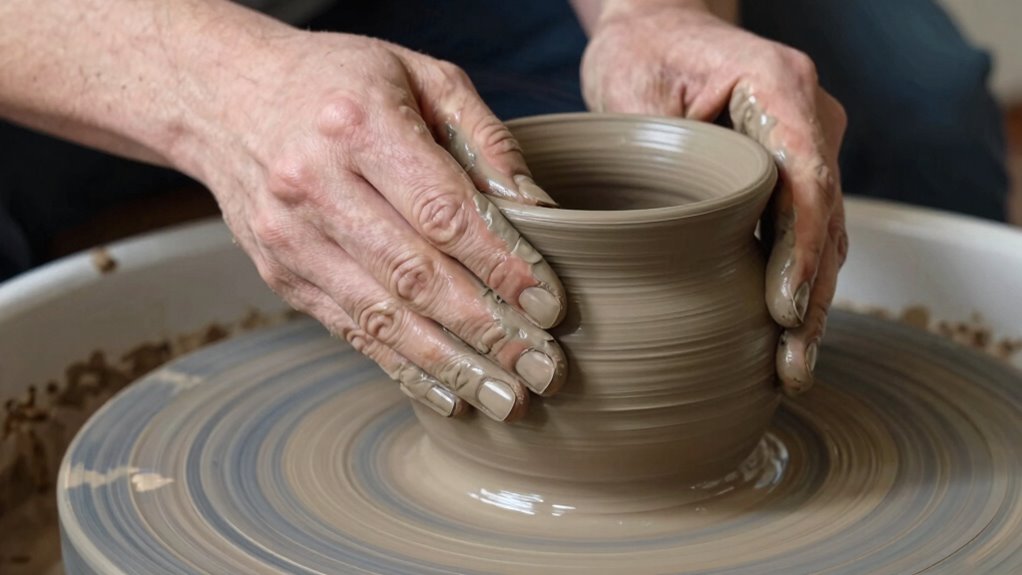

Leather-hard describes a stage in drying clay where it’s firm enough to carve or trim yet still has internal moisture to prevent cracking. At this point, the surface feels firm but slightly damp, and you can gently scratch it without breaking. Timing is key because working too early can cause warping, while waiting too long makes the piece fragile. Keep exploring to discover how to recognize the perfect moment for your project.
Key Takeaways
- Leather-hard is a stage where clay is firm but still slightly moist, ideal for carving and trimming.
- Recognizing this stage involves feeling for surface firmness and slight dampness, often tested with a fingernail.
- Proper timing ensures shape retention, prevents cracking, and allows for detailed work before the clay fully dries.
- Moisture levels decrease gradually, with surface drying before internal moisture, signaling readiness.
- Controlling moisture and timing is essential for achieving smooth, durable finishes and avoiding defects.
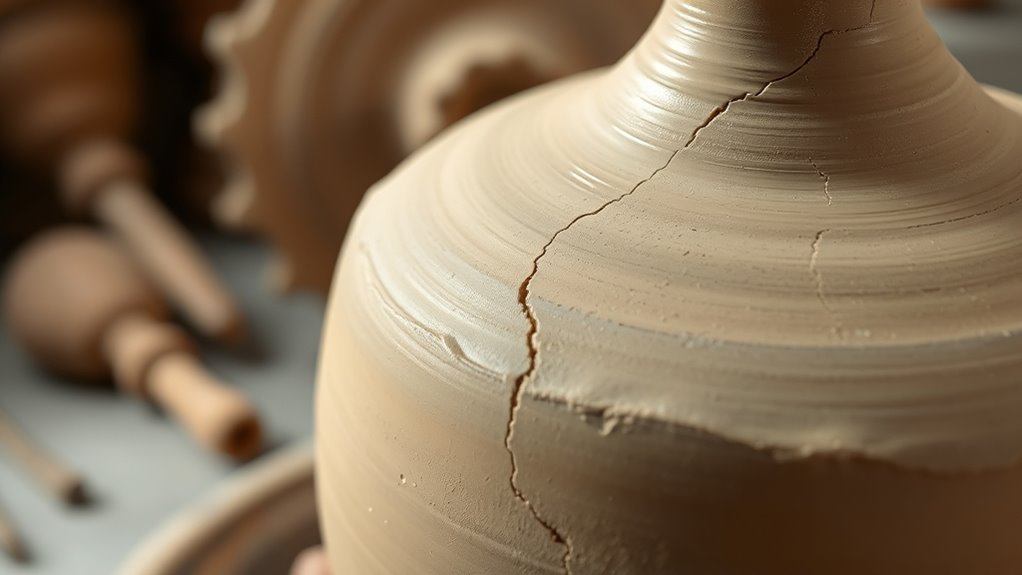
Understanding the leather-hard stage is essential for anyone working with clay, as it represents a specific point in the drying process when the pottery is firm but still slightly moist. At this stage, your piece has lost enough moisture from its surface to hold its shape firmly, yet it retains enough clay moisture internally to allow for carving, trimming, or adding details. Recognizing this stage is vital because it directly influences how you handle your piece moving forward. If you wait too long and the clay becomes bone dry, shaping or refining becomes difficult, risking cracks or deformation. Conversely, if you work too early, the piece might be too fragile, collapsing or losing its form before it’s ready.
During the drying process, clay moisture levels gradually decrease. When you first shape your clay, it’s plastic and soft, easy to mold. As it begins to dry, water evaporates from the surface, and the clay stiffens. The leather-hard stage occurs when enough moisture has evaporated from the surface, but enough remains within to keep the piece workable. This moisture balance makes it an ideal time for detailed carving, hitting, or attaching additional elements. You can even trim or refine the shape without fear of it collapsing under your tools. That’s because the clay’s internal moisture provides enough flexibility, yet the surface is firm enough to give you control. Recognizing the correct moisture level is crucial for successful work at this stage.
The leather-hard stage balances surface firmness with internal moisture for carving and refining.
Timing is everything in this stage. If you move too quickly and attempt to carve or trim when the piece is too wet, your work can become smudged or warped as the moisture shifts. On the other hand, waiting too long means the clay’s moisture has evaporated too much, causing it to become brittle and prone to cracking. The key is to gauge the moisture content visually and by feel. When the surface feels firm but still slightly damp, and the clay retains a bit of flexibility, you’ve hit the sweet spot. Many artists gently test by pressing a fingernail; if it leaves a slight impression without cracking, it’s usually ready for the next step.
Understanding clay moisture and the drying process helps you control the timing of your work. This stage offers a window of opportunity for finishing touches and refining your piece before it enters the final drying and firing stages. Paying close attention to moisture levels ensures your pottery maintains its intended shape and surface quality, ultimately leading to a successful final product. Recognizing when your piece is leather-hard is a skill that improves with experience, making your process more predictable and your results more consistent.
Amazon Product B08BH5GTNC
As an affiliate, we earn on qualifying purchases.
Frequently Asked Questions
Can Leather-Hard Clay Be Carved or Decorated Easily?
Yes, leather-hard clay is ideal for decorating techniques like carving, slip trailing, and impressing textures because it maintains its shape well. When you work with leather-hard clay, you can easily add details without it collapsing. To preserve your designs, keep the clay at the right dryness level and store it properly. These preservation tips help ensure your decorations stay intact and look professional once fired.
How Long Does It Typically Take for Clay to Reach Leather-Hard Stage?
You typically wait 24 to 72 hours for clay to reach the leather-hard stage, depending on factors like thickness and environment. During the clay drying process, you should monitor moisture content carefully to prevent cracking. Managing moisture is essential; if you wait too long, it becomes too dry to carve, but if you act too early, the clay may still be too soft. Timing is vital for successful decoration or carving.
Is Leather-Hard the Same for All Types of Clay?
Leather-hard isn’t exactly the same for all types of clay because clay hardness varies depending on the drying process and clay composition. Some clays reach leather-hard sooner, while others take longer due to moisture content and ingredients. You need to monitor your piece closely, as the timing differs. Always test for flexibility and dryness to guarantee it’s at the right stage for trimming, carving, or attaching pieces.
Can Leather-Hard Clay Be Rehydrated or Softened Again?
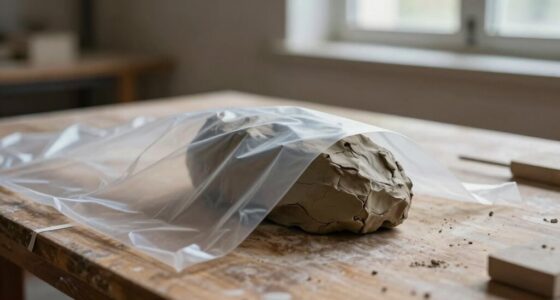
Yes, leather-hard clay can be rehydrated and softened again, like reviving a dried flower. To do this, you use rehydration techniques such as wrapping the piece in plastic or adding a small amount of water and letting it sit. Softening methods include gently kneading or applying water with a brush. With patience, you can bring your clay back to workable consistency, saving your project from the brink of dryness.
What Are Common Mistakes to Avoid During the Leather-Hard Stage?
During the leather-hard stage, avoid overworking your clay, which can weaken its structure and cause cracks. Be mindful of improper drying, as rushing this process may lead to warping or splitting. Handle the clay gently and don’t force it when carving or attaching pieces. Staying patient and attentive helps maintain the right consistency, ensuring your project remains stable and ready for the next steps without damage.
Amazon Product B0F5XYB4GM
As an affiliate, we earn on qualifying purchases.
Conclusion
Understanding when your clay reaches the leather-hard stage is essential for successful pottery. Did you know that around 60% of beginners struggle with timing, leading to cracks or deformation? By mastering this phase, you can improve your work’s durability and detail. Remember, patience is key—wait too long, and the clay becomes too dry; rush, and it’s too soft. Precise timing transforms your pottery from good to great.
Amazon Product B08JH88BRN
As an affiliate, we earn on qualifying purchases.
Amazon Product B00OZWX100
As an affiliate, we earn on qualifying purchases.