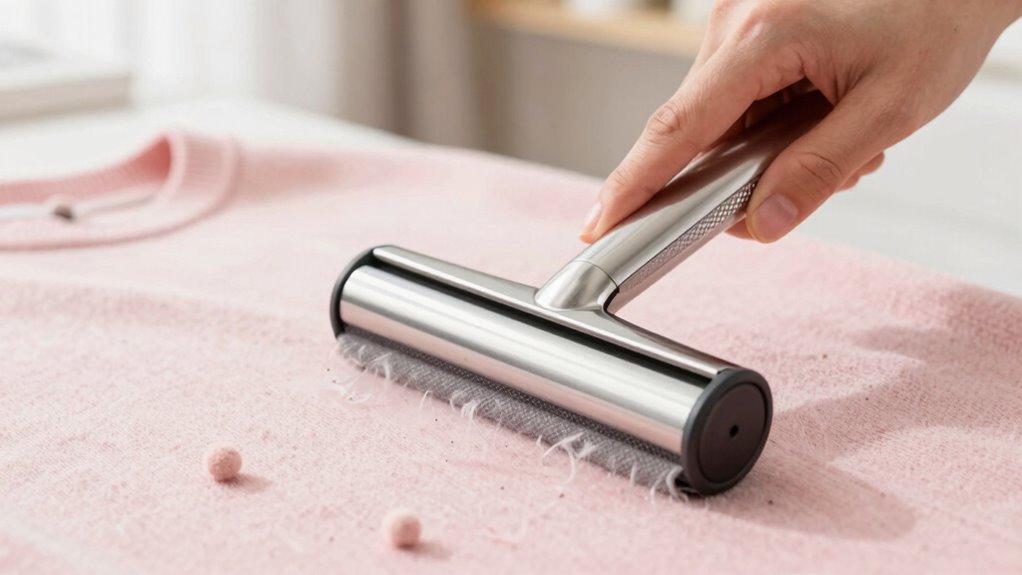

To remove lint and pills without damaging your fabric, gently use a lint roller or adhesive tape to lift lint off surfaces. For pills, run a fabric shaver or soft-bristled brush smoothly over the fabric, being careful not to press too hard. Turning your clothes inside out and using low heat during drying also helps prevent damage. Want to keep your clothes looking their best? Keep exploring ways to care for your fabrics effectively.

Get business pricing on tools and workshop supplies
- Business-only prices and quantity discounts
- Tax-exempt purchasing
- Multiple users, one account, clear invoices
Key Takeaways
- Use gentle tools like lint rollers, adhesive tape, or soft-bristled brushes to lift lint without damaging fabric.
- Run fabric shavers or pumice stones in light, even strokes to safely remove pills without tearing fibers.
- Turn garments inside out before cleaning to reduce friction and prevent damage during removal.
- Opt for low heat drying and remove clothes promptly to minimize static, lint accumulation, and fabric stress.
- Regularly maintain fabrics with careful brushing or cleaning to prevent stubborn lint and pills buildup.
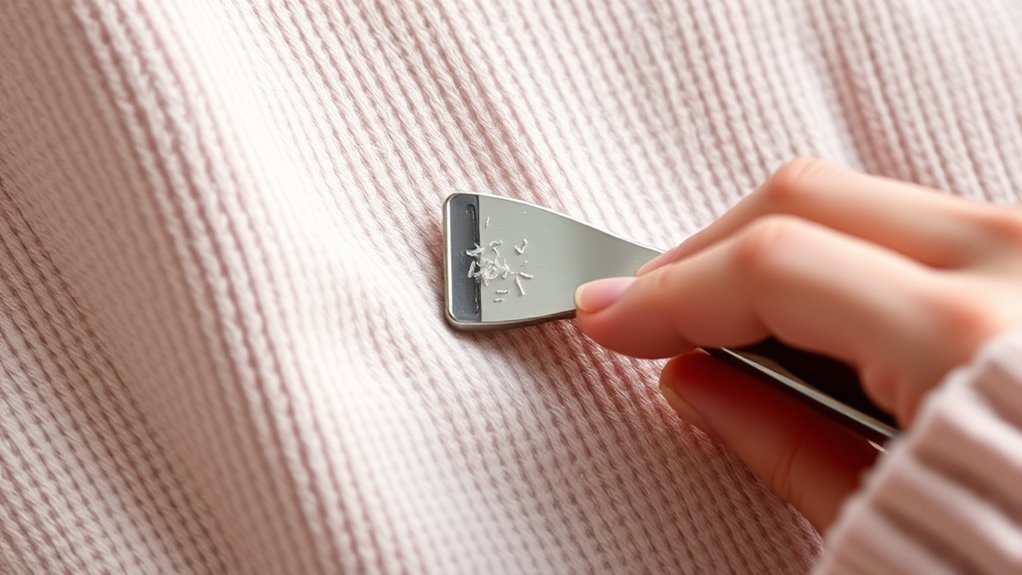
Over time, lint and pills can make your fabrics look worn and untidy, but removing them is simple with the right tools and techniques. The key is selecting methods that effectively refresh your garments without causing damage. One effective approach involves using fabric softeners during laundry. These products help loosen lint and reduce static, making pills less likely to cling to fibers. When you wash your clothes, add a small amount of fabric softener to the rinse cycle. This not only softens your fabrics but also helps minimize the formation of pills over time. Additionally, using gentle washing cycles and avoiding overloading the machine can prevent unnecessary stress on fabrics, which can lead to pilling and lint buildup.
For removing lint, a lint roller or adhesive tape works wonders. Gently roll or press the tape onto the fabric surface to lift away lint and pet hair. For more delicate fabrics, a soft-bristled brush or a damp cloth can also do the trick. When dealing with pills, a fabric shaver is your best friend. It safely trims away pills without damaging the fabric’s surface. Always run the shaver in gentle, even strokes and avoid pressing too hard to prevent tears or snags. To extend the life of your fabrics, consider using bleach alternatives when washing white or light-colored clothes. Traditional bleach can weaken fibers and cause discoloration, but bleach alternatives are milder and less corrosive. They effectively brighten fabrics and remove stains without the harsh effects of chlorine bleach, helping to keep your clothes looking newer longer.
Another helpful tip is to turn your clothes inside out before washing and drying. This reduces friction on the fabric surface, which is a common cause of pilling and lint accumulation. When drying, opt for low heat and remove clothes promptly to prevent static and lint from settling. For stubborn lint or pills, you might also try using a pumice stone or a specialized fabric comb, but ensure you do so gently to avoid damaging delicate fibers. Regular maintenance, like brushing out pills and lint after each wash, keeps fabrics looking fresh. Additionally, choosing high-quality, durable fabrics can reduce the frequency of lint and pills forming in the first place. Ultimately, combining these techniques—using fabric softeners, choosing gentle cleaning methods, and employing the right tools—allows you to keep your wardrobe looking its best without risking damage. With patience and the right approach, your clothes will stay smooth, lint-free, and pill-free for longer.
As an affiliate, we earn on qualifying purchases.
Frequently Asked Questions
Can I Use a Razor Blade on Delicate Fabrics?
Yes, you can use a razor blade on delicate fabrics, but you must prioritize razor blade safety. Gently hold the fabric taut and carefully shave off pills or lint, avoiding excessive pressure. Always test on a small, inconspicuous area first to prevent damage. For delicate fabric care, use a new, sharp blade and work slowly to prevent tears or snags. When done properly, this method effectively refreshes your fabric without harm.
How Often Should I Remove Lint to Prevent Buildup?
Did you know that most fabrics develop noticeable lint within just a few wears? To keep your clothes looking fresh, you should remove lint regularly—at least once a week or after every few wears—especially with fabrics prone to lint buildup. Consistent fabric care and lint prevention help extend your clothes’ lifespan, prevent pilling, and maintain a neat appearance. Making lint removal a routine habit keeps your wardrobe flawless and ready to wear.
Are There Eco-Friendly Lint Removal Options?
Yes, there are eco-friendly options for lint removal. You can use natural alternatives like a pumice stone, which gently lifts lint without chemicals, or a homemade adhesive roller made from natural rubber or beeswax. Reusable lint brushes and DIY cloth dampened slightly with water also work well. These eco-friendly options help you maintain your clothes while reducing waste and avoiding harmful chemicals, making them a sustainable choice.
Will Fabric Softener Cause More Pills?
No, fabric softener can actually increase pill formation if used excessively, as it leaves a residue that weakens fibers over time. However, proper fabric softener effects, like reducing static and softening fabric, don’t necessarily cause more pills if used in moderation. To prevent pill formation, consider using it sparingly and washing delicate fabrics inside out. This helps maintain fabric integrity and keeps your clothes looking newer longer.
Can I Remove Pills From Wool Without Damage?
You can safely remove pills from wool without damage by using a fabric shaver or a fine-toothed comb, especially on delicate fabric blends. Gently glide the tool over the surface, avoiding excessive pressure. To prevent future pilling, wash wool items inside out, use gentle detergents, and avoid high heat. Regular pilling prevention keeps your wool looking fresh without risking fabric damage.
As an affiliate, we earn on qualifying purchases.
Conclusion
Think of your fabric as a canvas, each lint and pill as shadows that obscure its true beauty. Removing them restores the artwork, revealing its vibrant colors and delicate strokes. With gentle care, you become the artist, bringing back the fabric’s original grace. Remember, patience is your brush, and your hands are the tools to transform wear into wonder. Keep at it, and let your clothing shine as a masterpiece reborn.
As an affiliate, we earn on qualifying purchases.
As an affiliate, we earn on qualifying purchases.
Fall yard work Picks
leaf blowers
As an affiliate, we earn on qualifying purchases.