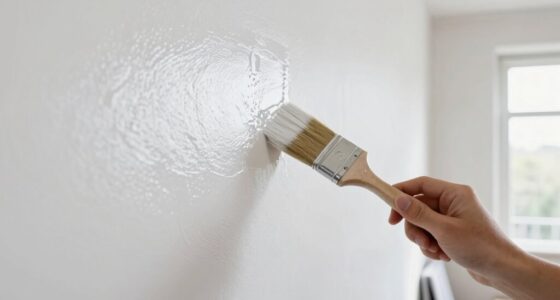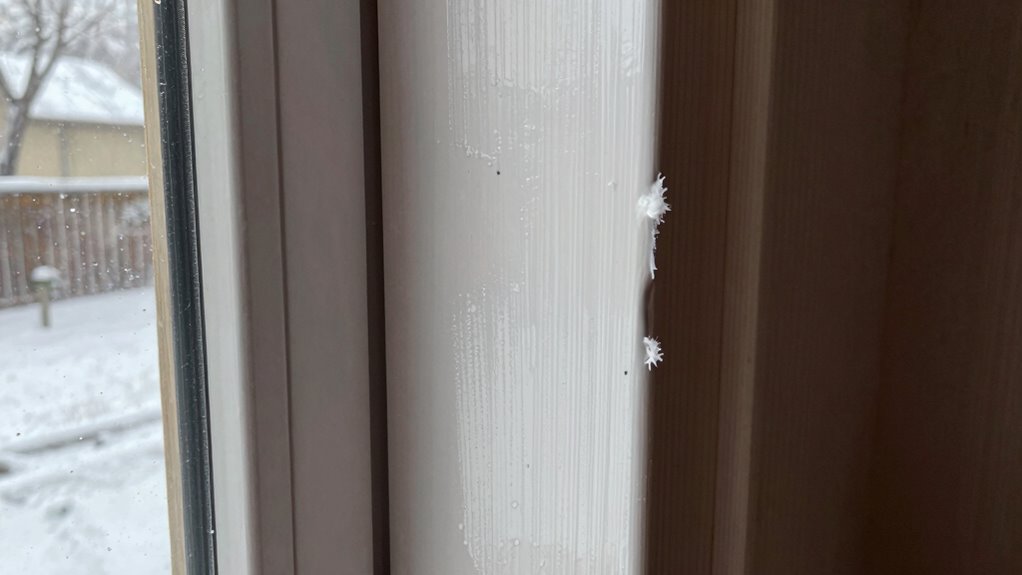

In winter, paint dries slowly because cold temperatures hinder the chemical reactions and solvent evaporation, keeping your paint wet longer. Lower temperatures can also cause paint to become tacky, crack, or freeze if too cold. High humidity outdoors or indoor moisture levels can further delay drying. Using heaters, choosing warmer times of day, and controlling humidity can help speed things up. To discover more ways to improve your winter painting, keep exploring these tips.
Key Takeaways
- Cold temperatures slow chemical reactions and solvent evaporation, extending paint drying times in winter.
- Freezing conditions can cause paint to become tacky or crack, hindering proper drying.
- High indoor humidity or damp outdoor air delays evaporation, making paint dry unevenly.
- Using heat sources like heaters or heat lamps helps maintain optimal temperatures for faster drying.
- Choosing optimal weather conditions and controlling humidity improve drying times and finish quality.
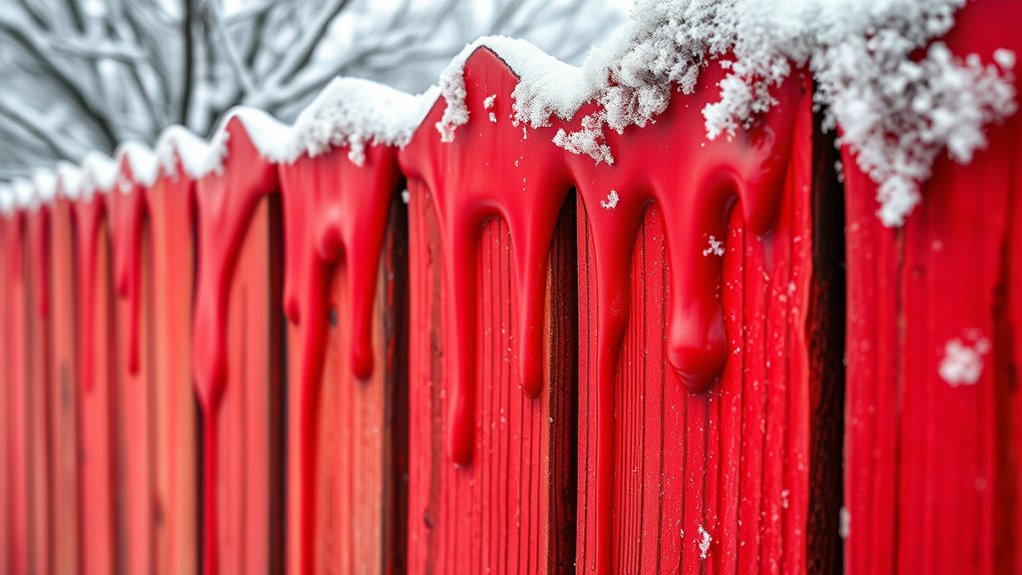
Painting during winter can be challenging because cold temperatures slow down the drying process. When you’re working in colder weather, you might notice that your paint takes longer to dry than usual. This isn’t just a matter of patience; understanding the underlying reasons can help you plan better and achieve a smoother finish. Two major factors influencing paint drying in winter are temperature effects and humidity impact.
Temperature effects play a significant role in how quickly paint dries. When temperatures drop, the chemical reactions in paint, especially those involving solvents and binders, slow down considerably. This makes the paint stay wet for longer periods. Cold air doesn’t just slow evaporation; it can also cause the paint to become tacky or even freeze if temperatures drop below freezing, leading to uneven drying or cracking once it warms up again. To combat this, you should try to paint during the warmest part of the day and keep the environment as warm as possible using heaters or heat lamps. Ensuring the temperature stays above the minimum recommended for your specific paint type will help expedite the drying process.
Humidity impact is equally important when it comes to winter painting. High humidity levels can trap moisture in the paint, preventing it from drying properly. Conversely, extremely low humidity might cause the paint to dry too quickly on the surface while remaining soft underneath, which can lead to cracking or poor adhesion. In winter, indoor humidity often drops due to heating systems, creating a dry environment that can shorten drying times initially but might also cause surface imperfections. On the other hand, if you’re painting outdoors and the air is damp or misty, the excess moisture will slow down the evaporation process, leaving your paint wet for longer periods. It’s essential to monitor humidity levels and, if necessary, use dehumidifiers or moisture absorbers indoors. Outdoors, try to select a day with low wind and moderate humidity for better results. Additionally, proper paint preparation can improve drying times and finish quality during winter conditions.

NoCry Clear Safety Glasses for Men and Women with Anti-Fog and Scratch Resistant Wrap Around Lenses, Adjustable Temples and Nose Pads — ANSI Z87 Certified Protective Eyewear with 100% UV Shielding
- Durable Polycarbonate Wraparound Design: Provides superior protection from threats
- Adjustable Fit with Comfort Features: Extendable arms and soft nose pads
- Anti-Fog and Scratch-Resistant Lenses: 5x more fog resistant, 2x more scratch resistant
As an affiliate, we earn on qualifying purchases.
Frequently Asked Questions
Can I Speed up Paint Drying Indoors During Winter?
Yes, you can speed up paint drying indoors during winter by using paint additives or drying accelerators. These products are designed to enhance evaporation and curing, helping your paint dry faster. Make sure to follow the manufacturer’s instructions for best results. Additionally, improve ventilation, keep the room warm, and reduce humidity to further hasten drying time. This combination ensures a quicker, smoother finish even in cold conditions.
Do Different Paint Types Dry at Different Rates in Winter?
Different paint types do dry at different rates in winter because of their unique paint chemistry and drying mechanisms. Oil-based paints generally take longer, while latex or water-based paints dry faster due to their solvent properties. You can think of it as a race—each type has its own pace influenced by temperature and humidity. Knowing these differences helps you choose the right paint for winter projects, ensuring a smoother finish.
How Does Humidity Affect Winter Paint Drying Times?
Humidity levels substantially impact winter paint drying times because higher humidity increases moisture content in the air. When the air is humid, it slows down the evaporation process, making your paint take longer to dry. You’ll notice delays if the humidity is too high, so it’s best to choose days with lower humidity or use dehumidifiers. Managing humidity helps guarantee your paint dries properly and evenly, even in winter conditions.
Are There Special Techniques for Painting in Extremely Cold Weather?
Yes, you can use winter-specific primers and cold weather additives to enhance painting in cold conditions. These products are designed to withstand low temperatures and help paint cure properly. Before starting, verify surfaces are clean and dry, and consider warming the primer and paint slightly. Using these techniques actively addresses cold weather challenges, making your project smoother and more successful despite the chill.
Does Temperature Impact the Durability of Winter-Applied Paint?
Yes, temperature impacts the durability of winter-applied paint. Cold conditions can weaken paint adhesion, making it more prone to peeling or cracking over time. To guarantee durability, you need proper surface preparation, like cleaning and priming, and use winter-specific paints formulated for low temperatures. Maintaining a stable, slightly warmer environment during application and drying helps improve adhesion and, ultimately, the longevity of your paint job.

TICONN Anti-Fog Safety Glasses for Men and Women, ANSI Z87.1 Scratch Proof Eye Goggles with Adjustable Arms and UV Protection (Clear, 1PK)
- Durable Polycarbonate Construction: Impact-resistant and lightweight design
- Anti-Fog and UV Protection: Maintains clarity and blocks 99.9% UV rays
- Adjustable and Comfortable Fit: Rubber frame, nose pads, and adjustable temples
As an affiliate, we earn on qualifying purchases.
Conclusion
So, don’t worry if paint seems to dry slowly in winter; it’s a normal part of the process. While colder temperatures can delay drying, proper preparation and using the right paint can still give you great results. Remember, rushing to finish might compromise quality, so patience is key. With a bit of planning, you’ll achieve a smooth, durable finish—even when the weather isn’t ideal. Winter’s chill won’t stop your project from turning out perfect.

Sparkjump Modern Birdhouse Woodworking Kit
- Create Family Memories: Build a birdhouse together for family bonding
- Develop Woodworking Skills: Enhance practical woodworking abilities for all ages
- Ideal Gift for Kids: Perfect creative gift for children aged 8-12
As an affiliate, we earn on qualifying purchases.

TICONN 12 Clear Safety Glasses for Men, Safety Goggles with Scratch Impact Resistant Meets ANSI Z87.1 Standard (12 Pack)
- Reliable Eye Protection: Protects against debris, UV rays, and harmful substances
- ANSI Z87.1 Certified: Meets safety standards for impact resistance
- Durable Polycarbonate Material: Scratch-resistant and distortion-free lenses
As an affiliate, we earn on qualifying purchases.