Kintsugi is a Japanese art that repairs broken pottery with gold, symbolizing resilience and embracing imperfections. It emphasizes that flaws and scars add beauty, telling a story rather than hiding damage. The gold lines highlight the object’s history and resilience, reflecting a philosophy that values imperfection and growth. This concept encourages you to see setbacks as opportunities for renewal. To understand how this symbolic tradition shapes ideas of beauty and strength, keep exploring further.
Key Takeaways
- Kintsugi is a Japanese art form that repairs broken pottery with gold, emphasizing beauty in imperfection.
- The gold lines symbolize resilience, transformation, and the object’s unique history.
- The philosophy encourages embracing flaws as part of the object’s and one’s personal story.
- It reflects Wabi-Sabi principles, valuing transience, authenticity, and the beauty of repair.
- Kintsugi promotes resilience and acceptance, turning damage into a symbol of strength and renewal.
Kintsugi repair kit
As an affiliate, we earn on qualifying purchases.
As an affiliate, we earn on qualifying purchases.
The Origins of Kintsugi in Japanese Culture
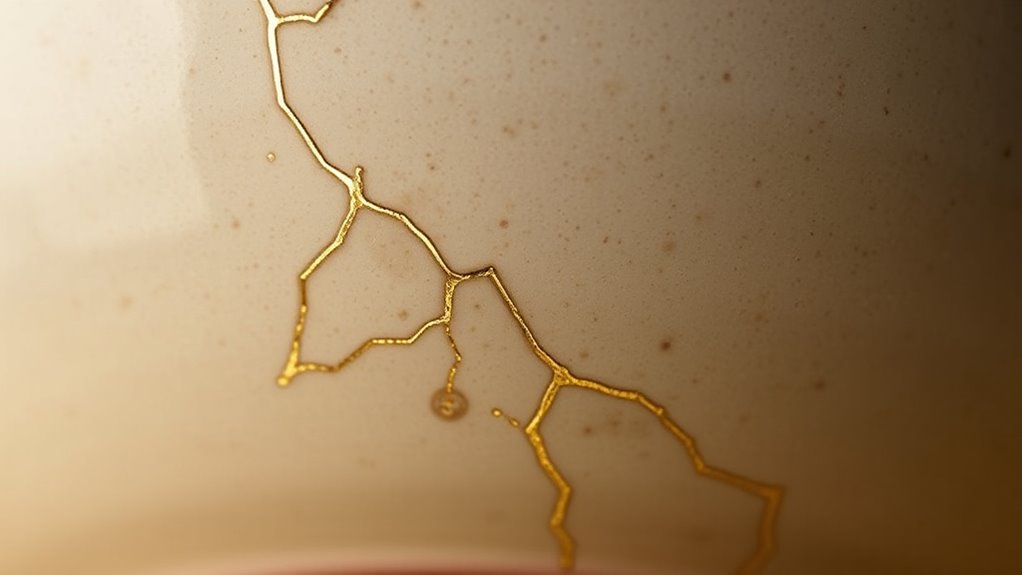
Kintsugi, which means “golden joinery,” originated in Japan during the late 15th century as a way to repair broken pottery. This practice emerged from the desire for ceramic restoration that emphasizes beauty in imperfection. Instead of discarding damaged items, artisans used gold lacquer to mend cracks, transforming broken pieces into artful objects. Over time, kintsugi became more than just ceramic restoration; it evolved into a powerful cultural symbolism. It teaches that flaws and imperfections are part of a object’s history, adding value and character. This philosophy encourages accepting life’s imperfections and viewing damage as an essential part of growth. Today, kintsugi’s origins reflect Japan’s deep respect for history, resilience, and the beauty found in imperfection. Recognizing the value of imperfections, kintsugi embodies a broader appreciation for resilience and the unique character of each individual and object. The artistic technique of kintsugi highlights the importance of embracing flaws as a form of beauty rather than something to hide. Additionally, the technique underscores the significance of cultural traditions that celebrate aging and imperfection as intrinsic aspects of beauty. The process also emphasizes the importance of patience and craftsmanship, which are central to many traditional Japanese arts. Furthermore, the practice of kintsugi often involves mindful craftsmanship, reinforcing the connection between artistic skill and cultural philosophy.
gold lacquer for pottery
As an affiliate, we earn on qualifying purchases.
As an affiliate, we earn on qualifying purchases.
The Materials and Techniques of Kintsugi

To repair broken pottery using kintsugi, artisans carefully select materials that highlight the beauty of imperfections. They use a mixture of traditional lacquer and powdered gold, silver, or platinum for the visible repair lines. This process involves precise ceramic restoration techniques to guarantee the pieces fit perfectly before applying the lacquer. The key steps include:
Kintsugi restores pottery with lacquer and metallic powders, celebrating imperfections through meticulous craftsmanship.
- Cleaning and preparing the broken edges
- Carefully fitting the fragments together
- Applying multiple layers of lacquer for strength
- Embedding metallic powder into the final layer
Lacquer application is vital, as it bonds the shards securely while allowing the golden seams to stand out. These materials and techniques emphasize the value of flaws, transforming broken pottery into a unique piece of art. Additionally, proper ventilation considerations are essential during the process to ensure safety and optimal curing of the lacquer. Proper material selection plays a crucial role in achieving both durability and aesthetic harmony in kintsugi repairs. Understanding the materials and techniques involved in kintsugi highlights the importance of craftsmanship and tradition in creating both beauty and resilience. Moreover, the sustainable practices employed in sourcing materials underscore the cultural respect embedded in this ancient art form.
ceramic restoration supplies
As an affiliate, we earn on qualifying purchases.
As an affiliate, we earn on qualifying purchases.
Symbolism of Gold in Kintsugi Repair

The choice of gold in kintsugi repair goes beyond aesthetics, carrying deep symbolic meaning. Gold symbolism represents value, resilience, and transformation, emphasizing that broken objects can become beautiful again. It highlights the repair metaphor central to kintsugi, where flaws are celebrated rather than hidden. Using gold underscores that imperfections add character and worth, turning damage into a story of renewal. This precious metal draws attention to the cracks, transforming them into focal points that enhance the object’s history. By choosing gold, you’re embracing a philosophy that celebrates imperfection and the beauty of recovery. It reminds you that life’s breaks and scars can be meaningful, valuable parts of your journey—proof that healing and growth can shine just as brightly as gold. Additionally, the aesthetic appeal of gold enhances the visual impact, making each repaired piece a unique work of art. Incorporating symbolic significance into the repair process elevates the act of mending to a form of artistic expression and personal philosophy. Recognizing the cultural importance of kintsugi in Japanese tradition deepens the appreciation for this beautiful craft. Furthermore, the cultural symbolism of gold can serve as a reminder of the importance of embracing heritage and tradition in personal healing processes. Including cultural context enriches our understanding of why gold plays such a pivotal role in this ancient practice.
Kintsugi art book
As an affiliate, we earn on qualifying purchases.
As an affiliate, we earn on qualifying purchases.
The Aesthetics of Imperfection and Wabi-Sabi
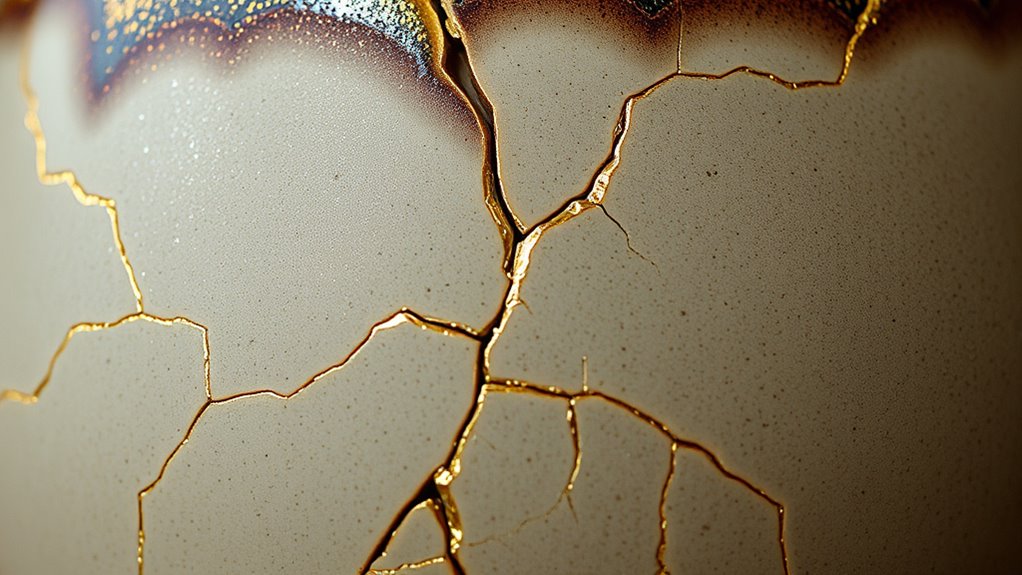
You begin to see beauty in flaws and imperfections, recognizing their unique charm. Wabi-sabi celebrates transience and the fleeting nature of life, reminding you that nothing lasts forever. Embracing these truths allows you to appreciate the imperfect and impermanent in everyday objects and moments. Recognizing the importance of authenticity in craftsmanship, these philosophies encourage creating spaces and products that foster comfort and personal authenticity. This perspective aligns with Italian craftsmanship that values authenticity and the history embedded in traditional artisanal techniques. Additionally, at-home beauty devices often emphasize individuality and unique features, echoing the artisanal approach that celebrates craftsmanship over uniformity.
Embracing Flawed Beauty
Have you ever wondered why imperfections can feel more genuine and beautiful than flawlessness? Embracing flawed beauty challenges your perceptions, encouraging you to see value in imperfections. This perspective aligns with Wabi-Sabi, highlighting the beauty of transience and imperfection. It also prompts moral dilemmas and ethical considerations about societal standards and authenticity. When you accept flaws, you confront:
- The pressure to conform to idealized standards
- The temptation to hide imperfections for social approval
- The ethical choice of honesty over superficial perfection
- The appreciation of authenticity and vulnerability
- Recognizing the beauty of imperfection can foster a deeper sense of self-acceptance and resilience.
Transience and Impermanence
Since nothing lasts forever, embracing transience and impermanence reveals the true beauty found in fleeting moments. In Kintsugi, you learn to see ceramic preservation not as perfect durability but as a celebration of material impermanence. Cracks and breaks remind you that even the most durable objects are subject to change and decay. This mindset aligns with the philosophy of Wabi-Sabi, which values imperfection and transience. Instead of resisting aging or damage, you appreciate the unique history each piece carries. By accepting the temporary nature of material durability, you find beauty in the imperfect, the incomplete, and the transient. Additionally, understanding the impermanent nature of materials enhances appreciation for the artistry involved in Kintsugi, highlighting its symbolic significance. Ultimately, embracing impermanence transforms how you view objects—and life itself—highlighting the poetic elegance of change and decay.
The Philosophical Principles Behind Kintsugi
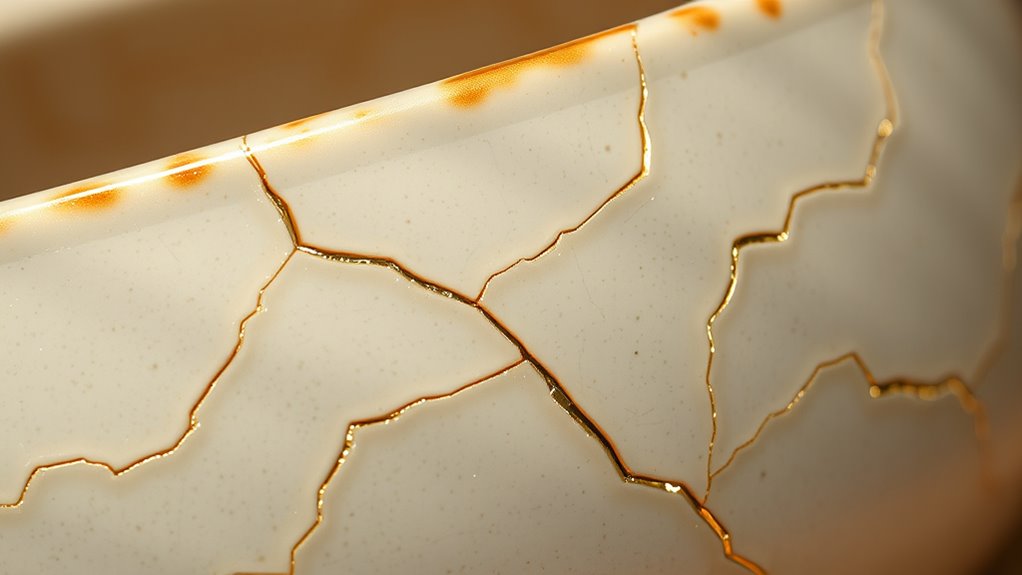
Kintsugi teaches you to embrace imperfection and aging as part of life’s natural process. It highlights resilience by transforming damage into beauty, showing that wounds can lead to growth. Through this philosophy, you learn to celebrate transformation and find value in every crack and scar. Additionally, it encourages cultivating a relationship with inner guidance, empowering individuals to make authentic choices and foster personal growth. Developing an awareness of auditory processing challenges can further deepen your understanding of resilience and self-awareness. Recognizing the importance of healing times and patience can help you better appreciate the process of growth and self-acceptance.
Embracing Imperfection and Aging
Embracing imperfection and aging requires shifting your perspective to see beauty in flaws and the passage of time. Kintsugi reflects this through its focus on honoring repaired objects, aligning with aesthetic philosophy that values authenticity. This approach encourages you to accept imperfections as part of life’s journey, rather than hide them. In ceremony rituals, such acceptance deepens your connection to the present moment, emphasizing humility and reverence for aging. By appreciating the cracks and scars, you learn to see resilience rather than loss. Remember, embracing imperfection means recognizing that:
- Flaws add unique character
- Aging signifies growth
- Beauty lies beyond perfection
- Value is found in authenticity
These ideas help you cultivate a mindset that celebrates life’s natural evolution.
Celebrating Resilience and Transformation
Have you ever considered how cracks and scars can symbolize strength rather than weakness? In ceramic restoration, these imperfections become a testament to resilience, highlighting how damage can lead to beauty and growth. Kintsugi embodies this philosophy through artistic repair, turning broken pottery into a symbol of transformation. Instead of hiding flaws, it celebrates them with gold-filled cracks that tell a story of endurance. This approach encourages you to view setbacks as opportunities for renewal. By embracing imperfections, you honor the process of healing and personal growth. Kintsugi reminds us that resilience isn’t about perfection but about transforming scars into sources of beauty and strength. It’s a powerful celebration of resilience, showing how brokenness can lead to a new, more meaningful form.
Kintsugi as a Metaphor for Healing and Resilience
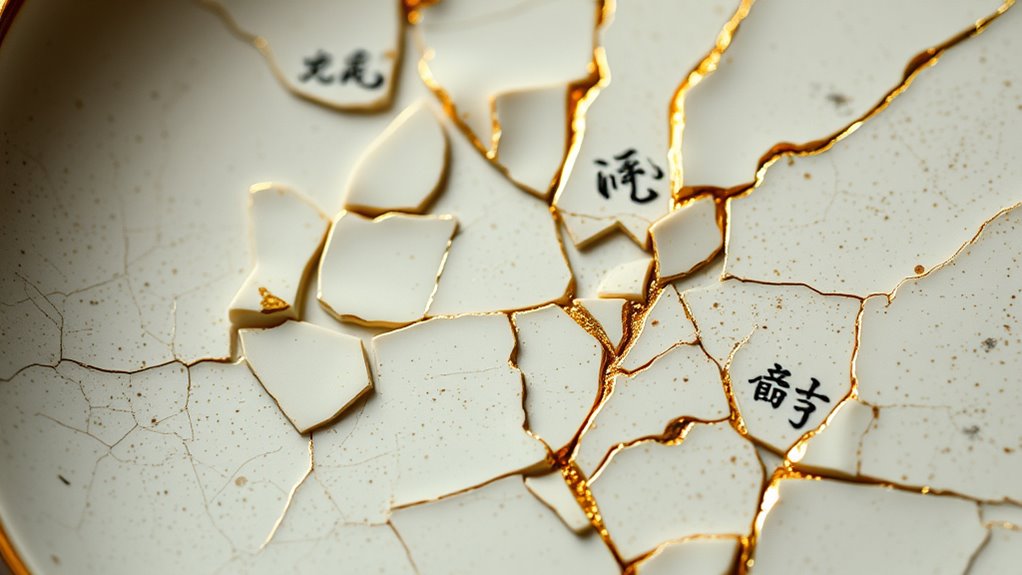
When we see a broken object repaired with gold, it immediately signals that the cracks and scars are part of its unique story. This perspective mirrors how you can view healing and resilience. Kintsugi teaches that damage isn’t the end but an opportunity for growth, much like pottery preservation and ceramic restoration emphasize restoring beauty to broken pieces. The gold lines highlight scars, symbolizing strength gained from adversity.
You learn to:
- Embrace imperfections as part of your journey
- Recognize resilience in overcoming setbacks
- Value healing as a process, not just a fix
- See scars as symbols of survival and strength
This philosophy encourages you to accept your wounds and transform them into sources of beauty and wisdom, just like the repaired ceramics.
Modern Interpretations and Applications of Kintsugi
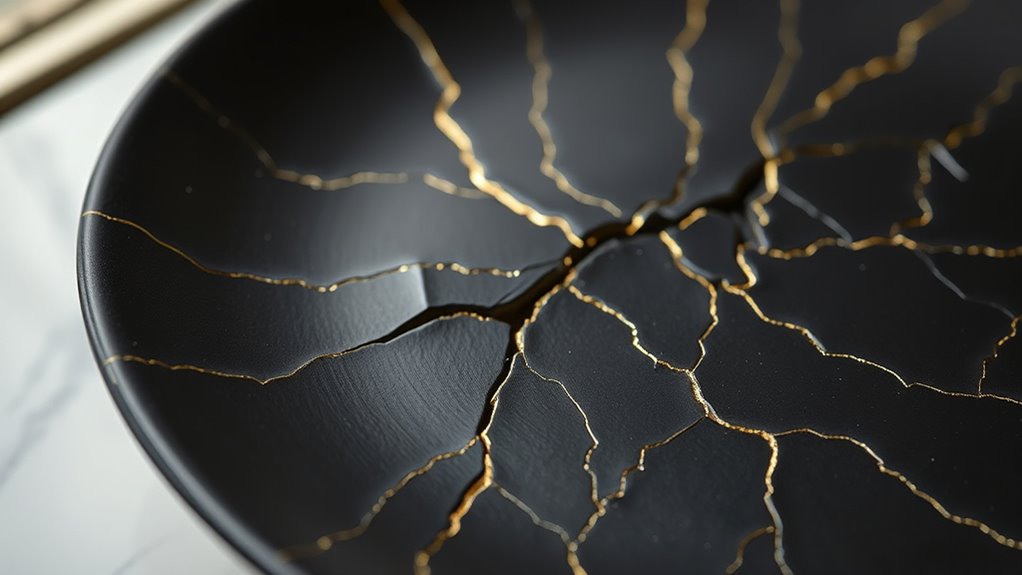
Today, the timeless philosophy of Kintsugi continues to inspire modern interpretations that extend beyond traditional pottery repair. In the domain of ceramic preservation, artists and designers incorporate Kintsugi techniques to highlight flaws and imperfections, turning damaged items into cherished art. This approach emphasizes the beauty of repair, fostering a shift toward valuing history and authenticity. Culturally, Kintsugi’s symbolism resonates globally, inspiring movements that celebrate resilience, acceptance, and transformation. You might see this philosophy reflected in contemporary jewelry, fashion, and interior design, where cracks and repairs become focal points rather than flaws. These applications demonstrate how Kintsugi’s principles adapt to modern aesthetics, encouraging people to see beauty in imperfection and to honor the history embedded within objects and, by extension, within ourselves.
Lessons From Kintsugi for Personal Growth
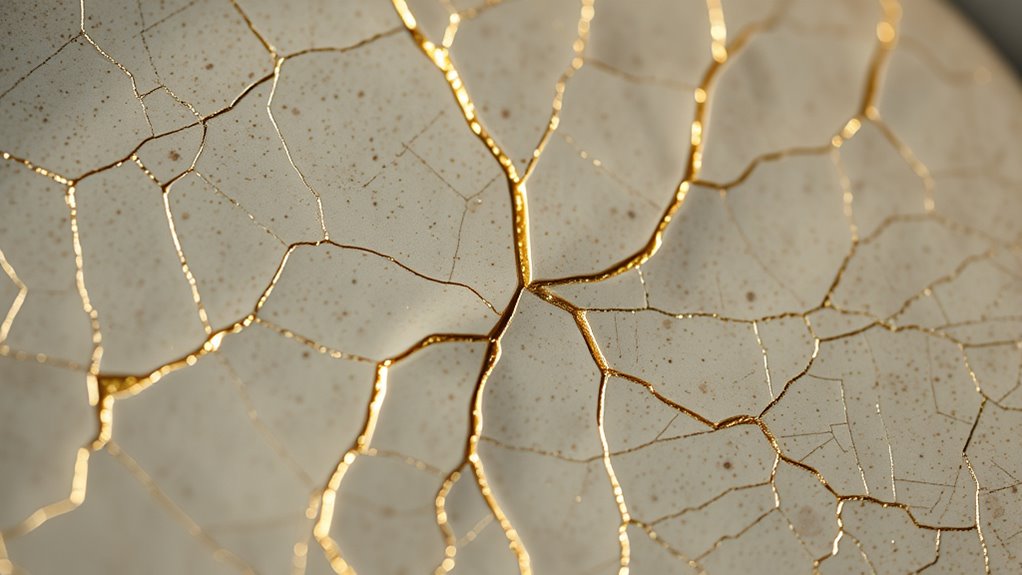
Kintsugi teaches you to embrace imperfections and see their value instead of hiding them. By finding beauty in breakage, you learn to accept setbacks as part of your growth. When you repair and strengthen yourself, you grow stronger and more resilient through the process.
Embrace Imperfections Fully
Embracing imperfections fully requires shifting your perspective from seeing flaws as failures to recognizing them as opportunities for growth. When you look at cracked ceramics, you see more than damage—you see history and resilience. Just like artisan craftsmanship transforms broken pieces into art, you can turn your flaws into strengths. Accepting imperfections helps you develop patience, humility, and authenticity. Remember:
- Cracks are part of your unique story.
- Flaws reveal your true character.
- Growth often comes through challenge and repair.
- Embracing imperfections fosters self-compassion.
Find Beauty in Breakage
When you start seeing breakage not as an ending but as an opportunity for transformation, you reveal a powerful lesson from Kintsugi. In traditional craftsmanship, ceramic restoration highlights that flaws and cracks can enhance beauty, not diminish it. By embracing broken pieces, you learn to find value in imperfections and see setbacks as part of your growth process. This perspective encourages you to approach challenges with resilience and patience, understanding that repair can create something more unique and meaningful. Instead of discarding what’s broken, you learn to celebrate it, recognizing that beauty often emerges from vulnerability. Kintsugi’s philosophy reminds you that life’s cracks can be transformed into art, offering a new way to see your own journey of healing and personal development.
Grow Through Repair
Growing through repair means seeing your setbacks as opportunities to strengthen and refine yourself. Just like in ceramic restoration, cracks and breaks are part of the process, not the end. Embracing these moments allows you to learn resilience and patience, rooted in cultural symbolism that values imperfection. When you repair yourself, you acknowledge your flaws and transform them into strengths. Remember:
- Every crack holds a lesson for growth
- Repairing fosters self-awareness
- Embracing imperfections builds resilience
- Cultural symbolism reminds you of shared human experience
Kintsugi in Art and Design Today
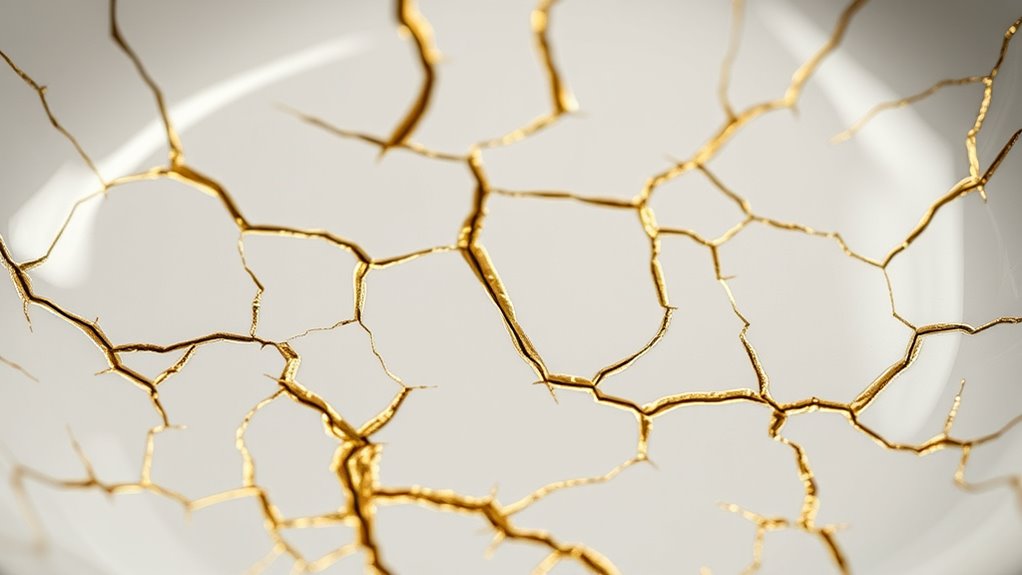
Have you noticed how Kintsugi’s philosophy of highlighting flaws has influenced contemporary art and design? Today, artists and designers incorporate the idea of embracing imperfections into their work, especially in ceramic preservation and pottery restoration. Instead of hiding cracks or damages, they celebrate them, creating unique pieces that tell a story. This approach encourages a shift from perfect, mass-produced objects to ones with character and history. In modern art, Kintsugi-inspired techniques appear in sculptures, installations, and functional ceramics, emphasizing resilience and beauty in flaws. Many artists use gold or similar materials to accentuate repairs, transforming damaged pottery into compelling visual statements. This movement challenges traditional notions of perfection and invites you to see beauty in the imperfect.
Embracing Flaws: How Kintsugi Inspires a New Perspective

Kintsugi invites you to see flaws not as failures but as opportunities for beauty and growth. When you look at broken ceramic pieces repaired through ceramic restoration, you realize each crack tells a story. This approach embodies cultural symbolism, emphasizing that imperfections add value rather than diminish it. By embracing flaws, you shift your perspective on failure and resilience.
Remember:
- Cracks highlight unique history, not shame
- Flaws symbolize strength and perseverance
- Repairing fosters acceptance and patience
- Imperfections become part of the object’s identity
Kintsugi teaches you that embracing your flaws can be empowering. It’s a reminder that brokenness isn’t the end but a chance to create something more meaningful, beautiful, and authentic.
Frequently Asked Questions
How Does Kintsugi Influence Modern Recovery and Mental Health Practices?
Kintsugi influences your modern recovery and mental health practices by emphasizing emotional resilience and healing symbolism. It encourages you to see cracks and scars as part of your unique story, promoting acceptance and growth. This approach helps you embrace imperfections, reminding you that healing involves transformation. By applying kintsugi’s philosophy, you learn to value resilience and view challenges as opportunities for renewal, fostering a positive mindset in your mental health journey.
Can Kintsugi Techniques Be Applied to Digital or Intangible Objects?
Yes, you can apply kintsugi techniques to digital repair and intangible healing. Just as gold lines highlight physical cracks, digital repair emphasizes restoring data, code, or apps. Similarly, intangible healing involves mending emotional wounds or mental scars, embracing imperfections with resilience. You see, both in physical and digital domains, kintsugi teaches you to celebrate recovery, transforming brokenness into beauty, and fostering growth through repair, whether tangible or intangible.
What Are the Environmental Impacts of Traditional Kintsugi Materials?
You should know that traditional kintsugi materials can have environmental impacts, especially if they involve chemical toxins from epoxy resins or synthetic glues. These substances may contribute to ceramic waste and pollution if not disposed of properly. By choosing eco-friendly alternatives, you minimize chemical toxins and reduce waste, making your kintsugi practice more sustainable and environmentally responsible.
How Does Kintsugi Compare With Western Restoration Philosophies?
You’ll find that kintsugi dramatically contrasts with Western restoration philosophies, emphasizing acceptance and beauty in imperfection. Cultural perspectives shape this approach, valuing history and soul over pristine perfection. Restoration ethics in kintsugi focus on embracing flaws, creating a story of resilience. Western methods often aim to erase damage, but with kintsugi, you celebrate every crack, making the repaired piece stronger, more meaningful, and uniquely yours.
Are There Cultural Differences in How Kintsugi Is Perceived Globally?
You’ll find that cultural perceptions of kintsugi vary globally, shaping its appreciation differently across regions. In Japan, it’s seen as a beautiful metaphor for resilience, while Western audiences often admire its artistry and philosophy. This global appreciation grows as more people understand its cultural significance, highlighting how different societies embrace kintsugi’s message of beauty in imperfection. Your awareness of these perceptions helps deepen your appreciation for this unique art form.
Conclusion
Embrace your cracks like golden veins, transforming brokenness into beauty. Kintsugi reminds you that flaws aren’t scars but stories etched with resilience and grace. Let your imperfections shimmer with the glow of acceptance, turning life’s fractures into art. When you see your wounds as opportunities for growth, you become a masterpiece in progress—radiant, unique, and whole. The beauty lies not in perfection, but in the courage to shine despite your cracks.