
TL;DR
Livingetc’s interior design report makes the case for using silver and gold together, rather than treating them as competing finishes. Designers say their contrasting warm and cool tones can add depth and affect how light reads in a room, but recommend making the mix intentional, often with one metal more prominent than the other.
Livingetc has published guidance on combining silver and gold in home interiors, challenging the idea that a room should stick to one metal. Color expert Amy Moorea Wong and designer Pablo López of Casa Josephine say the finishes can complement one another through their contrasting cool and warm tones, while reflecting light around a space.

Get business pricing on tools and workshop supplies
- Business-only prices and quantity discounts
- Tax-exempt purchasing
- Multiple users, one account, clear invoices
Wong describes silver and gold as opposites that can strengthen each other when placed together. In her account, silver reads as cool and crisp, while gold appears warmer and more burnished. Their contrast can create balance, she says, rather than making the room look mismatched. López, who has used the metals both together and separately in design projects, says they contribute texture and depth as well as associations with jewelry and luxury.
The report stresses that metallic finishes are not simply equivalent to ordinary paint colors. Wong says pale gray and ochre are the closest nonmetallic comparisons, but the reflective quality of silver and gold is part of their effect. Their surfaces can pick up and redirect light, changing the way nearby colors appear. Wong says silver tends to play a stronger role in daylight, while gold can add warmth under evening lighting.
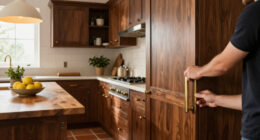
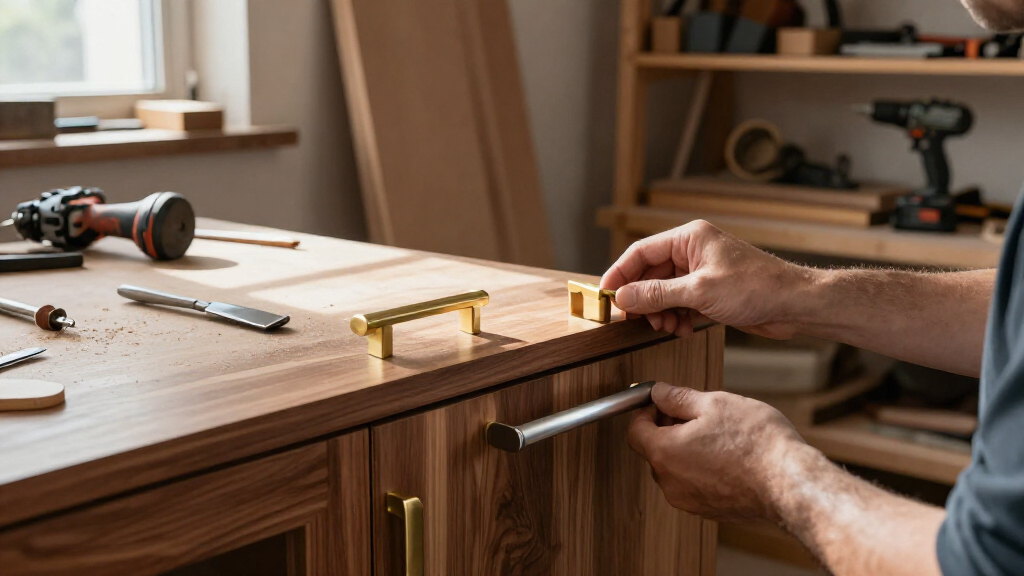
For a deliberate mix, Wong advises allowing one metal to dominate slightly and using the other as support. A third finish, such as bronze, could soften the contrast. López takes a bolder approach: he says he often uses silver and gold on large surfaces or substantial pieces rather than limiting them to small accents. The report gives examples including silver cabinetry with brass hardware and a silver artwork against a gold wall and console.
How Mixed Metals Change a Room
The advice matters to homeowners and designers weighing whether mixed-metal finishes will look cohesive. Instead of treating silver and gold as a choice between two competing styles, the report frames their contrast as a way to shape a room’s temperature, texture and light. Reflective surfaces can affect the colors around them, so their placement and scale may influence the overall feel beyond the objects themselves.
The guidance also acknowledges a practical design tension: gold and silver can signal glamour or a special-occasion look. A restrained use may read as elegant, Wong says, while a more extensive combination can feel theatrical. The distinction is not presented as a fixed rule, but as a matter of how confidently and deliberately the finishes are used.
Popular right now

iRobot Roomba Max 715 Robot Vacuum with AutoEmpty Dock

Sony WH-1000XM6 Wireless Noise-Canceling Headphones, Black

Bose QuietComfort Wireless Noise Cancelling Headphones – Cypress Green (Limited Edition)
As an affiliate, we earn on qualifying purchases.
From Single-Metal Rules to Layering
The Livingetc report addresses a familiar decorating question: whether silver and gold belong together. It presents the pairing as part of a broader willingness to mix finishes, rather than assigning one metal to an entire room. The article’s examples and recommendations come from design commentary, not from a consumer survey or a formal study of interior trends.
López describes layering silver-toned materials, including chrome, stainless steel, real silver, mirror and pewter, to create variation in finish. The report also suggests that other metals and contrasting textures can sit alongside the gold-and-silver combination. These examples underline that “silver” and “gold” can refer to different materials and finishes, not just uniform color choices.
“Silver and gold are the yin and yang of metallic shades, one cool and pale, the other warm and rich.”
— Amy Moorea Wong, Livingetc color expert
Where the Design Advice Ends
The report offers expert opinions and project examples, not evidence that mixed metals suit every interior or that the approach is becoming more popular across the industry. It does not provide survey data, sales figures or a defined measure of the trend’s reach. Whether a particular pairing works will depend on the room, the materials, the lighting and the amount of each finish.
The supplied article text also does not identify a publication date, name specific products or provide full details of the rooms shown in its images. Its recommendations should be read as design guidance rather than a rule or a guarantee of a particular result.
Applying the Pairing at Home
For readers considering the mix, the report’s next step is a design choice rather than a scheduled industry milestone: decide which metal will lead, then use the second to complement it. Consider how natural and artificial light will fall on the finishes, and whether a third material or a contrasting texture would make the combination feel more layered.
There is no announced follow-up study or forecast in the source material. The immediate takeaway is to test the balance in the room itself, using the scale and placement of the finishes to decide whether the result feels restrained or more dramatic.
Key Questions
Can silver and gold be used in the same room?
Yes. Livingetc’s report says the metals can complement each other through their contrasting cool and warm tones. The designers describe the result as dependent on how the finishes are balanced and used.
How should I balance silver and gold?
Amy Moorea Wong recommends letting one metal dominate slightly while the other supports it. The report also notes that designer Pablo López sometimes uses both on larger surfaces or pieces.
What other finishes can go with silver and gold?
The report mentions bronze as a possible third metal and describes layering silver-toned finishes such as chrome, stainless steel, mirror and pewter. It does not prescribe one required combination.
Why do silver and gold affect a room’s appearance?
Both finishes reflect light, and their different undertones can influence nearby colors. Wong says silver tends to read more strongly in daylight, while gold can add warmth under evening lighting.
Source: livingetc.com