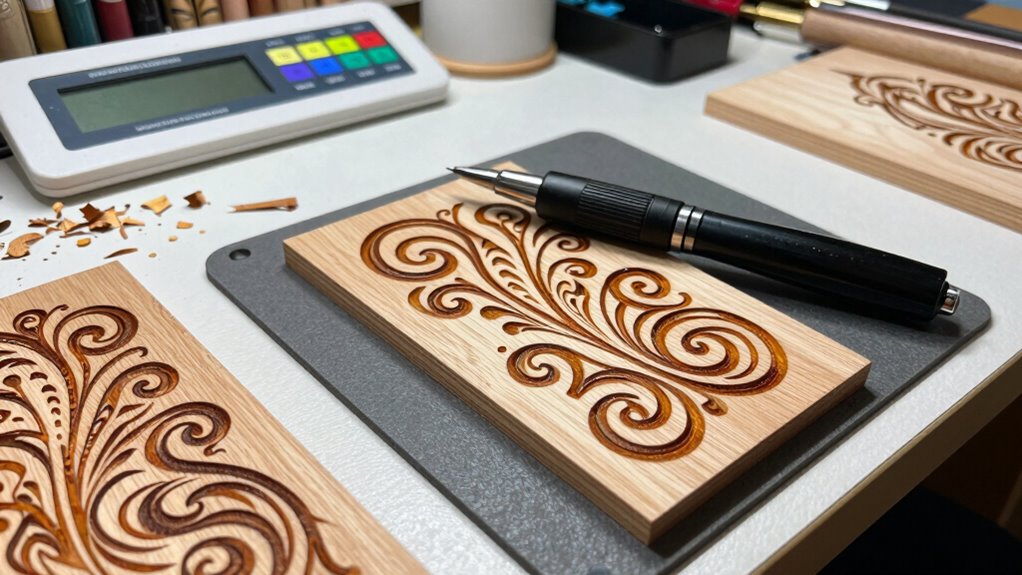
Setting up a dedicated pyrography station helps you produce detailed, consistent, and high-quality wood art efficiently. Focus on a sturdy, well-ventilated surface with organized tools and good lighting, including magnifiers for intricate work. Guarantee ergonomic furniture and proper airflow for comfort and safety during long sessions. Keeping your workspace clean and tools maintained boosts precision and reduces accidents. Keep exploring to discover how to optimize your station even further for stunning results.

Get business pricing on tools and workshop supplies
- Business-only prices and quantity discounts
- Tax-exempt purchasing
- Multiple users, one account, clear invoices
Key Takeaways
- A dedicated pyrography station provides a stable, organized workspace for precise and consistent wood burning.
- Proper lighting and magnification improve detail work and reduce eye strain during intricate designs.
- An ergonomic setup supports comfort and control, minimizing fatigue during extended pyrography sessions.
- Organized tools and heat-resistant surfaces ensure safety, cleanliness, and efficiency in the workspace.
- Good ventilation and workspace maintenance are essential for safety and quality results in decorative wood burning.
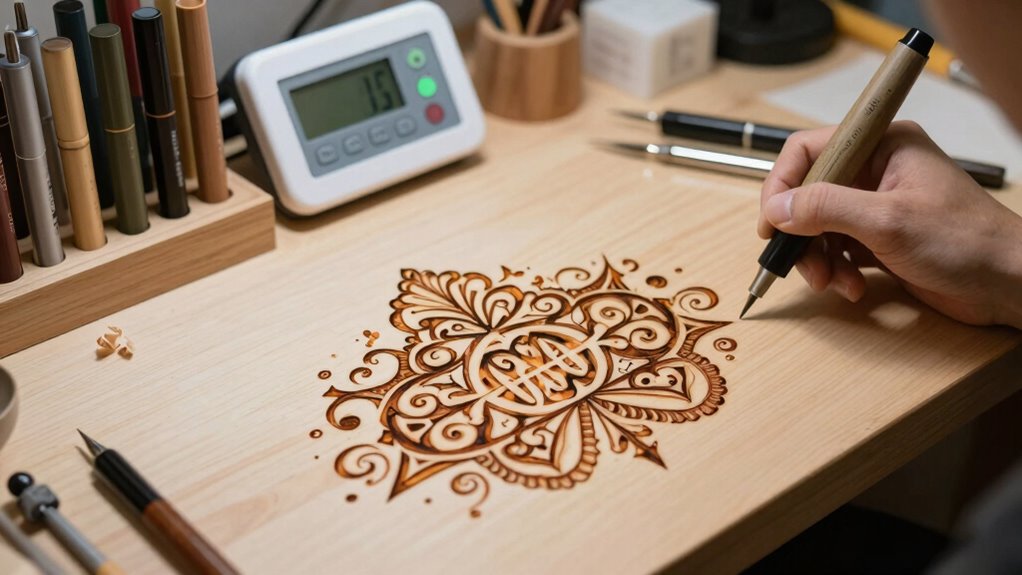
Pyrography stations are dedicated setups that make it easier for artists to create detailed woodburning designs with precision and comfort. When you set up a station specifically for pyrography, you create an environment that supports your craft, minimizes distractions, and helps you achieve cleaner, more consistent results. A well-designed station allows you to focus on your work and develop your wood burning techniques effectively.
A dedicated pyrography station enhances precision, comfort, and consistency in your woodburning projects.
To optimize your station setup tips, start by choosing a sturdy, flat surface that can handle the heat of your pyrography tools. Make sure it’s well-ventilated, because burning wood can produce fumes. Keep your tools organized within easy reach—using a toolbox, small drawers, or wall-mounted racks helps prevent clutter and saves you time. Also, include a heat-resistant mat or surface where you can rest your tools safely while switching tips or taking breaks. This prevents accidental burns and keeps your workspace clean.
Lighting plays a vital role in your station setup tips. Proper illumination, such as adjustable LED lamps, ensures you can see your fine details clearly without straining your eyes. Good lighting reduces mistakes and helps you develop better control over your wood burning techniques. Consider adding magnifying lenses if you work on intricate designs, as they provide enhanced visibility and help you achieve more precise results. Having a well-lit workspace also reduces fatigue during long sessions. Additionally, using ergonomic furniture and accessories can help prevent discomfort during extended work periods.
Incorporate a comfortable, ergonomic chair and arrange your station so that your arms and hands are supported during long sessions. Comfort directly impacts your ability to maintain steady, controlled movements, which is essential for mastering your wood burning techniques. Keep a small container of water or a damp cloth nearby to wipe your tips and keep them clean, guaranteeing consistent burn marks and preventing residue buildup that could affect your work. Additionally, having proper ventilation helps ensure a safer workspace by dispersing fumes generated during burning. Proper airflow is crucial for your health and safety during extended pyrography sessions. Ensuring your workspace is designed with ergonomics in mind can help prevent fatigue and repetitive strain injuries, allowing for more productive sessions. Moreover, incorporating proper lighting can significantly improve your accuracy and reduce eye strain, making your work more enjoyable.
As an affiliate, we earn on qualifying purchases.
Frequently Asked Questions
What Safety Precautions Should I Take When Using a Pyrography Station?
When using a pyrography station, you should prioritize ventilation safety by working in a well-ventilated area to avoid inhaling fumes. Always wear protective gear like gloves and safety glasses to shield your skin and eyes from burns or sparks. Keep a fire extinguisher nearby, and never leave the station unattended. Regularly inspect your tools for damage, and work cautiously to prevent accidents and guarantee a safe, enjoyable creative experience.
How Do I Choose the Right Wattage for My Projects?
Choosing the right wattage for your projects is like tuning an instrument—you want just the right note. For detailed work, opt for a lower wattage to allow precise control, typically around 15-25 watts. For larger or thicker pieces, higher wattage (30-40 watts) provides the power needed. Use power adjustment to fine-tune your tool’s heat, ensuring your designs come out perfect without burning the wood.
Can Pyrography Stations Be Used on Materials Other Than Wood?
Yes, you can use pyrography stations on alternative materials and non-wood surfaces. Many artists explore leather, gourds, bone, and even certain plastics with the right tools and techniques. However, you need to adapt your temperature settings and use appropriate tips for each material to avoid damage. Always test on a small area first to ensure your pyrography station produces the desired effect without compromising the surface quality.
How Do I Maintain and Clean My Pyrography Station?
To maintain and clean your pyrography station, regularly disconnect and cool down your tools first. Use a soft cloth or brush to remove dust and residue, keeping your workspace organized for safety and efficiency. Focus on tool ergonomics by adjusting grips and handles to prevent strain during use. Proper cleaning and organized workspaces not only extend your tools’ lifespan but also enhance your comfort and precision during pyrography sessions.
Are There Portable Pyrography Stations for Outdoor Work?
Imagine you’re a modern-day explorer, and yes, there are portable pyrography stations perfect for outdoor work. These devices offer excellent portable mobility and outdoor durability, letting you craft beautiful designs in nature’s embrace. They’re lightweight, easy to transport, and built tough enough to withstand outdoor conditions. So, whether you’re at a park or on a camping trip, you can enjoy pyrography without sacrificing convenience or quality.
As an affiliate, we earn on qualifying purchases.
Conclusion
By understanding pyrography stations, you empower yourself to create detailed, professional-looking designs that truly stand out. Imagine transforming a plain wooden box into a personalized keepsake for a loved one—each station’s specific tool and technique come together to bring your vision to life. With practice, you’ll see how mastering these stations opens up endless creative possibilities, making every project a meaningful masterpiece. Embark on, experiment, and let your artistry shine through your pyrography work.
As an affiliate, we earn on qualifying purchases.
As an affiliate, we earn on qualifying purchases.
Halloween Picks
halloween
As an affiliate, we earn on qualifying purchases.