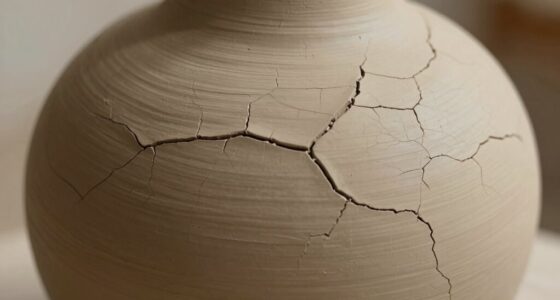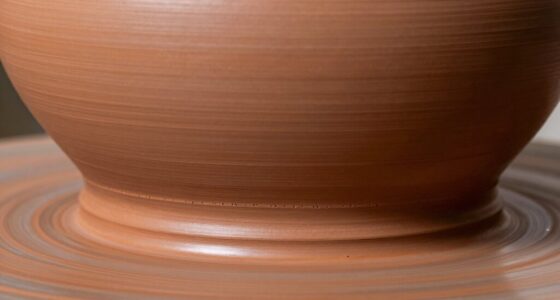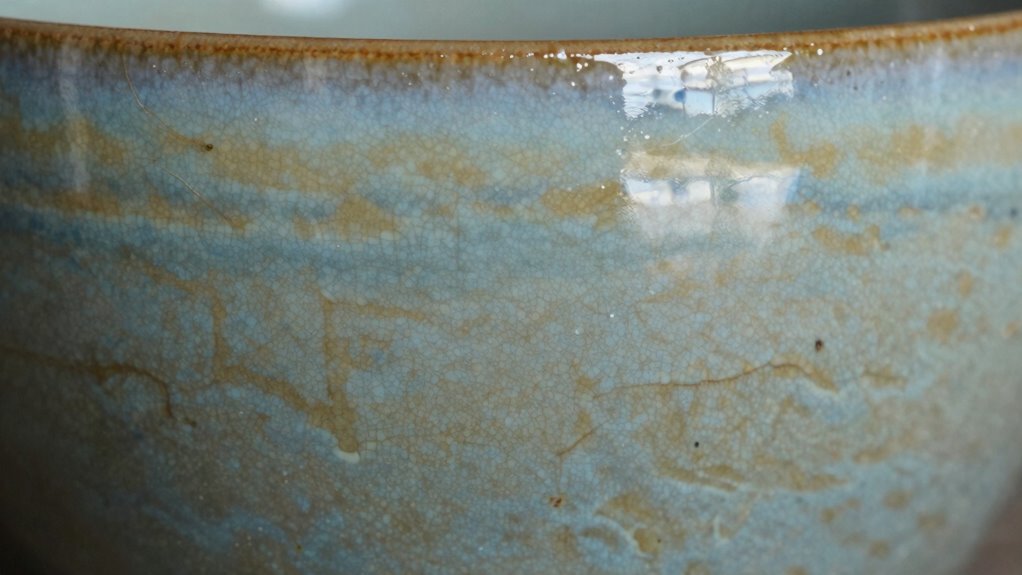
To spot potential glaze issues early, examine the surface closely before firing completes. Look for irregularities like pinholes, crawling, or uneven texture, which can hint at chemistry problems or firing temperature issues. Notice if the glaze appears too runny, dull, or overly glossy, as these signs indicate over- or under-firing. By observing these clues, you can adjust your process to prevent problems. Keep exploring to discover how surface details reveal the secrets behind a flawless finish.
Key Takeaways
- Examine the glaze surface for irregularities like crawling, pinholes, or blistering as early indicators of chemistry or firing issues.
- Observe the glossiness or matte finish to assess if the firing temperature is within the ideal range.
- Check for drips or runny textures that suggest over-firing or flux imbalance.
- Look for dull, under-fired areas to identify underheating or insufficient maturation.
- Use surface cues to adjust kiln temperature and firing cycle before final firing to prevent defects.
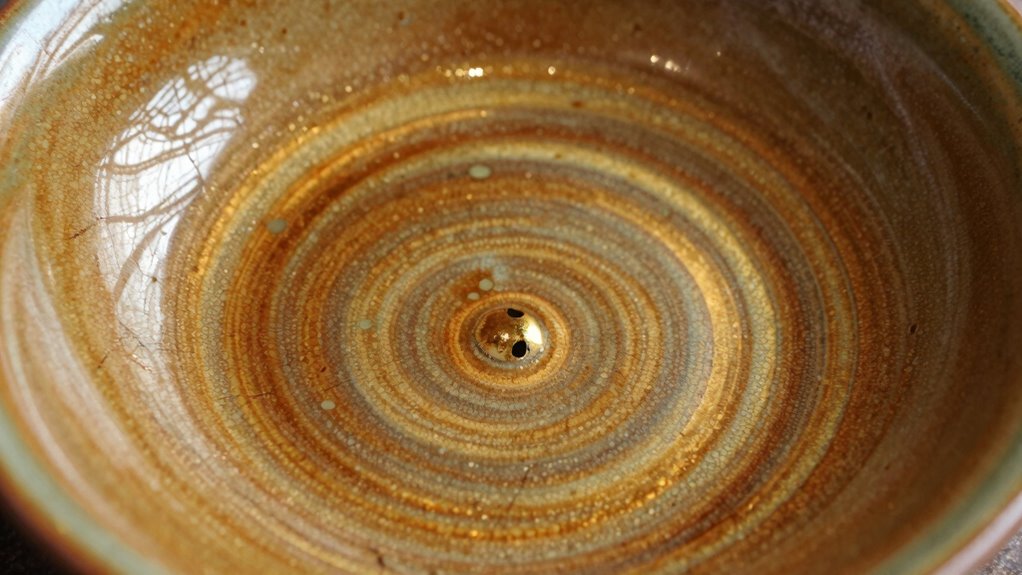
Have you ever wondered what a glaze surface reveals about your pottery? When you examine a glaze, you’re looking at more than just its color or texture—you’re interpreting the complex interplay of glaze chemistry and firing temperature that determines the final result. Understanding these factors helps you predict how your piece will turn out before it even leaves the kiln, giving you the power to correct issues early and achieve the desired finish.
Interpreting your glaze surface reveals chemistry and temperature insights, helping you predict and perfect your pottery outcomes.
Glaze chemistry is at the heart of how a glaze looks and behaves. It’s made up of ingredients that melt and fuse during firing, creating that smooth, glassy surface. Different chemical combinations produce different effects, from glossy to matte, or even textured finishes. For example, high silica content can lead to a shiny, glass-like surface, while certain fluxes can encourage runny, drippy effects. When you observe irregularities—such as crawling, pinholes, or pinpoints—you’re seeing the influence of glaze chemistry gone awry. Recognizing these signs allows you to adjust your recipe or application process for better results. Additionally, understanding how glaze chemistry affects surface helps you develop more controlled and intentional effects in your work.
Firing temperature plays a *key* role alongside glaze chemistry. Each glaze has a specific temperature range where it melts and matures properly. If you fire too hot or too cold, the glaze might become overly glossy, dull, or even crack. A glaze that appears uneven or has blistering may be a sign that it’s been fired outside its *ideal* temperature window. When you study the surface closely, you can often tell if the firing temperature was too high—glazes tend to run or become overly fluid—or too low, resulting in a dull, under-fired look. Paying attention to these subtle clues on the surface helps you fine-tune your kiln settings for consistent, predictable results. Recognizing how firing temperature impacts glaze appearance is essential for achieving professional-quality finishes. Developing an understanding of firing cycles and their effects can further refine your process and outcomes.
Reading a glaze surface isn’t just about identifying problems; it’s about understanding what’s happening beneath the surface. When you become familiar with how glaze chemistry and firing temperature influence the appearance, you gain insight into your firing process. This knowledge empowers you to troubleshoot issues early, make informed adjustments, and develop a deeper connection to your craft. Over time, you’ll start recognizing patterns, predicting outcomes, and crafting glazes that enhance your artistic vision. Ultimately, reading a glaze surface before it goes wrong saves you time, materials, and frustration, leading to more polished, professional-looking pottery.
As an affiliate, we earn on qualifying purchases.
Frequently Asked Questions
Can Glaze Surface Defects Be Fixed After Firing?
Glaze surface defects like glaze crackles and surface pinholes can’t usually be fixed after firing. Once the glaze cools and sets, these imperfections are permanent. To avoid them, you should check your glaze surface before firing, ensuring it’s smooth and free from cracks or pinholes. If defects appear, consider adjusting your glaze recipe or firing temperature next time, as repairs after firing typically won’t restore the surface properly.
What Tools Are Best for Inspecting Glaze Surfaces?
You should use a magnifying glass or a jeweler’s loupe to inspect glaze texture closely and assess surface sheen. These tools help you spot tiny imperfections, cracks, or pinholes that might not be visible to the naked eye. A good light source, like a raking light, enhances surface details, allowing you to evaluate the overall quality of the glaze. Regular inspection guarantees you catch issues early and achieve a flawless finish.
How Does Glaze Composition Affect Surface Appearance?
Did you know that glaze chemistry directly influences surface texture and appearance? When you understand how different ingredients interact, you can predict whether your glaze will be smooth, matte, or glossy. Variations in composition cause changes in melting points and surface tension, shaping the final look. By mastering glaze chemistry, you gain control over surface texture, ensuring your finished piece matches your artistic vision without surprises.
Are There Differences in Glaze Behavior on Different Clay Bodies?
Yes, different clay bodies influence glaze behavior through clay compatibility and surface interaction. When you apply a glaze, it reacts uniquely depending on the clay’s porosity, thermal expansion, and surface texture. You’ll notice variations in gloss, crackling, or crawling. To guarantee a successful finish, test your glaze on your specific clay body first, observing how it interacts and adjusts for ideal compatibility and surface quality.
What Are Early Signs of Glaze Failure During Application?
During application, watch for uneven glaze color consistency, which indicates improper mixing or application. Surface crack detection is also essential; tiny cracks or crazing can appear early, signaling potential failure. If you notice areas where the glaze isn’t smoothly covering or if colors seem inconsistent, address these issues promptly. These early signs help prevent larger problems post-firing, ensuring your finished piece has a durable, beautiful surface.

PID Temperature Controller Kit, CGELE Voltage AC 100~240V Comes with SSR 40DA Solid State Relay, K Type Thermocouple Sensor, and Black Heat Sink
- Alarm Relay Output: AC220V/DC30V 3A with buzzer connection
- Sensor Compatibility: Supports 2 and 3 wire thermocouples and RTDs
- SSR Output: Includes 40DA solid state relay
As an affiliate, we earn on qualifying purchases.
As an affiliate, we earn on qualifying purchases.
Conclusion
By learning to read your glaze surface, you gain the ability to prevent common mistakes and achieve stunning results. Remember, over 60% of pottery failures stem from misjudging glaze behavior before firing. So, trust your observations—look for signs of uneven thickness or pinholes. With experience, you’ll develop an instinct for when a glaze is just right. Mastering this skill not only saves you time and materials but also elevates your craftsmanship to new heights.
pottery glaze surface inspection tools
As an affiliate, we earn on qualifying purchases.
As an affiliate, we earn on qualifying purchases.
As an affiliate, we earn on qualifying purchases.