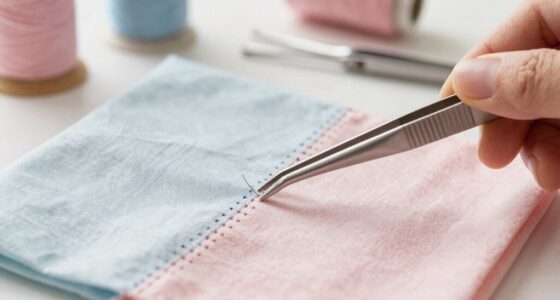
To prevent fabric layers from creeping apart while sewing, make certain your layers are well-aligned and smoothed before pinning. Use sharp, fine pins placed perpendicular to the seam every 2-3 inches, especially at curves. Gently press your layers flat and hold them firmly but gently as you sew. Adjust your sewing speed, especially at tricky spots, and consider using a walking foot for even feeding. Keep practicing these techniques to achieve cleaner, more professional seams. If you keep these tips in mind, you’ll master sewing with layered fabrics.
Key Takeaways
- Pin layers securely every 2-3 inches, especially at curves and edges.
- Use sharp pins perpendicular to the seam to prevent shifting.
- Maintain steady, gentle fabric guidance without forcing during sewing.
- Adjust sewing machine tension and presser foot pressure for better control.
- Sew at a slower speed on tricky sections to ensure layers stay aligned.
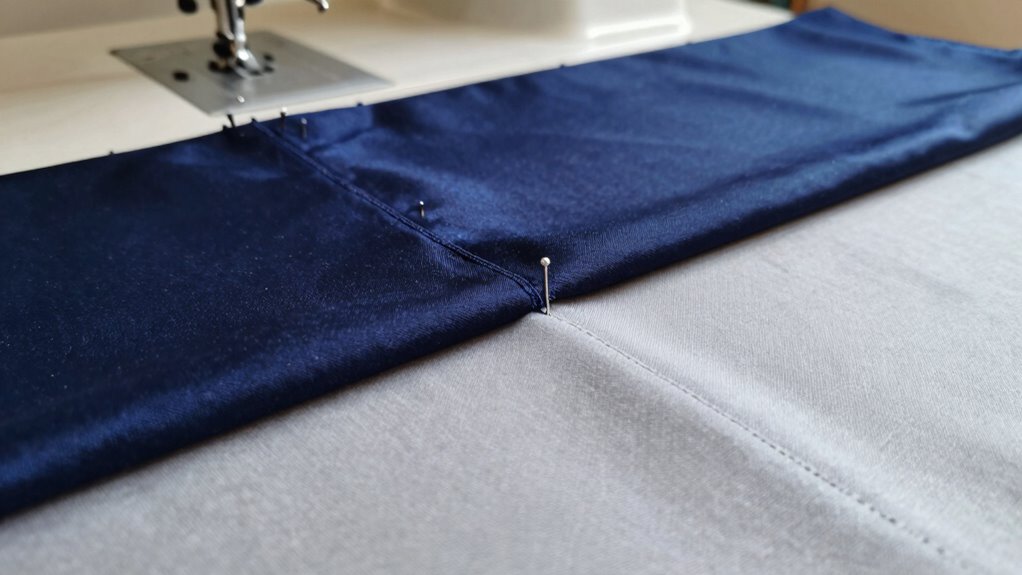
When sewing multiple fabric layers, it’s common for them to shift or creep apart, making it difficult to achieve precise seams. The key to preventing this is controlling the fabric’s movement as you sew. First, check your sewing machine tension. If the tension is too loose, your stitches won’t hold the layers firmly together, increasing the risk of slipping. Adjust your tension dial to a slightly higher setting, and test on scrap fabric to find the right balance. Proper tension ensures the fabric feeds smoothly and stitches stay consistent, which helps keep layers aligned.
Check your sewing machine tension and test on scrap fabric to keep layers aligned and prevent slipping.
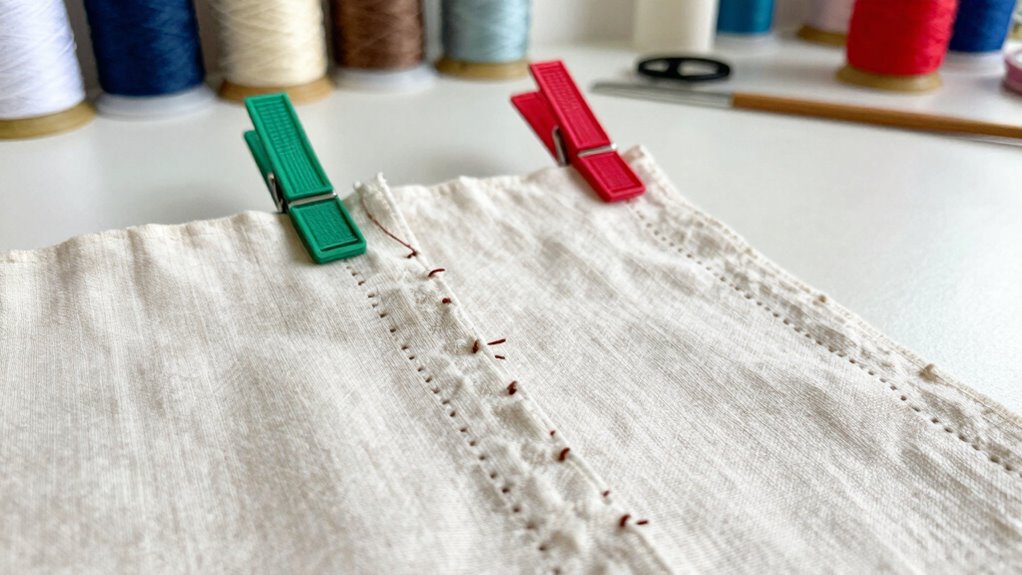
Next, pinning techniques are essential. Use sharp, fine pins and place them perpendicular to the seam line, keeping them close together—about every 2-3 inches. This keeps layers from shifting as you sew, especially at curves or corners. For extra grip, consider pinning at multiple points along the seam, particularly where the layers tend to slide. You can also pin from the center outward, which prevents puckering or bunching. If pins aren’t enough, fabric clips can provide additional hold without distorting the layers.
In addition, handling the fabric properly before sewing can make a difference. Make sure your layers are smoothed out and aligned perfectly before pinning. Use your hands to gently press the layers flat and remove any wrinkles or folds. When you start sewing, hold the fabric gently but firmly, guiding it steadily without forcing it. This helps maintain a consistent feed, which is critical for precision. Being mindful of fabric control techniques can greatly improve your sewing results. Additionally, using a proper sewing machine setup can further enhance your control over the fabric layers. Employing a consistent sewing speed can also help prevent layers from shifting unexpectedly.
Another technique is to sew slowly at the beginning and during tricky sections. Slowing down gives you more control over the fabric’s movement and helps you respond quickly if layers start to shift. Many sewing machines have adjustable stitch speeds—use this feature to your advantage. Also, consider sewing with a walking foot, which evenly feeds multiple layers through the machine, reducing slipping and creeping. Regularly checking your machine maintenance can ensure everything runs smoothly and prevents unexpected sewing issues. Moreover, practicing these techniques regularly will help you develop better fabric management skills, leading to more professional results.
Lastly, pay attention to your presser foot pressure. If your machine allows, increase the pressure slightly so the foot grips the layers more securely. Be cautious not to make it too tight, as that can cause puckering or damage the fabric. Combining proper sewing machine tension, effective pinning techniques, and careful handling will significantly reduce the chances of fabric layers creeping apart. With practice, you’ll find the right combination that keeps your layers perfectly aligned, giving you neat, professional-looking seams every time.

HONEYSEW Open Toe Walking Foot W/Guide for Brother Sewing Machine Quilting and Sewing Stitch Through Multiple Layers
Open toe for decorative stitching: The open toe design allows space for dense decorative stitches to glide easily…
As an affiliate, we earn on qualifying purchases.
As an affiliate, we earn on qualifying purchases.
Frequently Asked Questions
What Types of Fabric Are Most Prone to Creeping?
You’ll find woven fabrics, like silk, chiffon, and lightweight linen, are most prone to creeping because of their fiber slippage and lack of stretch. These fabrics tend to shift easily as you sew, making it tricky to keep layers aligned. To prevent this, use pins or clips generously, sew slowly, and consider stabilizers or interfacing to reduce fiber slippage and keep your layers in place.
Does Sewing Speed Affect Fabric Shifting?
Sewing speed markedly impacts fabric shifting, affecting your sewing accuracy and stitch tension. When you sew too quickly, your fabric tends to shift, leading to uneven stitches and misaligned layers. Slowing down helps maintain control, ensuring your fabric stays in place. By adjusting your sewing speed, you improve stitch consistency and tension, making your sewing more precise and professional. Focus on steady, deliberate movements to keep your fabric layers perfectly aligned.
Can Specific Presser Foots Prevent Layers From Moving?
Yes, specific presser feet can prevent layers from moving during sewing. Choose a presser foot compatible with your fabric and project, like a walking foot for multiple layers or thicker fabrics. It helps maintain consistent stitch length by applying even pressure, reducing shifting and creeping of fabric layers. Always guarantee your presser foot suits your machine and fabric type to achieve smooth, accurate stitches and prevent fabric layers from slipping apart.
How Does Fabric Weight Influence Creeping?
Heavier fabric tends to increase creeping because it requires more fabric tension to keep layers stable during sewing. When you work with lighter fabrics, they often shift more easily, leading to less seam stability. To combat this, you should adjust your sewing machine’s tension settings and use appropriate presser foot pressure. These steps help maintain fabric alignment, ensuring layers stay together and your seams stay even, regardless of fabric weight.
Are There Special Techniques for Quilting Layers?
For quilting layers, you should use layer stabilization techniques like basting or pinning to keep layers aligned. Sew with a long, even stitch to reinforce seams and prevent shifting. Consider using a walking foot, which helps evenly feed multiple layers through the machine. Additionally, applying temporary spray adhesive or hand-basting can provide extra seam reinforcement, ensuring your layers stay perfectly in place throughout your quilting project.
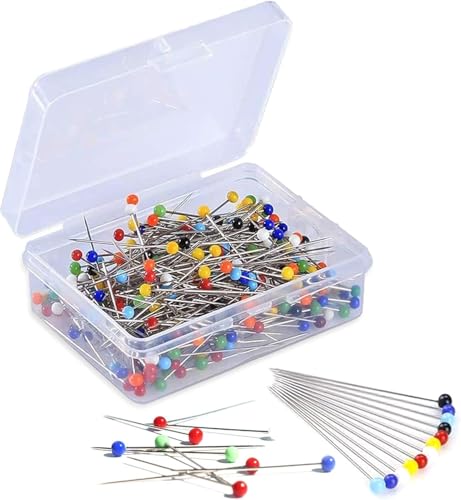
MINTHE 100PCS Sewing Pins for Fabric, Straight Pins Sewing with Pearlized Colored Heads, Quilting Supplies, Pearl, Stick, Corsage, Head
These Sewing Pins for fabric are perfect Sewing supplies & Quilting supplies. With a Stainless Steel Pin they…
As an affiliate, we earn on qualifying purchases.
As an affiliate, we earn on qualifying purchases.
Conclusion
So, next time you’re meticulously sewing those fabric layers, remember the irony—you’re trying to prevent them from creeping apart, yet it’s often your own hands that can cause the shift. With a little patience and some clever techniques, you’ll master keeping everything aligned. Who knew that a simple stitch or pin could be the secret to avoiding a fabric rebellion? Just stay steady, and those layers won’t stand a chance of wandering off—your perfect seam awaits!
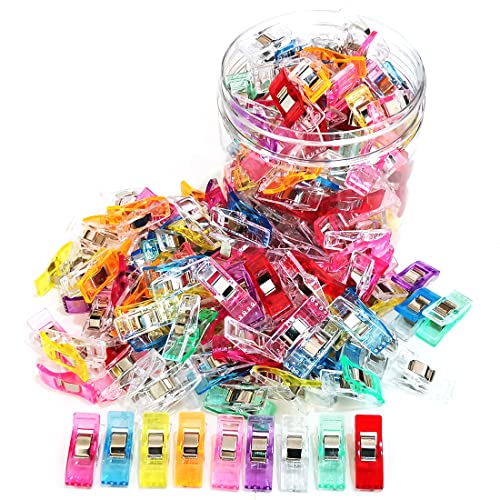
Otylzto Sewing Clips, 100 Pcs with Plastic Box, Premium Quilting Clips for Supplies Crafting Tools, Assorted Colors Plastic Clips for Crafts,Sew Clip,Sew Clips,Sewing Notions
high-quality super transparent AS material
As an affiliate, we earn on qualifying purchases.
As an affiliate, we earn on qualifying purchases.

Original Tajima Thread Tension Gauge TTG-CM76907 for Embroidery Factory Tools 912500110000
TOWA Bobbin Tension Gauge fit for TAJIMA, RICOMA Embroidery Machine
As an affiliate, we earn on qualifying purchases.
As an affiliate, we earn on qualifying purchases.