To prevent small wood parts from chipping out, always observe the grain direction before cutting and follow it to make smoother cuts. Use sharp tools and apply slow, controlled passes to minimize stress on the wood. Sand with fine-grit paper along the grain to smooth edges gently. Applying finishes like sealants before shaping can strengthen the surface. Careful technique and proper tool maintenance will keep chipping at bay—continue further to discover more detailed tips.

Get business pricing on tools and workshop supplies
- Business-only prices and quantity discounts
- Tax-exempt purchasing
- Multiple users, one account, clear invoices
Key Takeaways
- Follow the natural grain direction during cutting to reduce splintering and chipping.
- Use sharp, well-maintained tools for cleaner, smoother cuts on small parts.
- Support small pieces securely to prevent movement that causes chipping.
- Sand edges lightly with fine-grit paper along the grain after cutting.
- Apply a finish or wood conditioner to strengthen surfaces and minimize fiber damage.
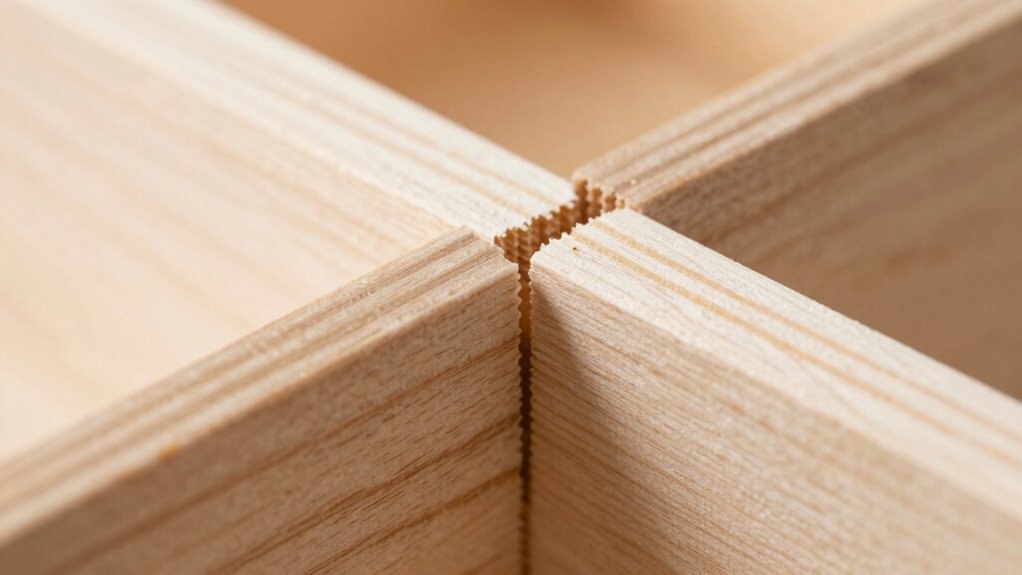
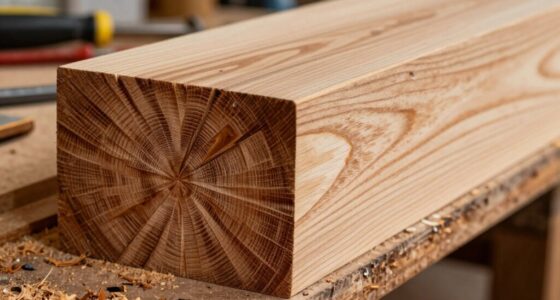
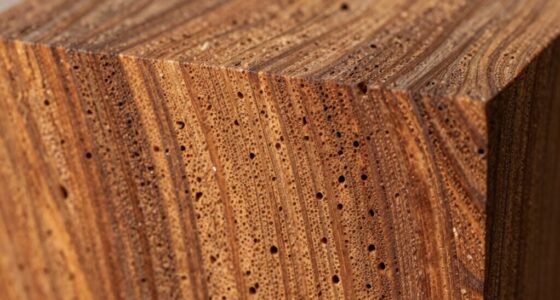
When working with small wood parts, chipping out can be a frustrating problem that compromises your project’s quality. It often happens when the cutting tool catches the grain, causing splinters or chips to break away. To prevent this, you need to pay close attention to the grain direction. Always examine your wood before cutting and plan your cuts to follow the natural grain flow. Cutting against the grain increases the risk of chipping, especially on delicate edges or detailed work. When you align your cuts with the grain, the tool glides smoothly, reducing stress on the wood fibers and minimizing splintering. It’s a simple step that can save you from tedious repair work later. Additionally, understanding the importance of grain orientation can help you better predict and prevent chipping during your projects.
Follow the grain flow to reduce chipping and achieve smooth, clean cuts on small wood parts.
In addition to understanding grain direction, mastering proper sanding techniques plays a vital role in preventing chips. After cutting or shaping, use fine-grit sandpaper to smooth the edges gently. Sand with the grain, not against it, because working perpendicular to the grain can raise fibers and create rough spots that are prone to chipping. When sanding small parts, take your time and use light, even pressure. This prevents over-sanding, which can weaken the edges and make them more susceptible to chipping during handling or finishing. Moreover, choosing the right type of sandpaper can also influence the smoothness and durability of the surface, further reducing chipping potential.
Applying a finish, such as a clear sealant or wood conditioner, can also help strengthen the surface and make it less prone to splitting or chipping. Be sure to apply these products evenly and allow adequate drying time before handling or further shaping. Sometimes, small chips occur because the wood fibers are weak or dry. Using a high-quality, properly conditioned wood can make a significant difference in the durability of your finished piece. Proper wood conditioning helps improve the wood’s ability to withstand stress and minimizes the risk of chipping over time.
Another useful technique is to use sharp tools. Dull blades or bits require more force, increasing the likelihood of tearing or chipping the wood. Keep your tools sharp and replace or sharpen blades regularly. When making intricate cuts or working on delicate small parts, take slow, controlled passes rather than trying to cut through in one go. This reduces stress on the material and helps maintain clean edges. Additionally, practicing precise control with your tools can significantly impact the quality of your work and prevent unnecessary damage.
As an affiliate, we earn on qualifying purchases.
Frequently Asked Questions
What Types of Wood Are Most Prone to Chipping?
Soft woods, such as pine, cedar, and fir, are most prone to chipping because their wood grain is less dense and more fragile. You’ll notice these woods chip easily when you cut or shape them, especially if the grain is irregular. To minimize chipping, use sharp tools and support the wood properly. Avoid rushing through projects, and consider sealing the surface to protect the soft wood from damage.
Can Specific Tools Prevent Chipping During Carving?
Using sharp, well-maintained tools helps prevent chipping during carving. Regular tool maintenance guarantees blades stay precise, reducing the risk of tearing or chipping small wood parts. Additionally, employing proper carving techniques, like making controlled, shallow cuts and following the grain, minimizes stress on the wood. By combining diligent tool care with careful carving methods, you can considerably reduce chipping and achieve cleaner, more professional results.
How Does Humidity Affect Wood Chipping?
Humidity greatly impacts wood chipping because high humidity increases wood moisture, making the wood softer and more prone to chipping during carving. Conversely, low humidity dries out the wood, reducing its flexibility and increasing the risk of cracks. You can prevent chipping by controlling humidity levels in your workspace, ensuring consistent moisture content. Proper humidity control helps maintain the wood’s stability, making it easier to carve smoothly without damaging small parts.
Are There Any Special Finishes to Protect Small Parts?
Think of protective coatings as armor for your tiny wood parts. To safeguard them from chipping, you can use sealant options like polyurethane or varnish, which act as a barrier against moisture and impact. Special finishes, such as clear coats or shellac, provide extra protection and enhance durability. Applying these finishes carefully guarantees your small parts stay intact and look great, even under daily wear and tear.
What Are Quick Fixes for Chipped Wood Parts?
If you have chipped wood parts, start by applying wood glue to the chipped area, pressing it firmly until it sets. Once dry, use gentle sanding techniques with fine-grit sandpaper to smooth out the repair and blend it with the surrounding surface. This quick fix restores the part’s shape and strength, preventing further damage. Just be patient and precise to achieve a seamless repair.
As an affiliate, we earn on qualifying purchases.
Conclusion
To keep small wood parts from chipping out, always take your time and use sharp tools for clean cuts. Support the wood properly and make shallow passes to prevent splintering. Remember, patience and precision are your best allies—like a craftsman in a bygone era, you can create flawless joints that stand the test of time. With these tips, you’ll guarantee your projects remain beautiful and durable, avoiding those pesky chips that can ruin your hard work.
As an affiliate, we earn on qualifying purchases.
As an affiliate, we earn on qualifying purchases.
Fall yard work Picks
leaf blowers
As an affiliate, we earn on qualifying purchases.