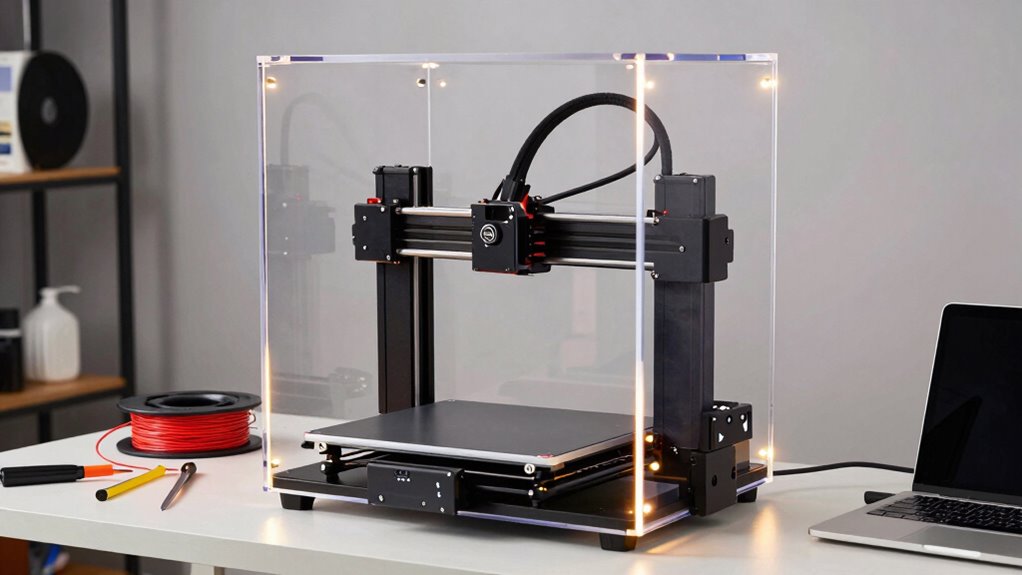

If you have a home studio, using a 3D printer enclosure is highly beneficial. It helps improve safety by containing fumes and VOCs, especially if your space has limited ventilation. Enclosures also stabilize temperature and humidity, resulting in better print quality and fewer errors. Plus, they dampen noise, creating a quieter workspace. To discover how an enclosure can transform your setup and guarantee smoother printing, keep exploring the details.

Get business pricing on tools and workshop supplies
- Business-only prices and quantity discounts
- Tax-exempt purchasing
- Multiple users, one account, clear invoices
Key Takeaways
- Enclosures reduce harmful fumes and VOCs, improving air quality in confined home studio spaces.
- They help maintain stable temperature and humidity levels, enhancing print quality and preventing print failures.
- Enclosures dampen noise, creating a quieter environment suitable for shared or multi-purpose home studios.
- They improve safety by containing fumes, fumes, and potential fire hazards within the workspace.
- Enclosures support consistent printing conditions, leading to more reliable and professional-looking results.
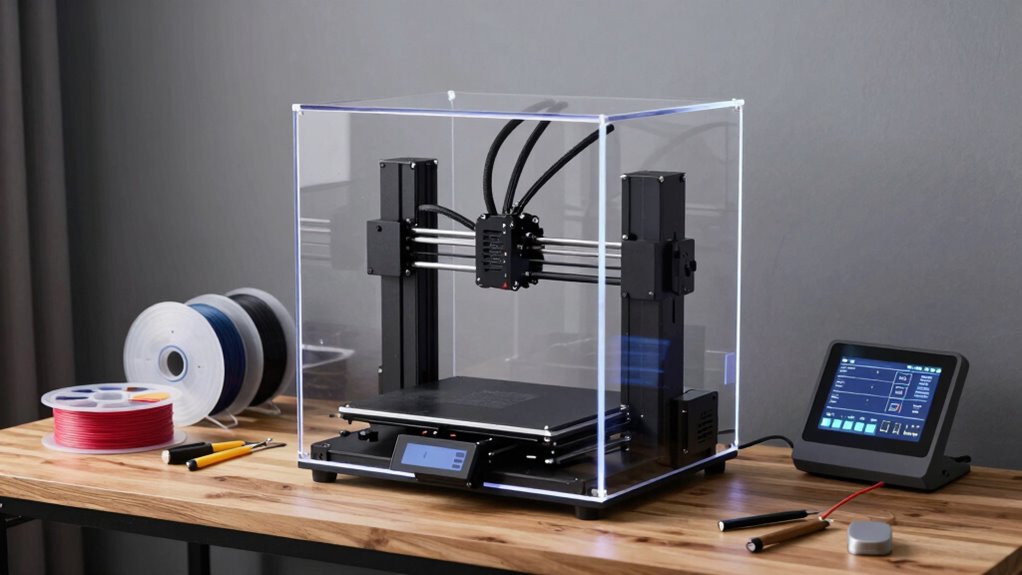
Setting up a 3D printer in your home studio can be exciting, but it also brings potential challenges like fumes, noise, and temperature fluctuations. If you want a smoother experience, investing in a 3D printer enclosure is worth considering. One key benefit of an enclosure is its ability to house filtration systems, which help reduce the release of harmful fumes produced during printing. Many filament types, like ABS or PETG, emit volatile organic compounds (VOCs) that can linger in your workspace and impact air quality. A good enclosure with proper filtration captures these fumes, making your environment safer and more comfortable. It’s especially important if your studio is in a shared or confined space where ventilation might be limited. Effective filtration is essential for maintaining a healthy work environment when working with certain filaments. Additionally, an enclosure can improve overall air quality by containing and filtering these emissions more efficiently.
An enclosure can also help control humidity levels, which can be critical for certain materials and print quality.
Another major advantage is noise reduction. 3D printers can be surprisingly loud, with fans, motors, and moving parts generating consistent noise that can be distracting, especially if you work in a shared household or need quiet for other activities. An enclosure acts as a sound barrier, dampening the noise and creating a quieter, more peaceful workspace. This allows you to focus better and enjoy your creative process without incessant background noise. Plus, it can help prevent noise from disturbing others in your home, making it easier to work on projects at any time of day.
Temperature fluctuations are another concern when working with 3D printers, particularly during long print jobs. An enclosure helps maintain a stable environment by trapping heat, which promotes better print quality and reduces warping or layer separation. It keeps the print bed and filament at consistent temperatures, especially important for materials sensitive to temperature changes. This stability ensures your projects turn out cleaner and with fewer errors, saving you time and frustration.
3D printer enclosure with filtration system
As an affiliate, we earn on qualifying purchases.
As an affiliate, we earn on qualifying purchases.
Frequently Asked Questions
Can a 3D Printer Enclosure Improve Print Quality?
Yes, a 3D printer enclosure can improve your print quality by maintaining a stable temperature and reducing drafts. It helps with material compatibility, especially for temperature-sensitive filaments like ABS. However, guarantee proper enclosure ventilation to prevent overheating and vent fumes safely. By controlling the environment, you minimize warping and layer errors, leading to cleaner, more consistent prints.
How Much Does a Typical 3D Printer Enclosure Cost?
A typical 3D printer enclosure costs between $50 and $200, depending on material options and features. While it’s an investment, safety considerations make it worthwhile, especially if you have kids or pets. You’ll find enclosures made from acrylic, wood, or metal, each offering different durability and aesthetics. The right enclosure protects you from fumes, reduces noise, and improves print quality, making it a valuable addition to your home studio.
Is a 3D Printer Enclosure Necessary for All Filament Types?
A 3D printer enclosure isn’t necessary for all filament types, but it’s highly recommended for filament compatibility and safety. For materials like ABS or PETG, which emit fumes and require stable temperatures, an enclosure helps contain fumes and maintain consistent heat. However, for PLA, ventilation needs are lower. If you use filaments with harmful fumes, an enclosure with proper ventilation becomes essential for safe, high-quality prints.
How Easy Is It to Build a Custom Enclosure at Home?
A stitch in time saves nine, so building a custom enclosure at home is quite manageable if you follow the right steps. You can easily DIY insulation and ventilation solutions by repurposing materials like foam boards or acrylic sheets. With basic tools, you’ll create a functional enclosure that controls temperature and fumes. Just plan carefully, and you’ll find that customizing your 3D printer enclosure is simpler than you think.
Does an Enclosure Reduce Noise From 3D Printers?
Yes, an enclosure can reduce noise from your 3D printer, making your workspace more comfortable. It also helps with ventilation concerns by containing fumes and heat, though you should guarantee proper airflow. Aesthetically, enclosures keep your studio tidy and less cluttered. Just remember to balance noise reduction with adequate ventilation, so your printer operates safely and efficiently while maintaining a clean, professional look in your home studio.
As an affiliate, we earn on qualifying purchases.
Conclusion
So, whether you realize it or not, your home studio might already be set up for success. That accidental spill of filament or the unexpected burst of fumes could be your cue to invest in an enclosure. It’s like finding that missing puzzle piece—suddenly everything fits, and your workspace becomes safer and more efficient. Sometimes, the smallest additions make the biggest difference, turning your hobby into a seamless, enjoyable craft.
temperature stable 3D printer enclosure
As an affiliate, we earn on qualifying purchases.
As an affiliate, we earn on qualifying purchases.
3D printer enclosure for ABS PETG filament
As an affiliate, we earn on qualifying purchases.
As an affiliate, we earn on qualifying purchases.
Fall Picks
fall essentials
As an affiliate, we earn on qualifying purchases.