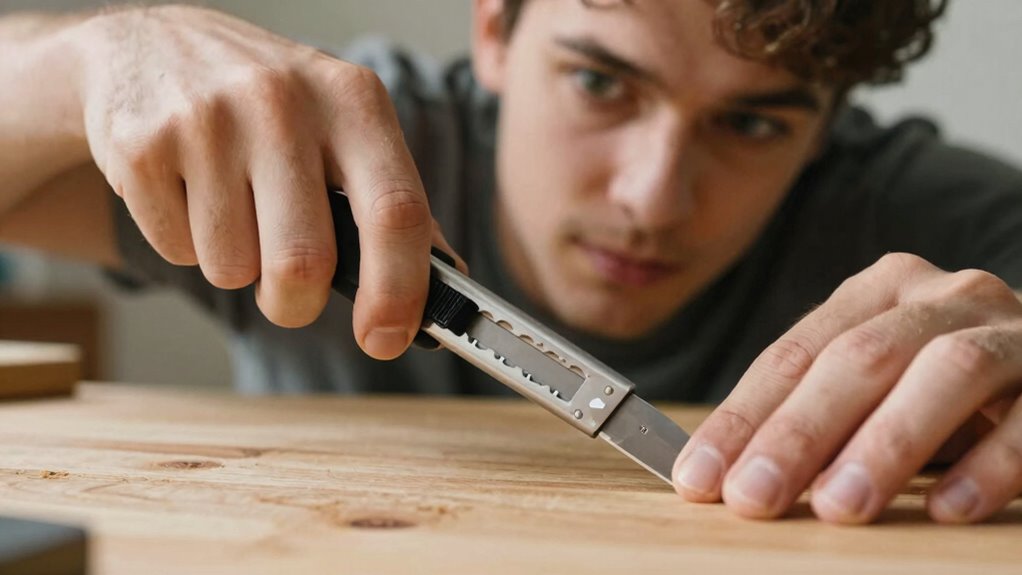

To handle sharp tools confidently, focus on developing safe habits like wearing protective gear, inspecting tools regularly, and keeping your workspace organized and well-lit. Take your time with each cut, grip tools firmly but not too tight, and always cut away from your body. Stay calm and avoid rushing, especially when feeling nervous. With consistent practice and proper preparation, you’ll gain confidence and reduce anxiety. Keep going to discover more ways to improve your safety and skills.
Key Takeaways
- Wear appropriate protective gear like gloves and safety glasses to boost confidence and reduce injury risk.
- Inspect and maintain tools regularly to ensure they are safe and reliable before use.
- Focus fully on each task, avoiding distractions, and use proper techniques to minimize mistakes.
- Keep your workspace organized, well-lit, and free of clutter to enhance visibility and safety.
- Develop consistent, deliberate habits and work at a steady pace to build confidence and reduce nervousness.
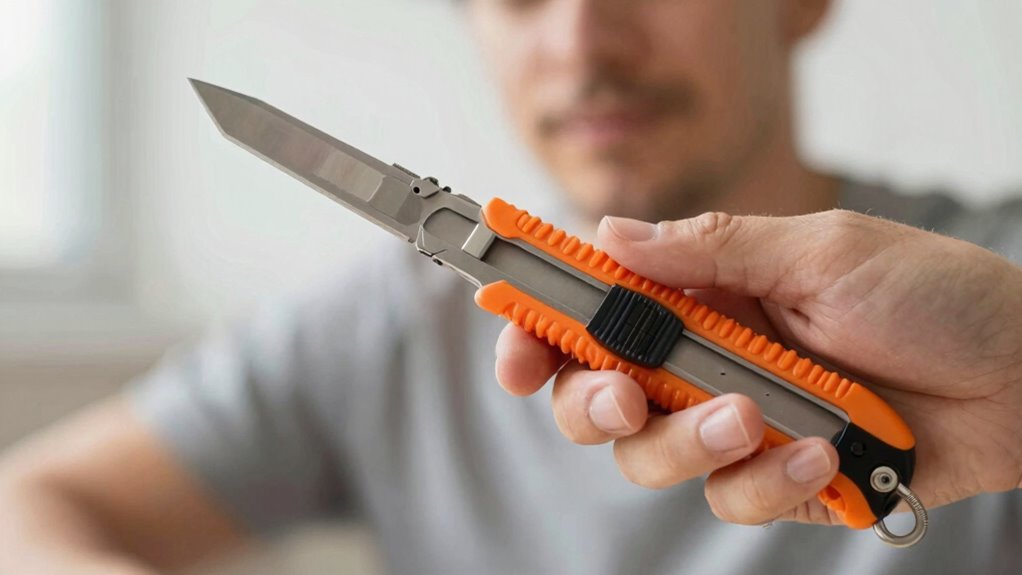
Handling sharp tools safely is vital to prevent injuries and guarantee a secure working environment. When you’re working with blades, knives, or other cutting instruments, your focus should always be on maintaining control and awareness. Wearing the right protective gear, such as cut-resistant gloves and safety glasses, can greatly reduce the risk of accidental cuts or punctures. These items act as a barrier between you and the sharp edge, giving you confidence as you work, especially when handling tricky or unfamiliar tools. Additionally, proper storage is essential. Keep your sharp tools in designated, secure areas—preferably in a toolbox or on a wall-mounted rack—to prevent accidental contact. When tools are stored properly, you’re less likely to reach for the wrong item or mishandle them out of haste. Always inspect your tools before use; dull blades require more force and are more prone to slipping, which can lead to injuries. Sharpen your tools regularly and store them safely afterward. When handling sharp tools, focus on your movements and avoid distractions. Nervousness often stems from uncertainty or fear of injury, so staying calm and deliberate can make a big difference. Take your time with each cut or task—rushing increases mistakes and accidents. Use the right technique by gripping tools firmly but not too tightly, and cut away from your body to minimize the risk of slips. If you’re feeling anxious, pause and breathe deeply; confidence grows with experience and preparation. Keep your workspace tidy and well-lit so you can clearly see what you’re doing, reducing the chance of accidents. Creating a safe working environment is essential to boost your confidence and reduce hazards. When you’re finished, clean your tools properly and store them securely in their designated place. This not only prolongs the lifespan of your tools but also guarantees they’re ready and safe for the next use. Proper tool maintenance is essential to ensure safety and longevity. Remember, handling sharp tools isn’t about rushing through the task but about respecting the tool’s power and potential dangers. By wearing protective gear, maintaining proper storage, and approaching each task with focus, you can work confidently without becoming nervous. Over time, as you become more familiar with your tools and develop consistent habits, your confidence will grow, making the entire process smoother and safer. Handling sharp tools safely is a skill that combines good habits, proper equipment, and a calm attitude. Keep these principles in mind, and you’ll reduce your risk of injury while working efficiently and effectively.

Schwer ProGuard High Level Cut Resistant Work Gloves for Extreme Protection, ANSI A9 Cut Gloves with Reinforced Thumb, Non Slip, Breathable, Durable, Touch-screen, Black 1 Pair(L 3326
- High-Level Cut Resistance: ANSI A9 rated protection
- Durable Abrasion Resistance: Sandy nitrile coating for grip
- Reinforced Thumb Crotch: Enhanced durability and strength
As an affiliate, we earn on qualifying purchases.
As an affiliate, we earn on qualifying purchases.
Frequently Asked Questions
What Should I Do if I Accidentally Cut Myself?
If you accidentally cut yourself, first aid is essential. Apply direct pressure to control bleeding, using a clean cloth or bandage. Keep your hand elevated to slow blood flow. Once bleeding is under control, clean the wound gently with water, then cover it with a sterile bandage. Seek medical attention if the cut is deep or won’t stop bleeding. Staying calm helps you handle the situation effectively.
How Often Should I Inspect My Tools for Damage?
Imagine you’re about to start a woodworking project and notice a dull or chipped chisel. You should inspect your tools for damage before each use, especially after heavy work or accidents. Regular tool maintenance and safety precautions guarantee your tools stay in good shape. Check for cracks, rust, or dull edges weekly to prevent mishaps. Staying vigilant keeps you safe and extends the lifespan of your tools.
Are There Specific Gloves for Handling Sharp Tools?
Yes, there are specific gloves designed for handling sharp tools. You should choose protective gear made from durable glove materials like cut-resistant fibers, such as Kevlar or Dyneema. These gloves provide a strong barrier against accidental cuts and punctures, giving you confidence while working. Always guarantee the gloves fit well and are rated for the level of sharpness you’re handling, so you stay safe without sacrificing dexterity.
How Can I Improve My Grip on Slippery Tools?
To improve your grip on slippery tools, focus on proper grip techniques by wrapping your fingers firmly around the handle without squeezing too tightly. Wear slip-resistant gloves to enhance your hold and prevent slipping. Keep your hands dry and clean to maximize friction. Practice controlled movements and stay relaxed to maintain stability. These steps help you handle tools confidently, reducing the risk of accidents and increasing safety during your work.
What’s the Best Way to Store Sharp Tools Safely?
Did you know that improper storage causes 25% of tool accidents? To store sharp tools safely, prioritize tool maintenance and proper labeling. Use a dedicated toolbox or wall-mounted rack, keeping blades covered and handles visible. Label compartments clearly to prevent mix-ups, and regularly check for rust or damage. This way, you minimize risks, keep your tools in top shape, and work confidently without fear of injury.

HPYNPES Safety GlassesClear Anti-Fog Goggles Over-Spec Glasses Protective Eye Wear Industrial Approved Wide-Vision(4 PACK)
- Wide Application Range: Suitable for various outdoor and industrial uses
- Adjustable Temples: Fits all head sizes comfortably
- Anti-Fog HD Vision: Clear, wide-angle, high-definition view
As an affiliate, we earn on qualifying purchases.
As an affiliate, we earn on qualifying purchases.
Conclusion
Remember, handling sharp tools requires confidence, not fear. While the danger is real, your careful approach transforms potential accidents into moments of mastery. Embrace the calm, focused mindset, and see each cut as a step toward skill and safety. The sharp edge may threaten, but your steady hand and cautious heart hold the true power. In mastering safety, you turn a tool that could harm into an instrument of creation, reminding you that control is your greatest strength.

Intelitopia Complete Knife Sharpening Stone Set – Dual Grit Whetstone 400/1000 3000/8000 Knife Sharpener with Leather Strop, Flattening Stone, Bamboo Base, 3 Non-slip Rubber Bases & Angle Guide
- Complete Knife Sharpening Kit: Includes all essential sharpening tools
- Dual Grit Whetstone: 400/1000 and 3000/8000 grit options
- High-Quality Corundum Stone: Durable aluminum oxide abrasive
As an affiliate, we earn on qualifying purchases.
As an affiliate, we earn on qualifying purchases.

PIYILO 48 in Garage Tool Organizer Wall Mount, Adjustable Tool Storage Rack
- Versatile Organization: Six double-layer hooks and three rails
- Standard Stud Compatibility: Fits 16-inch on-center stud spacing
- Easy Wall Mounting: Includes hardware for quick installation
As an affiliate, we earn on qualifying purchases.
As an affiliate, we earn on qualifying purchases.