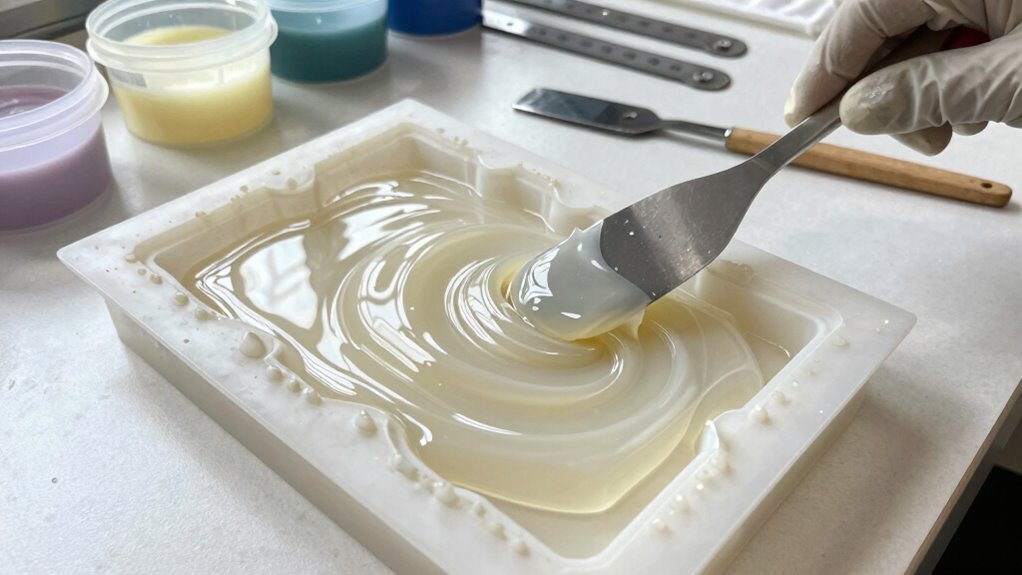

Before buying silicone in bulk, understand the importance of selecting the right formulation based on your project’s needs, like flexibility or detail. Prepare your workspace with clean tools, and measure carefully to guarantee proper curing. Experiment with pigments and release agents on small samples before committing to bigger orders. Master mixing, pouring, and curing techniques to avoid imperfections and improve mold quality. If you keep exploring, you’ll discover how to perfect your mold-making process step by step.

Get business pricing on tools and workshop supplies
- Business-only prices and quantity discounts
- Tax-exempt purchasing
- Multiple users, one account, clear invoices
Key Takeaways
- Understand different silicone formulations and their suitability for your specific project needs.
- Test small batches with chosen materials, pigments, and release agents before bulk purchase.
- Ensure proper workspace setup and tool preparation to achieve high-quality molds.
- Follow manufacturer instructions carefully for mixing, pouring, and curing to prevent defects.
- Plan for multi-part molds and embedding objects to ensure accurate, durable results.
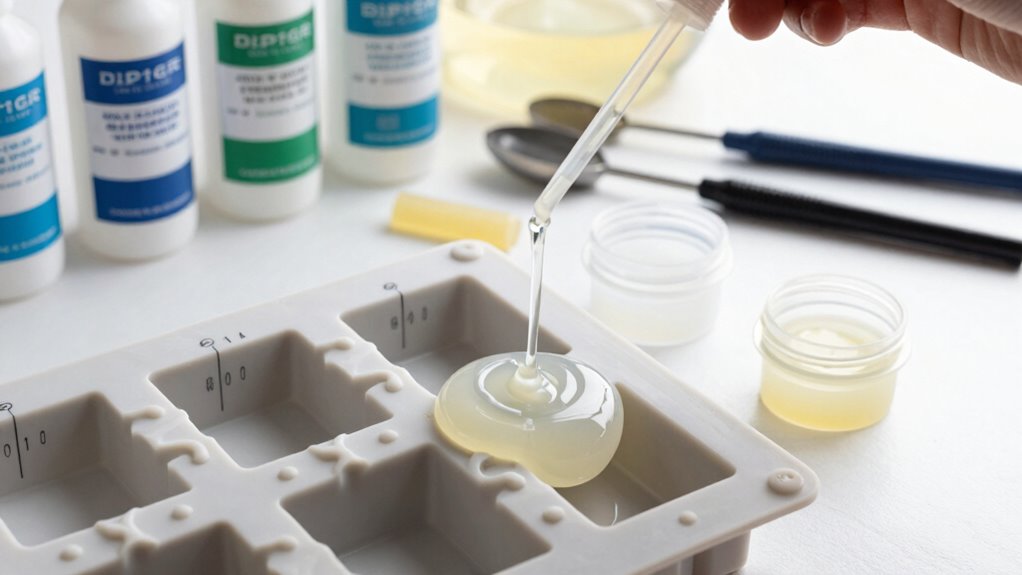
Silicone mold making is a versatile skill that allows you to create detailed, flexible molds for casting a variety of materials. Before diving into bulk purchases, it’s vital to understand the basics so you can make informed decisions and avoid unnecessary expenses. One key aspect is selecting the right silicone type. There are different formulations, each suited for specific projects—some are more flexible, while others cure faster or hold intricate details better. When choosing silicone, consider your project’s complexity, the materials you plan to cast, and your budget.
Another important factor is preparing your workspace and tools. Make sure you have a clean, dust-free surface, as debris can mar the mold’s surface and compromise detail. Use appropriate containers for mixing your silicone, and always measure carefully to guarantee proper curing. When working with silicone, you’ll often need to incorporate color pigments if you want to add vibrancy to your castings. These pigments are mixed into the silicone before pouring, allowing you to customize the final look of your molds or cast objects. Be mindful to use pigments compatible with silicone to prevent curing issues.
Before pouring silicone over your original model, applying a mold release agent is essential. Mold release agents help prevent the silicone from sticking to your model or any underlying surfaces, making demolding easier and reducing the risk of damaging your mold or the original. Different mold release agents are available for various materials, so choose one suited to your model’s composition. Applying a thin, even layer and allowing it to dry thoroughly ensures a smooth surface and easier removal later.
When mixing the silicone, follow the manufacturer’s instructions carefully. Proper mixing and curing times directly impact the quality of your mold. Once poured, avoid disturbing the mold during curing, as any movement can cause imperfections. If you plan to embed objects or create multi-part molds, plan accordingly and use appropriate registration marks to align your mold halves accurately. Additionally, understanding the types of silicone available can help you select the best formulation for your specific project needs. Being aware of the silicone curing process can also help you troubleshoot issues and improve your results. Knowing the properties of different silicone types can further assist in choosing the most suitable material for your project. Exploring silicone testing methods can also be beneficial for optimizing your process and achieving higher-quality molds.
Bulk buying silicone can be cost-effective, but it’s wise to start with smaller quantities to test your process. Experiment with different pigments and release agents to see how they affect your final product. This practice helps you refine your technique and guarantees you’re satisfied with the results before committing to larger orders. Ultimately, understanding these foundational steps—selecting the right silicone, preparing your workspace, using pigments and mold release agents properly—sets you up for successful, high-quality molds that meet your creative needs.
As an affiliate, we earn on qualifying purchases.
Frequently Asked Questions
What Safety Precautions Should I Take When Working With Silicone Molds?
When working with silicone molds, you should prioritize chemical safety by working in a well-ventilated area and avoiding skin contact. Always wear protective gear like gloves, safety goggles, and a mask to prevent inhaling fumes or getting silicone on your skin. Follow the manufacturer’s instructions carefully, and keep the workspace clean. These precautions help guarantee your safety during the mold-making process.
How Long Does Silicone Mold Curing Typically Take?
You might think silicone molds cure quickly, but curing time actually depends on mold flexibility and curing temperature. Typically, it takes about 24 hours at room temperature for full curing. If you increase the curing temperature, the process speeds up, but too high a temperature can affect mold flexibility. For best results, follow manufacturer instructions and be patient—proper curing guarantees durability and detailed mold quality.
Can Silicone Molds Be Used With Food or Edible Items?
Yes, silicone molds can be used with food or edible items if they’re labeled as food-safe. For cooking safety, always verify the mold’s compatibility with edible materials, confirming it’s made from food-grade silicone. Avoid using non-food-safe silicone molds for edible items, as they may contain chemicals harmful when ingested. Properly cleaning and maintaining your food-safe silicone molds also helps guarantee safe, successful culinary creations.
What Are Common Mistakes to Avoid in Mold Making?
You should avoid common mistakes like neglecting design considerations and ignoring material compatibility. Always research how your chosen materials interact with each other and guarantee your mold design facilitates easy removal without damage. Rushing the curing process or skipping surface preparation can lead to imperfections. By paying attention to these factors, you create durable, high-quality molds that produce consistent results. Proper planning and understanding help prevent costly errors in mold making.
How Do I Store Silicone Molds to Extend Their Lifespan?
To extend your silicone molds’ lifespan, store them properly by using storage solutions like airtight containers or soft, padded boxes to prevent damage. Keep molds away from direct sunlight, extreme temperatures, and sharp objects. Regular mold maintenance, such as cleaning with gentle soap and inspecting for cracks or tears, guarantees longevity. Proper storage and diligent maintenance help preserve your molds, making them more durable and ready for repeated use.
As an affiliate, we earn on qualifying purchases.
Conclusion
Now that you understand the basics, you’re holding a key to a world of endless creative potential. Just like a mold shapes the final masterpiece, your knowledge shapes your craft’s future. Before buying in bulk, remember that quality and preparation are your guiding stars—ensuring your journey is smooth and the finished piece true. With this foundation, you’re ready to turn your ideas into tangible realities, forging a path where imagination becomes reality.
As an affiliate, we earn on qualifying purchases.
silicone mold curing thermometer
As an affiliate, we earn on qualifying purchases.
As an affiliate, we earn on qualifying purchases.
Fall yard work Picks
leaf blowers
As an affiliate, we earn on qualifying purchases.