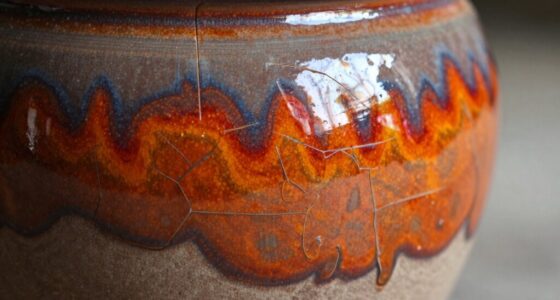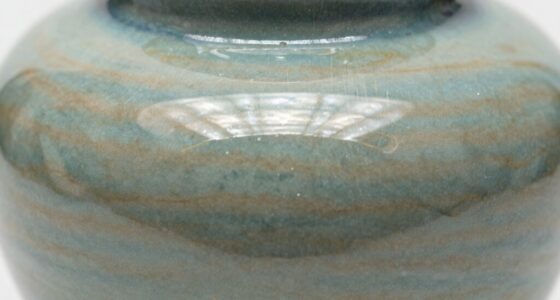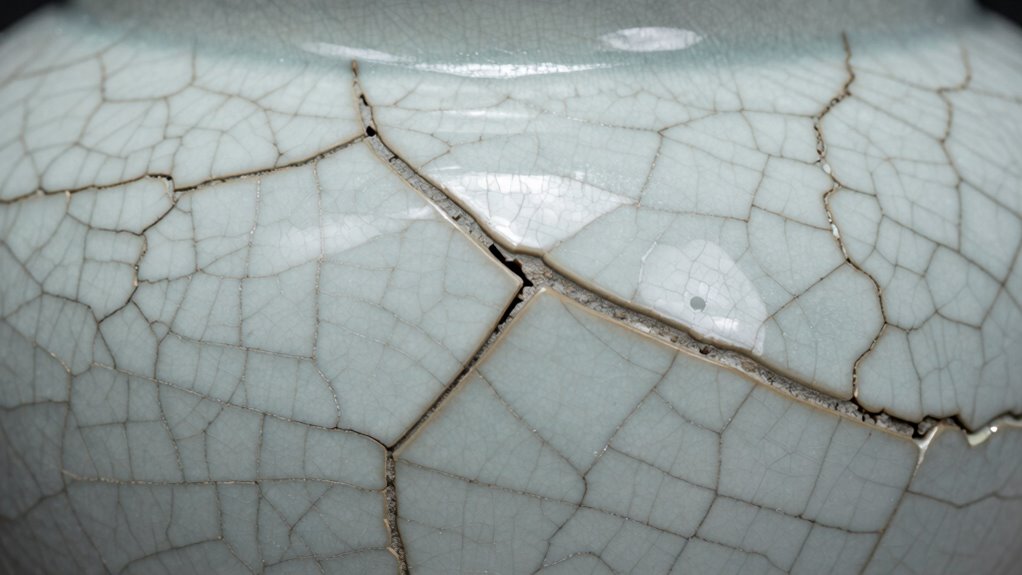

Crazing in pottery glaze appears as a fine, uniform network of tiny cracks on the surface, often adding character to antiques. Cracks, however, are wider, deeper, and irregular, sometimes extending into the ceramic body and caused by impact or stress. Crazing typically doesn’t compromise the piece’s stability, while cracks can weaken it over time. To tell them apart, observe the crack patterns and depths closely—you’ll discover more details as you explore further.
Key Takeaways
- Crazing appears as a fine, uniform network of tiny cracks on the glaze surface; cracks are wider, irregular, and deeper.
- Crazing typically follows the glaze surface without penetrating the ceramic body, while cracks may extend into the underlying material.
- Crazing is usually harmless and adds character, whereas cracks can compromise structural integrity and lead to deterioration.
- Visual inspection of crack size, pattern, and depth helps distinguish fine crazing from more pronounced cracks.
- Older pottery with traditional techniques often shows crazing, while modern glazes aim to reduce it, although cracks may still occur.
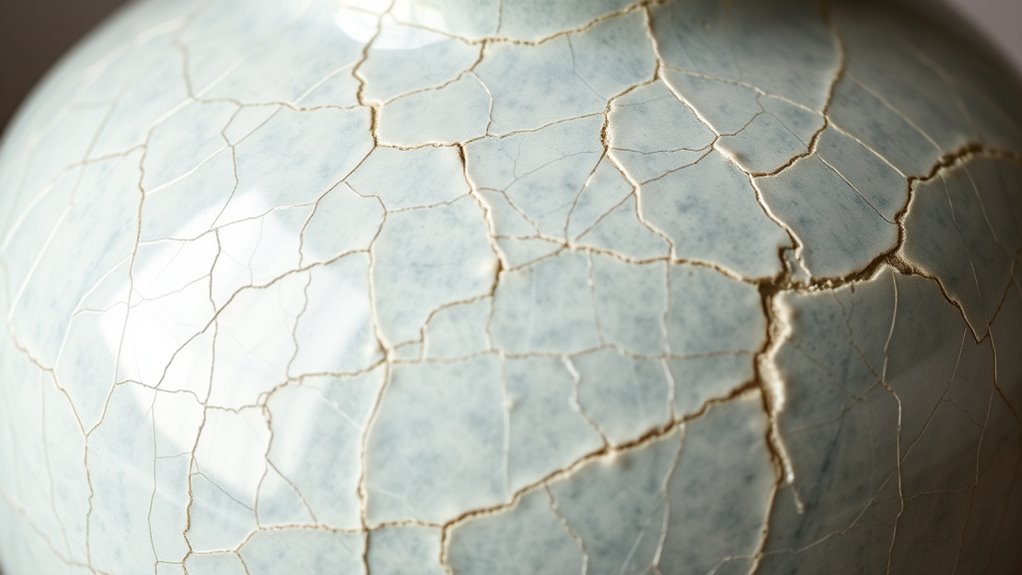
If you’ve ever noticed fine lines or cracks on your glazed pottery, you might be wondering whether they’re harmless crazing or something more serious like cracking. Understanding the difference begins with recognizing how each forms and what they look like. Crazing is often linked to the history of pottery techniques, where artisans used traditional methods that resulted in a network of tiny cracks in the glaze. These cracks occur because of a mismatch in the thermal expansion rates between the glaze and the clay body, which can happen over time or during cooling. Modern glaze formulations have been developed to reduce crazing by creating more compatible materials, but it still occurs in some pieces, especially those made with traditional firing techniques. Free floating methods and natural materials can influence the appearance of crazing, making each piece unique.
Crazing appears as a fine web of cracks that don’t usually compromise the structural integrity of the piece. They often add character, especially in antique or handcrafted pottery, and are sometimes even considered desirable for their aesthetic appeal. However, if these cracks are deeply etched or allow moisture to seep in, they can become problematic, leading to staining or mold growth over time. Cracking, on the other hand, tends to be more severe. It involves larger fractures that can compromise the stability of the piece. Cracks might be caused by sudden temperature shocks, impact, or structural stress, and they often run deeper than crazing. Unlike crazing, cracks in pottery can sometimes lead to pieces breaking apart if not addressed promptly.
To tell the difference, look closely at the pattern and depth of the lines. Crazing usually forms a uniform, fine network of tiny cracks that follow the glaze’s surface, often with no significant breaks in the pottery itself. Cracks tend to be more irregular, wider, and may extend into the body of the ceramic, sometimes with splintered edges. When examining older pieces, consider their history—if a piece was made using traditional techniques with natural glazes, crazing might be part of its charm. Modern glazes are formulated to minimize these issues, but crazing can still happen when the glaze and clay body are incompatible or when the piece has been subjected to temperature fluctuations. Proper understanding of glaze chemistry can help in identifying and preventing crazing and cracking.

Kintsugi Repair Kit Gold & Silver – Food Safe Ceramic Glue for Broken Pottery, Porcelain, Bowls, Glass | Japanese Kintsugi Glue Perfect for Beginners Restoring Meaningful Gifts, 50ml
Japanese Kintsugi Art:Experience traditional Japanese craftsmanship! Our food-safe Ceramic Glue transforms broken ceramics, glass, and jade into unique…
As an affiliate, we earn on qualifying purchases.
As an affiliate, we earn on qualifying purchases.
Frequently Asked Questions
Can Crazing Affect the Durability of Pottery Over Time?
Crazing can affect the durability of pottery over time because it’s caused by glaze expansion mismatched with the clay body, leading to tiny cracks. These cracks create pottery stress, making it more vulnerable to further damage or breakage, especially if exposed to moisture or temperature changes. While some pottery with crazing remains functional, you should watch for worsening stress, as it can compromise the piece’s long-term stability.
How Can I Prevent Glaze Cracking During Firing?
To prevent glaze cracking during firing, you should carefully select your glaze formulation, ensuring it matches your clay body and firing temperature. Avoid rapid heating or cooling, which stresses the glaze and causes cracks. Maintain a consistent firing temperature, and adjust it if needed to minimize thermal shock. Properly controlling these factors helps your glaze adhere smoothly, reducing the risk of cracking and ensuring a durable, beautiful finish.
Are There Specific Glazes More Prone to Crazing?
Yes, certain glazes are more prone to crazing, especially those with specific glaze formulation and firing temperature. Glazes with a high coefficient of expansion or those fired at lower temperatures tend to craze more. You should choose glazes designed for your clay body, paying attention to recommended firing temperatures. Adjusting the glaze formulation and firing temperature can help reduce crazing, giving you a smoother, more durable finish.
Does Glaze Crazing Impact Food Safety?
Glaze crazing can impact food safety if not properly managed. You should be cautious because crazing may harbor bacteria or ceramic contamination, making the piece unsafe for food use. To guarantee glaze safety, regularly inspect your pottery and avoid using crazed pieces for eating or drinking. Proper sealing and testing can minimize health risks, protecting you from potential ceramic contamination. Always prioritize safety when handling glazed ceramics for food contact.
Can Crazing Be Repaired or Hidden Effectively?
Yes, you can repair or hide crazing effectively. For glaze repair, you might use a clear, food-safe epoxy to fill in cracks, restoring smoothness. Surface concealment options include applying a glaze pen or paint designed for pottery, which can blend the crazing and make it less noticeable. Regular cleaning and sealing can also help minimize the appearance of crazing, keeping your pottery looking good for years to come.

MendMight Tub & Tile Repair Kit for Renters & Homeowners, 5.6 oz Porcelain Repair Epoxy with 6 Pigments, Easy-Sand to Fix Chips, Cracks, Holes, Dents & Scratches on Tub, Sink, Countertop & Tile
Made for Small Chips, Cracks & Surface Damage Fix small cosmetic damage such as chips, hairline cracks, scratches,…
As an affiliate, we earn on qualifying purchases.
As an affiliate, we earn on qualifying purchases.
Conclusion
Understanding the difference between crazing and cracking helps you care for your pottery better. Did you know that nearly 60% of pottery collectors believe that crazing adds character, while cracks can decrease value? By inspecting your pieces carefully, you can preserve their beauty and integrity. Remember, a little knowledge goes a long way in keeping your pottery looking its best. Whether you love the charm of crazing or want to avoid cracks, now you’re better equipped to tell them apart!

Blisstime 18PCS Clay Sculpting Tools, Basic Clay Pottery Carving Tool Kit with Wooden Handles and Tool Bag
18 Pieces in Total: This set of clay tools contains most of the basic tools you may need…
As an affiliate, we earn on qualifying purchases.
As an affiliate, we earn on qualifying purchases.

ENGINEER SL-36 Illuminated 5X Magnifying Inspection loupe with Integrated 'Graduated' Scale (Handheld Magnifier with LED)
X5 Magnification (eyepiece diameter of 50mm).
As an affiliate, we earn on qualifying purchases.
As an affiliate, we earn on qualifying purchases.